
Pumpkin seed oil for hair loss isn’t just a home remedy anymore. It has been studied in people, which makes it more promising than many other natural hair treatments. So far, two human studies, one in men and one in women, have found some improvement in hair growth. However, the research is still limited, so we need more studies to know how effective it really is. It’s also important to keep in mind that pumpkin seed oil won’t bring back hair from areas that are completely bald, scarred, or have been inactive for a long time.
What Is Pumpkin Seed Oil?
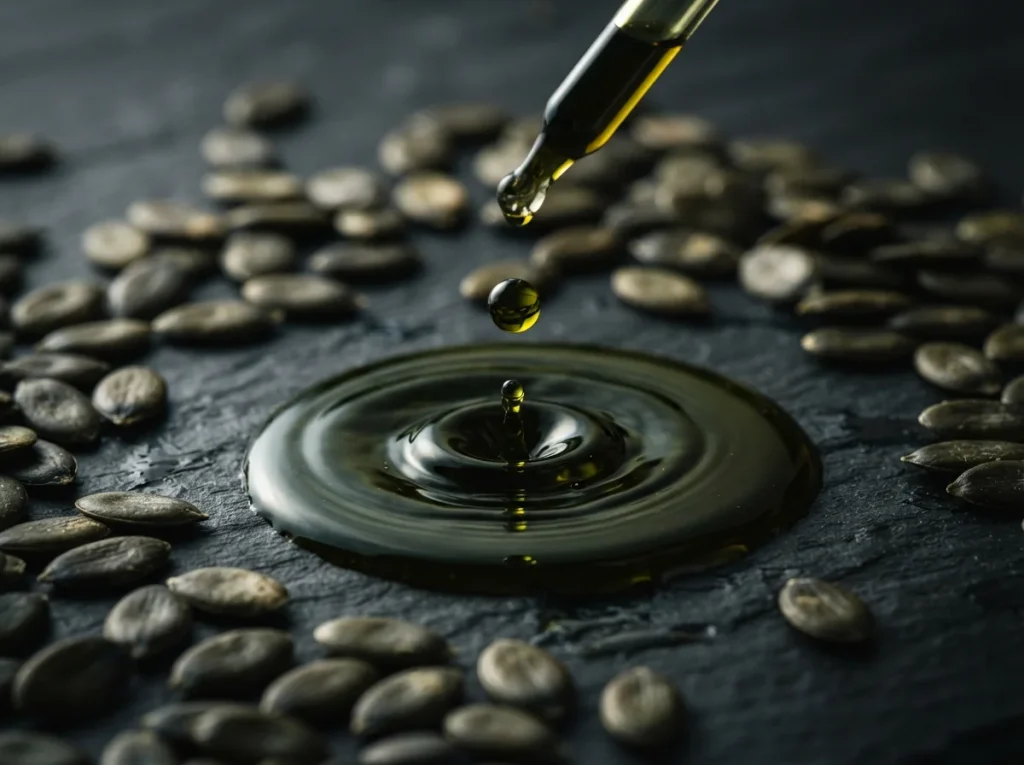
Pumpkin seed oil is made from the seeds of Cucurbita pepo, which are cold-pressed to extract the oil. It contains high amounts of unsaturated fatty acids, Vitamin E, zinc, and plant sterols including beta-sitosterol. You can find pumpkin seed oil in the form of an oral softgel supplement, a liquid oil you can cook with or apply directly to the skin, and, more recently, in hair serum and shampoo.
How Might Pumpkin Seed Oil Help Hair Growth?
Possible DHT inhibition. Pumpkin seed oil contains beta-sitosterol and other phytosterols believed to inhibit 5-alpha reductase, the enzyme that converts testosterone into DHT (dihydrotestosterone), the hormone most strongly linked to pattern hair loss. This mechanism was first observed in rat studies before human trials were carried out (Cho et al., 2014).
Nutrient and antioxidant support. It also supplies essential fatty acids and antioxidants that may support general scalp health, though this effect has not been isolated or tested separately from the DHT-related mechanism.
What Does the Research Actually Say?
Oral pumpkin seed oil in men (Cho et al., 2014). In a randomized, double-blind, placebo-controlled trial, 76 men with mild to moderate androgenetic alopecia (Norwood-Hamilton types II through V) took either 400 mg of pumpkin seed oil or a placebo daily for 24 weeks. The pumpkin seed oil group had a mean hair count increase of about 40%, compared to about 10% in the placebo group (P < 0.001). Participants had not used minoxidil, finasteride, or other hair loss treatments for at least 3 months before the study.
In another study by Ibrahim et al. (2021), 60 women with female pattern hair loss used either 1 mL of pumpkin seed oil or 5% minoxidil foam on their scalp every day for three months. Instead of counting the hairs directly, the researchers used a dermoscope to look at changes in the scalp and hair. The women using pumpkin seed oil had fewer thin, miniaturized hairs and more upright hairs that appeared to be actively growing, suggesting that some hairs may have shifted from a resting phase into the growth phase.
These two studies aren’t directly comparable because they measured different things. The men’s study counted the actual number of hairs, while the women’s study looked at hair and scalp changes using a dermoscope. Both studies showed some positive results, but they don’t measure the same outcome. So instead of taking them as proof that pumpkin seed oil works equally well for both men and women, it’s better to see them as two separate pieces of evidence.
A Second Human Study: What the Prostate Research Tells Us
There’s another human study worth mentioning, although it wasn’t actually about hair loss. In 2009, Korean researchers followed 47 men with an enlarged prostate (BPH) for 12 months. The men were divided into four groups: placebo, pumpkin seed oil, saw palmetto oil, and a combination of both. The pumpkin seed oil group took 320 mg a day and showed an improvement in urinary flow, while the placebo group continued to get worse. Interestingly, taking pumpkin seed oil and saw palmetto together didn’t produce better results than using either one alone. This study doesn’t prove that pumpkin seed oil helps with hair loss, but it is still interesting because it provides some human evidence that the oil may affect the same hormonal pathway linked to DHT. That said, the prostate and hair follicles are very different, so the results shouldn’t be taken as direct proof of a hair-growth effect.
There are still some limits to the research. Both studies were small, lasted for a relatively short time, and haven’t been properly repeated in larger groups. A published comment on the 2014 study also mentioned that seasonal hormone changes could affect hair growth and suggested that future studies should last at least a year to rule this out. For now, pumpkin seed oil looks promising, but there isn’t enough evidence to say that it works as well as prescription hair-loss treatments.
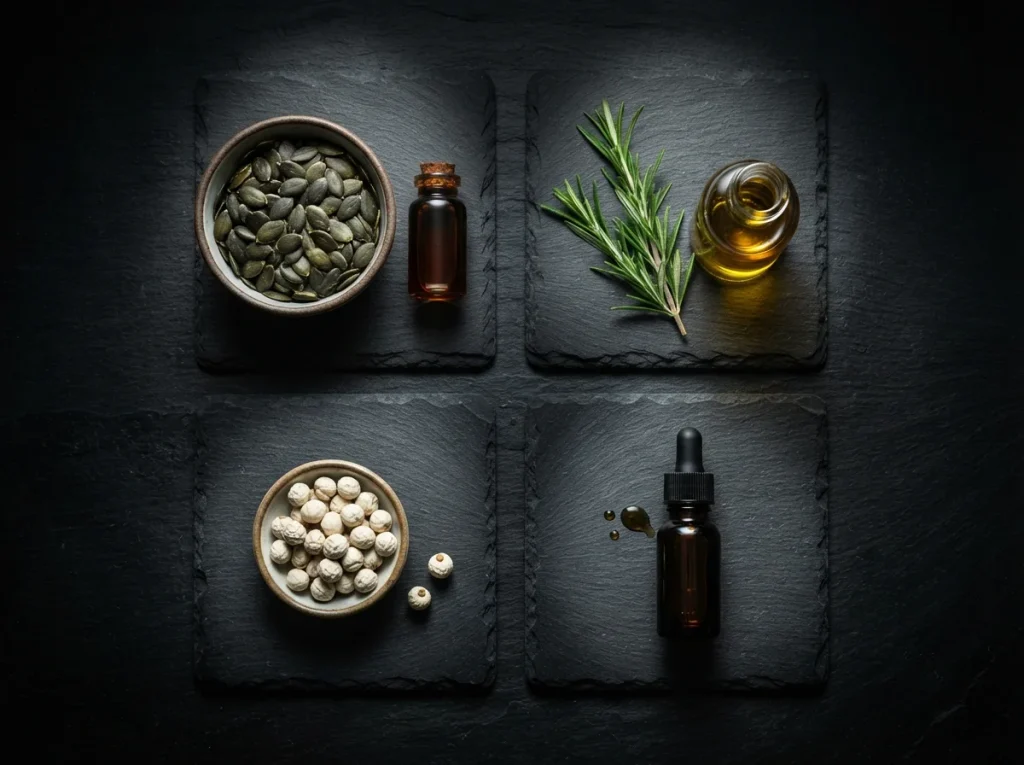
Pumpkin Seed Oil vs Minoxidil, Saw Palmetto, and Rosemary Oil
| What to Know | Pumpkin Seed Oil | Minoxidil | Saw Palmetto | Rosemary Oil |
|---|---|---|---|---|
| Evidence | 2 small human RCTs | Large body of research, FDA-approved | Mixed, weaker than pumpkin seed oil | 1 small RCT, similar to minoxidil |
| Mechanism | Possible DHT/5-AR inhibition | Increases blood flow, extends growth phase | DHT/5-AR inhibition | Scalp circulation, antioxidant |
| Time to see results | Around 24 weeks (oral) | Around 3 to 6 months | Unclear, often 3 to 6 months | Around 3 to 6 months |
| Best for | Mild to moderate thinning, DHT-related loss | Proven option, all stages | Mild thinning, often combined with other options | Mild thinning |
Is pumpkin seed oil better than minoxidil?
The 40% increase in hair count from the Cho study sounds impressive, but it’s important not to take that as proof that pumpkin seed oil is better than minoxidil. Minoxidil has been studied for decades in much larger clinical trials, while pumpkin seed oil still has limited research behind it. So, pumpkin seed oil may be worth considering if you prefer a more natural option, but it shouldn’t be seen as a replacement for treatments with stronger evidence, especially in more advanced hair loss.
Pumpkin seed oil and saw palmetto for hair loss – should you combine them?
Pumpkin seed oil and saw palmetto are thought to work in a similar way by blocking an enzyme called 5-alpha reductase, which is why you’ll often see them combined in hair-loss supplements. However, there isn’t a dedicated clinical trial showing that taking both together works better than taking either one alone. A combination has been tested for a related condition (prostate health), where it did not outperform either ingredient alone, though no combined trial has specifically measured hair outcomes. For now, any claims about a combined effect are based on how each ingredient may work individually, not on direct research. If you’re thinking about trying a supplement with both, it’s worth checking how much of each ingredient it actually contains instead of relying only on the marketing claims.
Pumpkin seed oil vs rosemary oil for hair loss. Both pumpkin seed oil and rosemary oil have one human study each showing some results that were broadly similar to minoxidil. The pumpkin seed oil study used it as an oral supplement and measured actual hair counts, while the rosemary oil study involved applying the oil to the scalp. Since the two oils haven’t been tested directly against each other, there’s no solid evidence to say that one works better than the other. Some people choose to use both, taking pumpkin seed oil orally and applying rosemary oil to the scalp, but this combination hasn’t been properly studied yet.
How to Use Pumpkin Seed Oil for Hair Growth
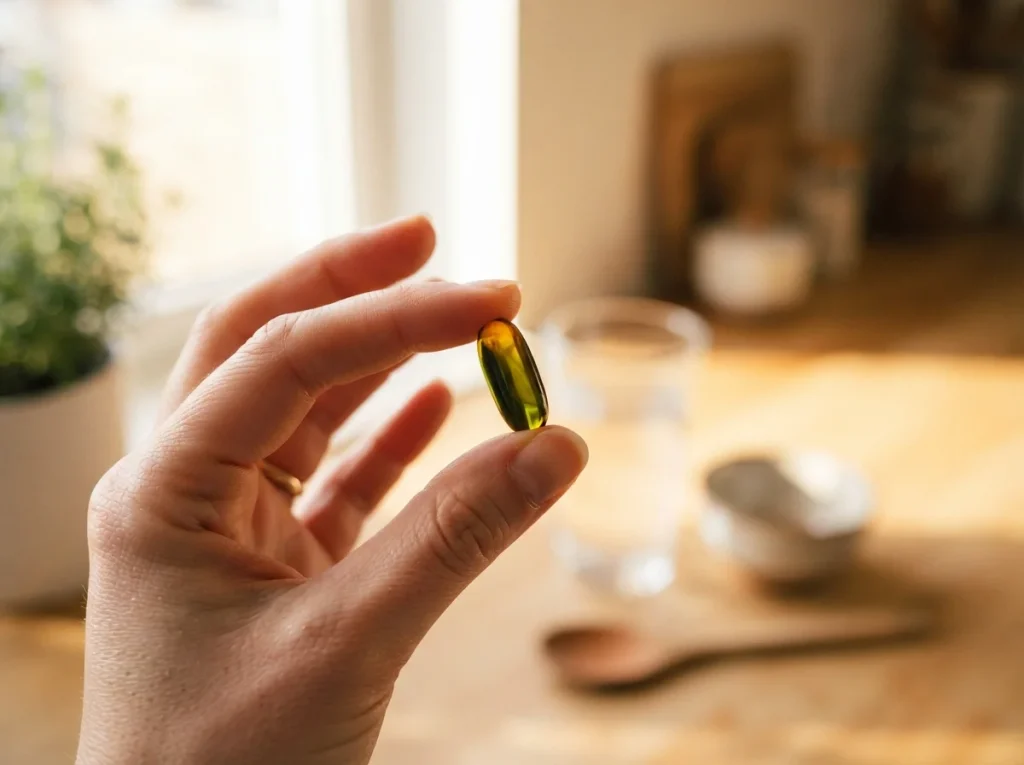
Oral supplement (the method used in the stronger trial):
- Dosage. The Cho et al. trial used 400 mg of pumpkin seed oil daily, taken in capsule form.
- Take it with food, which is standard practice for oil-based softgels to improve absorption and reduce stomach upset.
- Give it time. No significant change was seen until the 24-week mark in the trial, so plan for at least 6 months before judging results.
- Check the label. Look for products that list pumpkin seed oil as the primary ingredient and state the milligram amount per capsule, so you know whether you’re matching the dose used in the study.
Topical application (the method used in the women’s trial):
Apply about 1 mL of cold-pressed pumpkin seed oil directly to your scalp and gently massage it in. Leave it on for at least 30 minutes, or overnight if your scalp handles it well, then wash it out with a mild shampoo. The study used daily application, so if you want to follow a similar routine, apply it once a day and give it around three months before judging the results.
Side Effects and Who Should Avoid It
The Cho et al. study didn’t report any major side effects from pumpkin seed oil over the 24-week period, which is a good sign. However, the study was small, so it’s still worth being a little careful. Some basic precautions are:
- Allergies. Avoid it if you have a known allergy to pumpkin, other seeds, or related plants.
- Pregnancy and breastfeeding. Oral supplementation has not been specifically studied in pregnant or breastfeeding women; check with your doctor first.
- Existing medication. If you take blood pressure or blood sugar medication, mention any new supplement to your doctor, as plant-based oils can occasionally interact with these.
- Topical use. Patch test on your forearm first if you have sensitive skin, and discontinue if you notice redness or irritation.
There isn’t much research on how pumpkin seed oil may interact with specific medicines, and the available trials don’t provide enough information to confirm any particular drug interactions. So it’s best to treat this as a general precaution rather than assuming it’s completely risk-free. If you take regular medication or have any concerns, it’s a good idea to check with your doctor or pharmacist before using it.
What Naturally Lowers DHT?
Pumpkin seed oil and saw palmetto are two of the most talked-about natural options for hair loss because they may help reduce the activity of 5-alpha reductase, the enzyme that converts testosterone into DHT. Things like a healthy diet, good sleep, and managing stress may also support overall hair health, but there’s much less direct research showing that they can treat hair loss. If you notice a receding hairline or thinning around the crown, it’s better to get it checked by a dermatologist instead of assuming DHT is the cause, since different types of hair loss can look very similar.
Will Pumpkin Seed Oil Make Thinning Hair Thick Again?
It may help improve the thickness of hair that is slowly becoming thinner because of DHT sensitivity. This is based on the improvements seen in the women’s study and the increase in hair count reported in the men’s study. However, it’s unlikely to bring back hair in areas where the follicles have stopped producing hair completely, such as an old bald patch or scarred area.
When Pumpkin Seed Oil Is Not Enough

Pumpkin seed oil, like other natural options, only works on follicles that are still active. If you have:
- Advanced pattern baldness with no visible fine hair regrowth.
- Scarring alopecia.
- No improvement after 6 months of consistent, correctly dosed use.
Then a hair transplant becomes a more realistic option. See our guides to hair transplant cost in the USA, FUE vs FUT, and how to choose a hair transplant clinic. Some people also continue using pumpkin seed oil or rosemary oil for general scalp health alongside or after a transplant, but always check with your surgeon before applying anything to the recipient area during healing.
FAQs:
Q: Does pumpkin seed oil really help with hair loss?
It may help, but the research is still limited. In one study, men who took 400 mg of pumpkin seed oil daily for 24 weeks saw around a 40% increase in hair count, compared with about 10% in the placebo group. Another study in women found some improvement in hair and scalp growth markers after using it for three months.
Q: Which is better for hair loss, pumpkin seed oil or rosemary oil?
Both have some human research behind them. Separate studies found results that were broadly similar to minoxidil. However, pumpkin seed oil and rosemary oil haven’t been compared directly. So, there’s no solid evidence that one works better than the other.
Q: What are the side effects of taking pumpkin seed oil?
The main clinical study didn’t report any major side effects over 24 weeks. Still, it’s important to be careful if you have a seed allergy or take medication, especially for blood pressure or blood sugar. In those cases, it’s best to check with your doctor before using it.
Q: Is pumpkin seed oil a DHT blocker?
Pumpkin seed oil may help reduce the activity of 5-alpha reductase, an enzyme involved in producing DHT. This is thought to be partly related to compounds such as beta-sitosterol. However, the evidence is still limited, so it’s better to think of pumpkin seed oil as a possible mild natural option rather than a proven DHT blocker like prescription treatments.
Q: How long does pumpkin seed oil take to regrow hair?
Don’t expect results overnight. The main oral study looked at results after 24 weeks, while the topical study checked changes after three months. If you’re trying it, give it at least a few months before deciding whether it’s helping.
Q: What are the “big 3” for hair regrowth?
The term “big 3” is commonly used to describe minoxidil, finasteride, and ketoconazole shampoo. It isn’t an official medical term, and pumpkin seed oil isn’t part of this group. If you want to use pumpkin seed oil, it would generally be considered an additional natural option rather than a replacement for these treatments.
Q: Which oil is best for thinning hair?
Pumpkin seed oil and rosemary oil are two of the natural oils with some human clinical research behind them. However, there isn’t enough evidence to say that one is definitely the best for thinning hair.
Q: What happens if I take pumpkin seed oil every day?
In the main clinical trial, men took 400 mg of pumpkin seed oil daily for 24 weeks. They saw an increase in hair count, with no major side effects reported. However, there isn’t much research on using it for longer than 24 weeks. So, the long-term effects are still unclear.
Q: Is pumpkin seed oil better than minoxidil?
There’s no good evidence showing that pumpkin seed oil is better than minoxidil. Minoxidil has been studied much more extensively over many years, while pumpkin seed oil has only a small amount of clinical research behind it. Pumpkin seed oil may still be an option for people who prefer a more natural approach.
Q: Who should avoid pumpkin seed oil?
Anyone with a known pumpkin or seed allergy should avoid it. If you’re pregnant or breastfeeding, talk to your doctor before taking pumpkin seed oil supplements. There isn’t enough research on their safety during this time.
Q: Which is better for hair loss, saw palmetto or pumpkin seed oil?
Pumpkin seed oil has some clinical research showing improved hair count. Saw palmetto also has research, but the results are more mixed. Both may affect the DHT pathway. However, there isn’t enough evidence to say that one is better than the other.
Our Approach
We have not personally tested pumpkin seed oil; this guide is based on the published clinical trials listed in Sources below.
Conclusion
Pumpkin seed oil is one of the few natural options for hair loss that has been tested in randomized clinical trials involving both men and women. It may be worth trying if you have mild to moderate thinning and prefer a natural approach, but it’s important to keep your expectations realistic. Give it around 3 to 6 months, stay consistent, and take photos along the way so you can actually compare your progress. If you don’t notice any improvement or your hair loss is getting worse, consider speaking with a dermatologist or hair-loss specialist. If you don’t notice any improvement or your hair loss is getting worse, consider speaking with a dermatologist or hair-loss specialist.
Sources:
- Cho YH, Lee SY, Jeong DW, et al. “Effect of Pumpkin Seed Oil on Hair Growth in Men with Androgenetic Alopecia: A Randomized, Double-Blind, Placebo-Controlled Trial.” Evidence-Based Complementary and Alternative Medicine. 2014;2014:549721. https://pmc.ncbi.nlm.nih.gov/articles/PMC4017725/
- Ibrahim IM, Hasan MS, Elsabaa KI, Elsaie ML. “Pumpkin seed oil vs. minoxidil 5% topical foam for the treatment of female pattern hair loss: A randomized comparative trial.” Journal of Cosmetic Dermatology. 2021;20(9):2867-2873. https://doi.org/10.1111/jocd.13976
- Hong H, Kim CS, Maeng S. “Effects of pumpkin seed oil and saw palmetto oil in Korean men with symptomatic benign prostatic hyperplasia.” Nutr Res Pract. 2009;3(4):323-327. https://pubmed.ncbi.nlm.nih.gov/20098586/
Written & Reviewed By
Written by: Wajiha Aqeel
Co-Founder & Hair Restoration Research Lead
Medically Reviewed by: Dr. Anam Sahibzada
Specialist Dermatologist & Trichologist
Data & publication oversight: Daniel Brooks
Co-Founder & Senior Operations & Data Director
Content reviewed by:
Mehwish Fareed
Clinical Aesthetician & Content Reviewer
Asma Shamshad
Medical Student & Content Contributor
Originally published: October 1, 2026
Research & content last reviewed: October 2026
Last updated: October 1, 2026
Disclaimer: This article is for educational purposes and is not medical advice. Talk to a doctor before starting any new supplement, especially if you are pregnant, breastfeeding, or managing a medical condition.