
Medical Disclaimer: This article is for informational purposes only and does not replace professional medical advice. Read our full Medical Disclaimer.
FUT (Follicular Unit Transplantation)is a surgical procedure in which a strip of skin from the donor region of the scalp is extracted and divided into grafts which are later transferred to the bald region. It is possible to achieve the greatest number of grafts in one session and is the optimal procedure for significant hair loss (Norwood 5-7). FUT transplants are a permanently successful and naturally aesthetic hair transplant with high graft survival rates and in 2026 is a common practice across the globe.
The FUT hair transplant is still one of the safest and most effective medical hair restoration procedure that people experiencing a very high level of hair loss and baldness would turn to. If you want a permanent result with the highest chance of graft survival, then this is still widely performed and applied throughout the US, the UK, Turkey and various premier hair clinics worldwide.
This guide will dissect everything about FUT, including its price, recovery, scarring, results, and its comparison with FUE.
Many patients still favor FUT over other procedures as the total yield per single session of FUT can be higher which is great for those who have already experienced advanced hair loss. Throughout this complete expert guide we will compare clinics, surgeons, price across different US states and results that patients have undergone.
What is FUT Hair Transplant? (Follicular Unit Transplantation)
FUT (Follicular Unit Transplantation) is a surgical permanent hair replacement procedure in which a thin strip of skin with hair is removed from the permanent donor site on the back of the scalp, called strip hair transplant or strip surgery.
The strip is divided into natural follicular units (groups of 1-4 hairs) under high powered stereoscopic microscopes and transplanted into thinning or balding areas on the recipient scalp by the surgeons.
Key Medical Fact: The highest density of live grafts possible in one sitting. In addition, moreover, furthermore, and also F.U.T yields 3000–5000+ live grafts. Therefore, consequently, and hence it is thus the “method of choice” for patients suffering from Norwood stages 5, 6, and 7 of hair loss.
The ISHRS (International Society of Hair Restoration Surgery) recognizes FUT as one of the most practiced and efficient methods available for people who have a lot of male or female pattern baldness. In addition, moreover, furthermore, and also it is widely accepted in clinical practice. Dr. Robert Bernstein adapted and perfected the method during the 1990’s and many surgeons still consider it the superior technique to use when seeking maximum follicular output.
Who is the Ideal Candidate for FUT?
FUT is especially suited for:
- Candidates with Norwood scale 5-7 extensive hair loss who require 3,000-5,000+ grafts.
- Candidates that have had hair transplant repair done in the past who need max yield.
- Candidates who do not mind keeping hair very short in length as linear scar can be hidden with longer hair.
- Candidates that are most concerned with graft survival rate and density.
- Candidates that have an elastic and healthy donor zone in the back of the scalp.
FUT Hair Transplant Procedure Step by Step
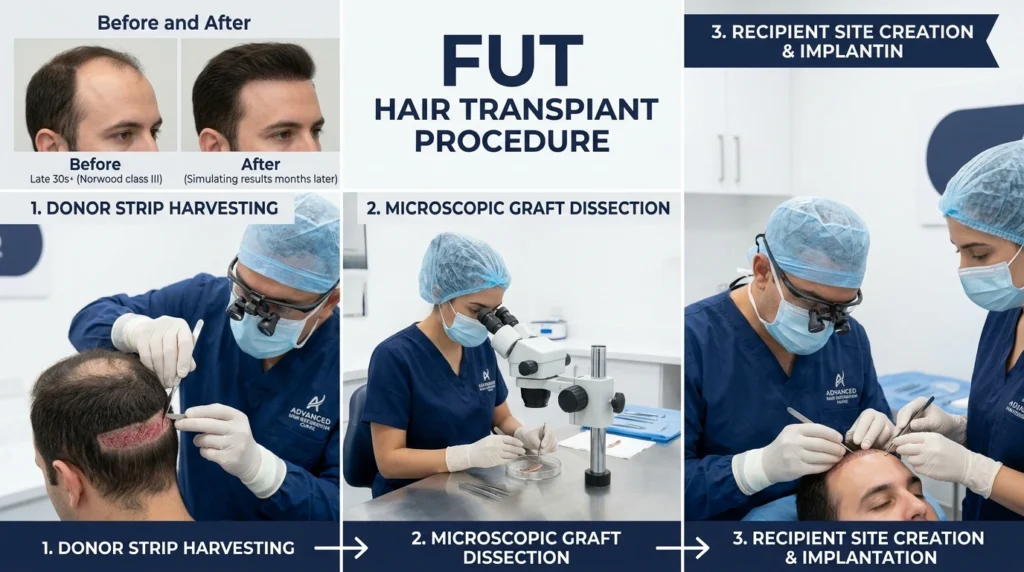
Knowing in precise detail exactly what takes place throughout the entire FUT surgery allows the patient to be more prepared both mentally and physically. Below is an explicit breakdown of each stage of surgery.
Consultation & Hairline Design
The surgeon considers donor density, and scalp laxity. In addition, the surgeon evaluates the Norwood stage and crafts a hairline that looks natural for your facial structure and age.
Local Anesthesia Administration
Local anesthetic is used to numb both the donor and recipient areas. in addition, the procedure itself does not cause any pain. Moreover, If you feel nervous, the surgeon may oral sedatives.
Strip Excision from Donor Area
At the posterior of the scalp from a permanent safe donor zone, a thin elliptical strip of skin is first identified. In addition, this strip is carefully removed using a scalpel, usually measuring 1cm x 25-30cm.
Trichophytic Closure Stitching
The donor wound is closed with sophisticated trichophytic closure sutures. In addition, these sutures allow hair to grow through the scar and greatly reduce its visibility. Therefore the final scar appears much finer and less noticeable over time.
Microscopic Graft Dissection
The strip is then sectioned into individual follicular units (1 – 4 hairs) by technicians with a stereoscopic microscope. In addition, moreover, furthermore, and also each graft is carefully preserved to keep it as intact as possible. In fact, similarly, and additionally, this process helps maintain high graft survival rates.
Recipient Site Creation
Recipient (bald) areas are created as tiny incisions in precise angles and direction. In addition, these angles are designed to match the natural growth pattern of native hair. Therefore, the transplanted area blends in seamlessly and become unseen.
Graft Implantation
Each follicular unit is placed into the recipient sites. In addition, moreover, furthermore, and also density, angle, and direction are adjusted for optimal natural appearance of the hairline and coverage. Therefore, consequently, and hence the final result achieves a more natural look.
Post-Op Care & Instructions
Patient advised with dressing protocol, care advice for cleaning, and instructions for taking medication (antibiotics, anti-inflammatories). Sutures to be removed on day 10-14.
FUT vs FUE Hair Transplant Full Comparison 2026
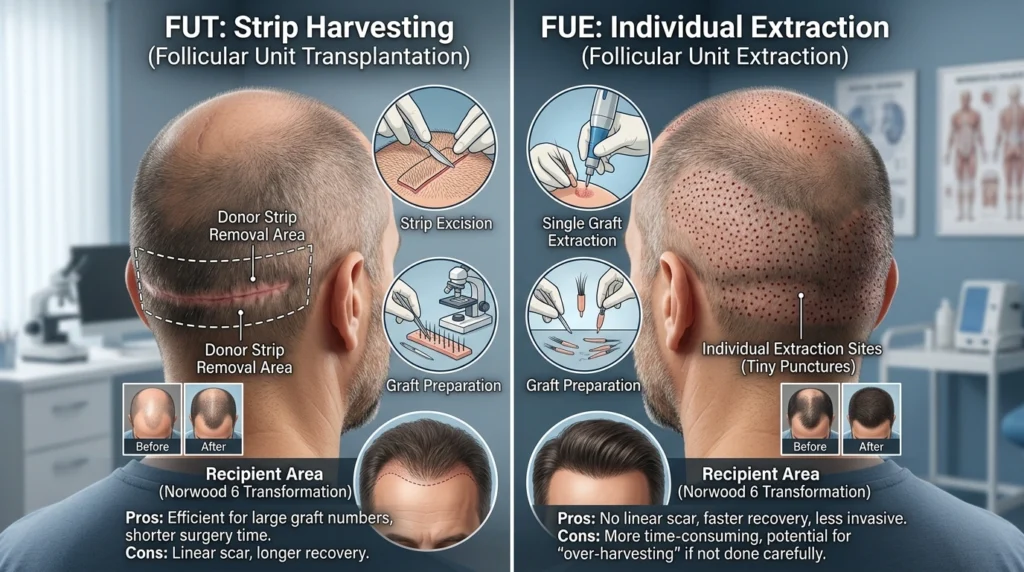
This is by far the most searched question relating to hair restoration, FUT or FUE? While, both methods work in their own right but are suitable to very different types of patient, so here is a detailed and honest look at FUT vs FUE:
| Feature | FUT (Strip Surgery) | FUE (Follicular Unit Extraction) | DHI (Direct Implant) |
| Method | Strip removal & dissection | Individual follicle extraction | Direct pen-implant |
| Graft Yield | 3,000 – 5,000+ per session | 2,000 – 4,000 per session | 1,500 – 3,000 per session |
| Scar Type | Linear scar (hidden by hair) | Tiny dot scars | Tiny dot scars |
| Graft Survival Rate | 90 – 98% | 85 – 95% | 85 – 95% |
| Cost (USA) | $4,000 – $13,000 | $6,000 – $18,000 | $8,000 – $20,000 |
| Recovery Time | 10 – 14 days | 7 – 10 days | 7 – 10 days |
| Best For | Advanced baldness (NW 5 – 7) | Moderate loss, no scar preference | Low-moderate density needs |
| Head Shaving Required | Only donor strip area | Full head shave usually | No shave option available |
| Donor Area Impact | Linear, but higher yield | Wider diffuse extraction | Wider diffuse extraction |
Choose FUT If
- You have Norwood Stage 5 – 7 advanced baldness
- You need as many grafts in one sitting as possible
- Cost is a concern for you as FUT is more economical
- You can wear hair at a medium length to disguise scar
- You want graft survival and density as your prime concern
- You are performing hair transplant repair work
Choose FUE If
- Don’t want linear scar
- Prefer extremely short hair-dos
- Mild to moderate hair loss
- Would like to speed up recovery (7 – 10 days)
- Cost per graft is high
- Graft yield per session is low
Expert Verdict: In a patient with Norwood Stage 5+ loss requiring 3,000+ grafts, FUT offers better density and higher graft survival rates. In addition, it also provides a lower overall cost compared to alternative methods. FUE can be a great choice for the patient seeking the undetectable scar and keeping their hair shorter. Patients with significant loss are often excellent candidates for a combination of FUT and FUE. In addition, this approach helps optimize donor yield for a lifetime.
FUT Hair Transplant Cost 2026 USA, UK, Turkey, UAE
The cost of FUT hair transplant may vary widely in different regions and can depend on many factors like the skill and experience of surgeon, reputability of the clinic and number of grafts needed. Below is a detailed international price comparison:
| Region | Average Cost Range | Cost Per Graft | Quality Level |
| USA Top Quality | $4,000 – $13,000 | $5 – $9 per graft | ⭐⭐⭐⭐⭐ |
| UK | $3,500 – $9,000 | $4 – $8 per graft | ⭐⭐⭐⭐⭐ |
| Canada | $4,000 – $11,000 | $4 – $8 per graft | ⭐⭐⭐⭐⭐ |
| Turkey Best Value | $1,500 – $3,500 | $1 – $3 per graft | ⭐⭐⭐⭐ |
| UAE | $3,000 – $8,000 | $3 – $7 per graft | ⭐⭐⭐⭐ |
| India | $800 – $2,500 | $0.8 – $2 per graft | ⭐⭐⭐ |
| Poland/Eastern EU | $2,000 – 5,000 | $2 – $5 per graft | ⭐⭐⭐⭐ |
What Factors Affect FUT Hair Transplant Cost?
There are 5 main factors which dictate your ultimate cost for FUT.
- Grafts: Most clinics quote price per graft ($4 – 9 in the USA). If you have a 3,000 graft procedure at $6 per graft then your cost is $18,000 before any discounts apply.
- Surgeon skill/experience: Highly experienced board-certified, ISHRS member surgeons are willing to charge top dollar for good reason as graft take is much higher in their hands.
- Location of clinic: clinics in Manhattan or Beverly Hills will charge 30-50% more for similar procedures to those carried out in Florida or Texas.
- Clinic equipment: clinics with microscopic dissection, PRP therapies, or bioenhancer implantation procedures will command higher fees.
- What is included in the service: Some clinics may offer include PRPs, take-home pain relief medications, or free follow-up visits in their package which adds to its value.
FUT Hair Transplant Cost by US State 2026 Price Guide
The pricing in the US varies greatly by state. Below is the latest FUT pricing information available for the top 10 states in the US:
| State | Price Range (2026) | Average Cost | Notable Clinics |
| New York | $6,000 – $12,000 | $9,000 | Bernstein Medical, Feller & Bloxham |
| California Highest | $6,500 – $13,000 | $9,750 | Alvi Armani, Hair Sciences Center |
| Texas | $5,000 – $10,000 | $7,500 | Nader Hair Restoration, True & Dorin |
| Florida | $4,500 – $9,000 | $6,750 | Bosley Medical, Hair Transplant Institute |
| Illinois | $5,000 – $9,500 | $7,250 | Midwest Hair Restoration |
| Arizona | $4,500 – $8,500 | $6,500 | Arizona Hair Sciences |
| Pennsylvania Best Value | $4,000 – $8,000 | $6,000 | Philadelphia Hair Institute |
| New Jersey | $5,000 – $9,500 | $7,250 | NJ Hair Restoration Center |
| Massachusetts | $5,500 – $11,000 | $8,250 | Boston Hair Associates |
| Virginia | $4,500 – $9,000 | $6,750 | Virginia Hair Restoration |
Cost-Saving Tip: If you consider traveling to one of the large TX or FL volume centers, then, moreover, furthermore, additionally, and also you will save $2000 – $4000 compared to NY/CA prices. In addition, likewise, similarly, and consequently you may achieve comparable or better outcomes. However, nevertheless, still, and on the other hand you should double-check that the surgeons are IAHRS or ISHRS members. Therefore, thus, hence, and as a result avoid booking solely based on price.
FUT Hair Transplant Scar Honest Truth, Types & Treatments
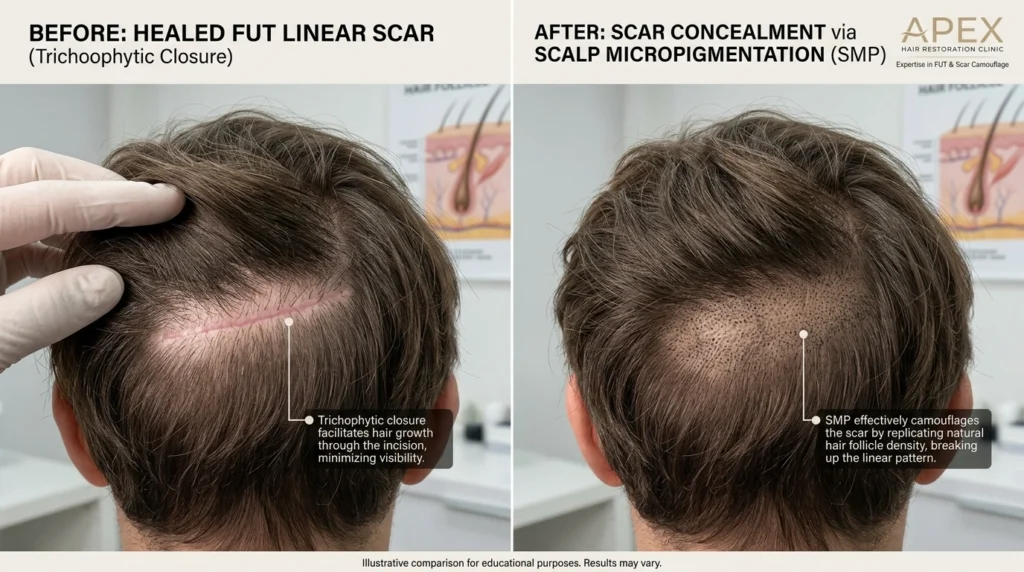
So what is the most frequent question asked regarding FUT? “How bad is the FUT scar?” Here is the entirely truthful answer with supporting clinical evidence.
The Linear Scar: What to Expect
Yes FUT can leave a linear (horizontal) scar on the back of the scalp in the donor area. While, visibility depends on the following:
- The ability of the surgeon: Using trichophytic closure, a skilled surgeon may only leave a scar of less than 1 – 2 mm in width.
- The length of hair you keep on the back of your head: This is usually in excess of 1 inch. At this length the scar in usually completely hidden from view on most patients.
- Skin type: Good skin elasticity produces a thinner, less visible scar.
- Wound care: Sun protection after surgery, and good wound care will minimize scar formation.
FUT Scar Treatment Options (If Visible)
FUE Into the Scar
Thus they can place single FUE grafts directly into the line scar to hide the appearance of the linear scar. This is excellent for patients wishing for a very short hairstyle.
Scalp Micropigmentation (SMP)
However, moreover, in addition, furthermore, medical tattooing uses needles to create the appearance of follicles within the scar. In addition, it works well with very short hair. Therefore, it helps improve the overall appearance of the scar area.
Scar Revision Surgery
Although wider or higher scar re-excision followed by fine trichophytic closure can provide good results, moreover, in addition, furthermore, and also it helps improve scar width in cases of broad or hypertrophic scarring.
Laser Resurfacing
Hence, in combination with Fractional CO2 laser treatment or Er:YAG treatment, moreover, furthermore, and also the scar tissue can be remodeled. In addition, on the other hand, and consequently, pigment contrast may change, leading to a flatter and less conspicuous scar.
Clinical Reality: More than 90% of patients who have undergone FUT under the supervision of an experienced FUT surgeon report that the FUT scar is not visible when the hair is kept at a normal length. Moreover, FUT scarring has improved significantly over time, and its visibility mainly depends on the surgeon’s skill and technique.
FUT Hair Transplant Recovery Timeline Day by Day
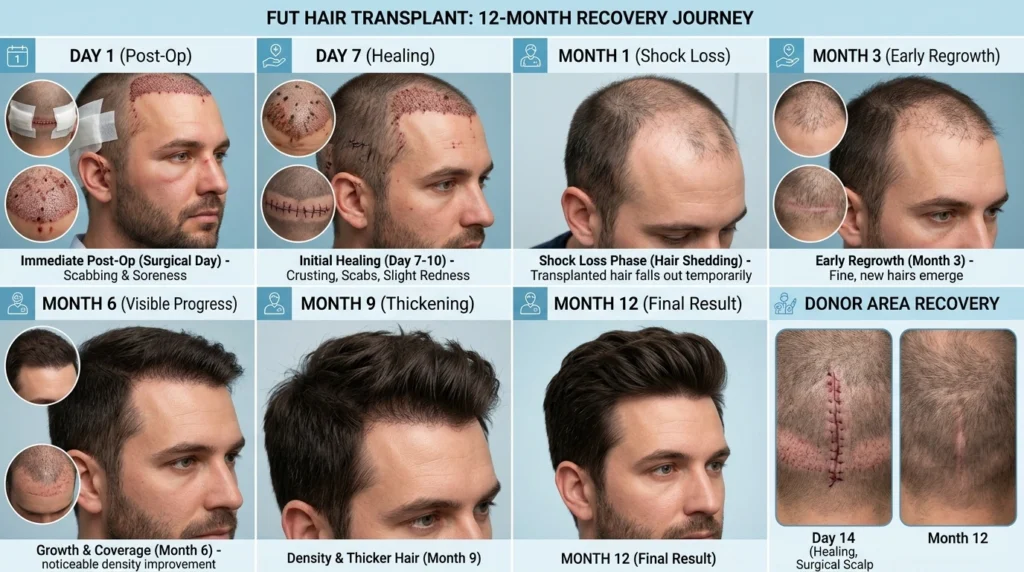
Recuperation from FUT is generally simple as long as post-op instructions are adhered to. Here is an realistic full recovery timeline:
Day 1 – 3: Immediate Post-Op
First slight puffiness of the forehead and donor site. Tightness across the donor strip is noticed. A light bandage might be applied. Minimal pain is present and will be controlled with prescribed pain medication. Sleep will be propped up to help minimize the swelling.
Day 4 – 7: Scabbing Phase
Then small scabs appear around the transplanted grafts; these are normal. From Day 3-4 the grafts should be washed gently using prescribed shampoo. Do not pick or scratch the grafts. It should feel normal for a normal patient and they should be allowed to perform light domestic tasks.
Day 10 – 14: Suture Removal
Next Sutures from the donor area are removed in the clinic. The scabs in the recipient area will fall off on their own. Most patients are able to return to office type work without any problems. Patients should refrain from strenuous physical activity and swimming.
Week 3 – 6: Shock Loss Phase
After that, the transplanted hair will fall out; this is “shock loss” (telogen effluvium), and it is absolutely normal. Moreover, the root of the follicle remains intact beneath the skin. Therefore, try not to panic, as regrowth will occur in the following months. In addition, this phase is a natural part of the hair restoration process. Consequently, patients can expect gradual improvement over time.
Month 3 – 4: Early Regrowth
Then the first new hairs grow from transplanted follicles. Very fine, delicate hair growth should be seen in the recipient sites. PRP treatment sessions (if advised) aid this process.
Month 6 – 8: Significant Growth
Meanwhile you’ll have 50-70% of your final density showing through. Hair texture and thickness will be returning to normal. In most patients there will be a very good cosmetic result at this time.
Month 9 – 12: Final Results
Finally Total density and a natural hairline can be obtained. 90 – 98% survival of follicular grafts in FUT successful results. Subsequently the results of hair transplantations are final – the transplanted hair will not fall out because it grows from a stable donor area.
FUT Hair Transplant Results What to Realistically Expect
Meanwhile managing patient expectations correctly is crucial to patient satisfaction. Clinical evidence and the opinion of top surgeons are that FUT results in:
| Result Factor | Expected Outcome | Key Variable |
| Graft Survival Rate | 90 – 98% with expert surgeon | Surgeon skill + team quality |
| First Visible Growth | 3 – 4 months post-surgery | Individual hair growth cycle |
| Final Density | 9 – 12 months post-surgery | Graft count + recipient area size |
| Permanence | Lifetime – donor hair is DHT-resistant | Genetic stability of donor zone |
| Natural Appearance | Achievable with experienced surgeon | Hairline design + angle/direction |
| Density Coverage | High – 40 – 60 grafts per cm² | Number of grafts + area covered |
Realistic Expectation Note: Because F.U.T. Requires implanting long term donor hair that doesn’t fall out from D.H.T., the implanted hair should be for life with no balding out in the future. The non-implanted surrounding hair may thin with natural aging, genetics, hormonal changes, stress or lifestyle.
Most experienced surgeons recommend a combined treatment approach. Moreover, they also suggest adding long-term hair care treatments such as finasteride, minoxidil, PRP therapy, scalp hygiene care, and a proper diet. In addition, periodic treatments help maintain overall hair density. Furthermore, these steps slow down further hair loss and help preserve natural hair. Consequently, they improve long-term results. As a result, they also extend the lifespan of the transplant. Therefore, patients achieve more stable results over time. Finally, this combined strategy improves the overall success of hair restoration.
FUT Hair Transplant for Men & Women
FUT Hair Transplant for Men
For men with generalized male pattern baldness (androgenetic alopecia) and Norwood 4 to 7, FUT provides the best surgical results. Advantages of FUT in male patients are:
- Max number of grafts per procedure-effective for bald areas on crown, mid-scalp, hairline; good for coverage in large areas of baldness.
- Hairline will look very natural, with the correct density.
- Best cost per graft for very significant hair loss.
- This technique can be complemented with F.U.T. In subsequent treatments if more donor supply is needed in the future.
FUT Hair Transplant for Women
In certain instances, FUT can also be utilized for women with female pattern hair loss (Ludwig Scale) or diffuse thinning. The advantage of FUT over FUE in female patients is the fact that full head shaving is not required, which many female patients find more acceptable from a social standpoint.
- Does not necessarily require a complete head shave; only the strip site needs to be shaved.
- Women with diffuse thinning across the entire scalp can have FUE.
- High success rates of graft take in women.
- Effective for female anterior hairline recession.
Important for Women: FUT hair transplant is not for everyone. For example women with DUPA should have a unstable donor area and will be poor candidates to the result of the transplant. Need for detailed analysis of the scalp before surgery. Donor density must be analyzed by HairCheck or densitometry by ISHRS certified surgeon.
List of Top 10 Best FUT Hair Transplant Clinics Worldwide 2026
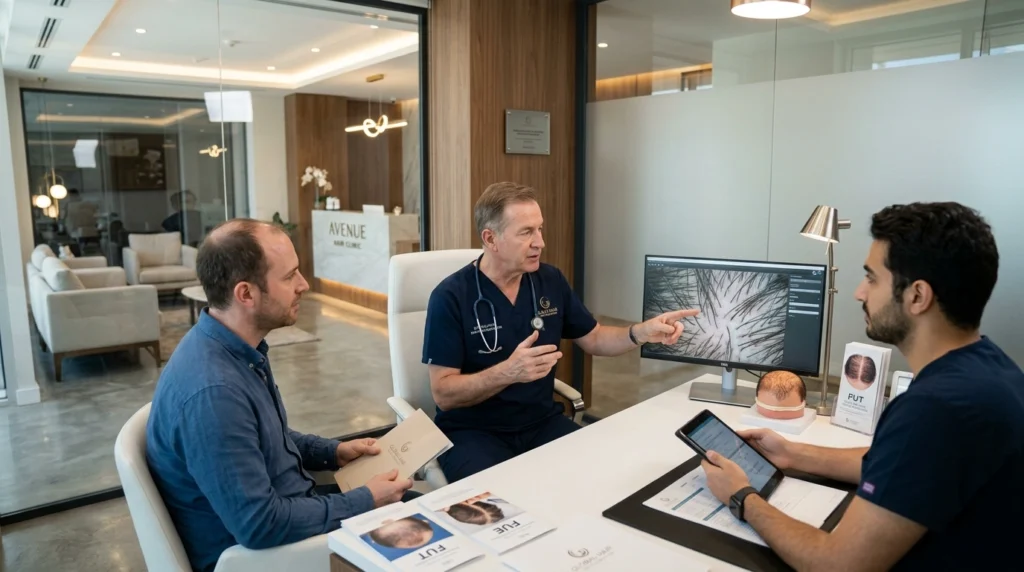
The rankings of these clinics are as follows, in no particular order. Each are ranked according to the qualifications of the surgeon, patient results, membership in ISHRS or IAHRS, success in terms of survival of grafts, and patient testimonial:
#1 Bosley Medical Group USA Nationwide
Multiple US Locations | 40+ Years Experience
America’s largest, oldest hair restoration network with over 70 locations nationwide. Bosley led the way in standardized FUT procedures, yielding consistent results. Great for any patient seeking nationwide access to a top-tier FUT practice.
Doctor: Dr. David P. Deutsch, MD, FACS, ABHRS (Beverly Hills, CA),Dr. Ken Washenik, MD, Ph.D. (Beverly Hills, CA), Dr. Edwin A. Suddleson, MD, FISHRS (Beverly Hills & Multiple Locations), Dr. Jeffrey Epstein, MD, FACS (New York, NY/Miami, FL), Dr. Robert E. Alpeter, MD (New York, NY)
Location: 9100 Wilshire Blvd, 9th Floor, Beverly Hills, California 90212, United States.
Phone No: +1 310 – 985 – 6405
Website: https://www.bosley.com/
#2 Bernstein Medical Center for Hair Restoration New York, USA
New York, NY | Academic Research-Based Practice
Founded by Dr. Robert Bernstein the innovator of modern FUT technique. Science-based approach with cutting-edge technology. The gold standard academic reference for hair restoration globally. Exceptional for complex cases and revision surgery.
Doctor: Dr. Bernstein
Location: 110 E 55th St Floor 11, New York, NY 10022, United States.
Phone No: +1 212 – 826 – 2400
Website: https://www.bernsteinmedical.com/
#3 Hasson & Wong Hair Restoration Canada, International
Vancouver, Canada | World-Renowned Mega Sessions
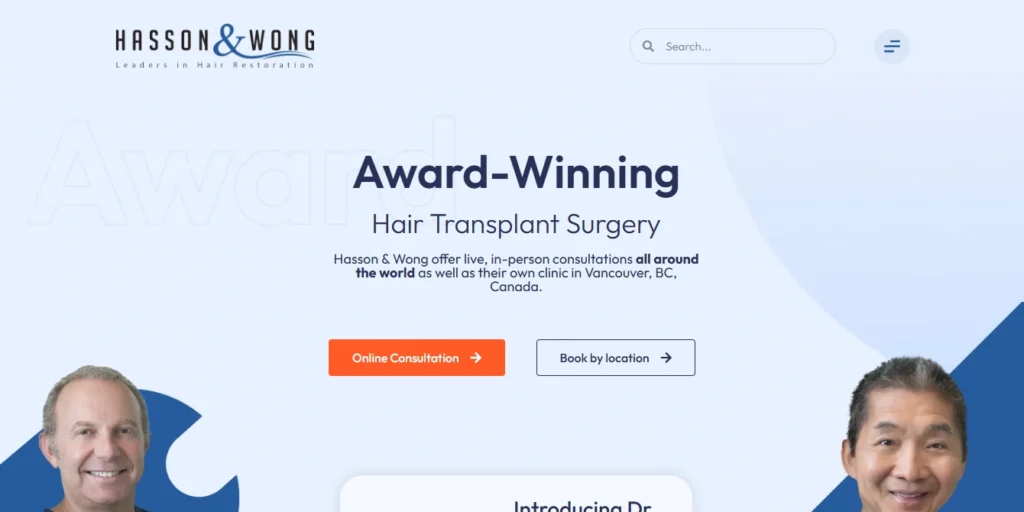
Globally respected for their mega sessions of FUT giving 4000-5000+ grafts in one go. The highest graft survival rate possible. Attracts patients from across the world for this, in order to obtain the highest possible yield.
Doctor: Dr. Hasson – Dr. Wong
Location: 1001 W Broadway #600, Vancouver, BC V6H 4E4, Canada.
Phone No: +1 604 – 739 – 4247
Website: https://hassonandwong.com/
#4 Shapiro Medical Group Minnesota, USA
Minneapolis, MN | Artistic Hairline Specialists

Expert in the artistic natural hairline design and difficult repairs. Expert at fixing previous poor outcomes of transplants. Scientific & artistic combination of work. Very well regarded in the ISHRS.
Doctor: Dr. Ron Shapiro, MD, Dr. David Josephitis,DO, R. Paul Shapiro, MD.
Location: 5270 W 84th St Suite 500, Minneapolis, MN 55437, United States.
Phone No: +1 952 – 926 – 0000
Website: https://shapiromedical.com/
#5 Feller & Bloxham Medical New York, USA
Great Neck, New York | FUT Strip Specialists
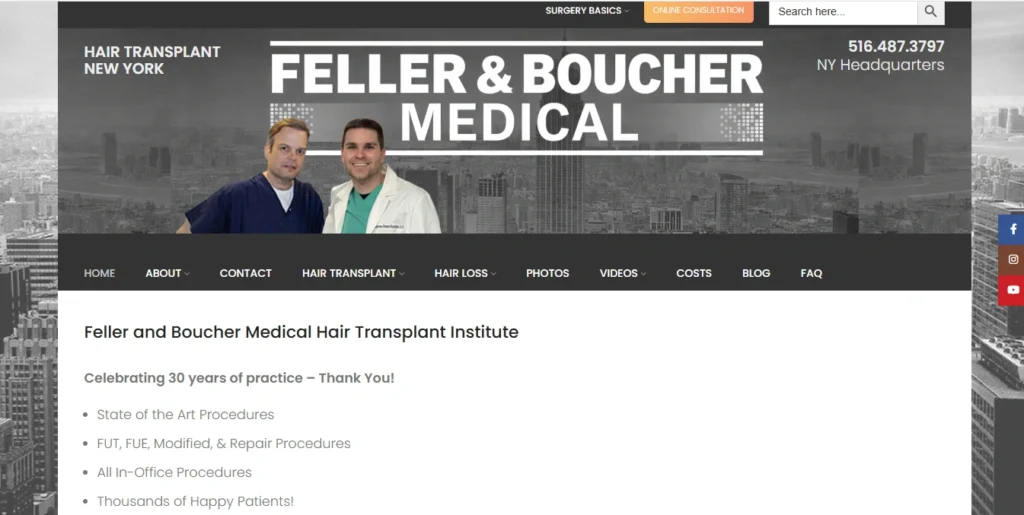
Arguably, one of the most technically accurate FUT strip procedures in North America. Dr. Bloxham has a reputation for diligent donor site dissection and minimal scarring. This doctor consistently has excellent natural density at very tight scar width.
Doctor: Dr. Alan Feller, Dr. Shane Boucher
Location: 287 Northern Blvd #200, Great Neck, NY 11021, United States.
Phone No: +1 516 – 487 – 3797
Website: https://fellermedical.com/
#6 Alvi Armani Hair Restoration California, USA
Beverly Hills, CA | Luxury Medical Aesthetic Practice
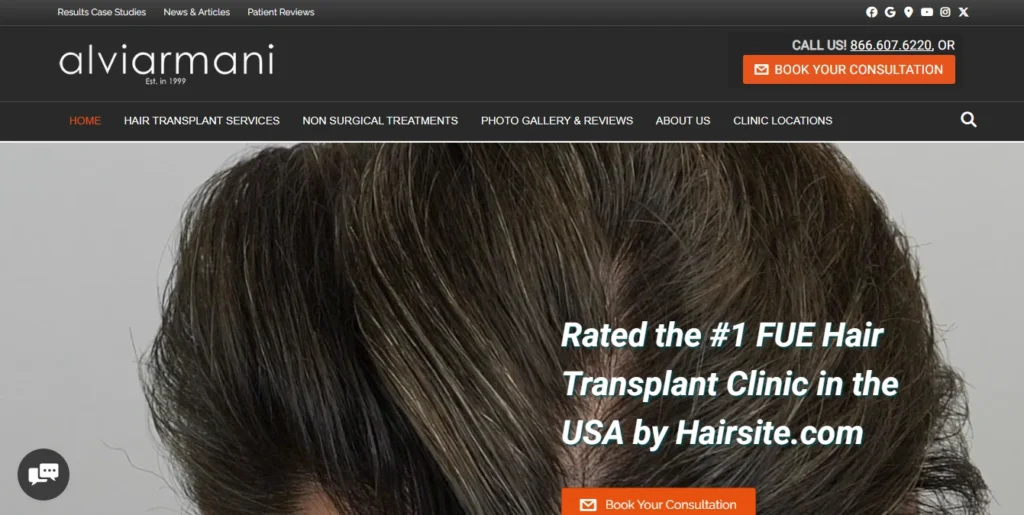
Top-level luxury aesthetics practice renowned for artistic hairline creation and extremely natural looking cosmetic results. Medical skill married with exclusive cosmetic artistry. Sought after by the entertainment world for a flawless, hidden effect.
Doctor: Dr Ischayek and Dr Barton
Location: 8500 Wilshire Blvd #1010, Beverly Hills, CA 90211, United States.
Phone No: +1 310 – 652 – 6444
Website: https://www.alviarmani.com/
#7 Nader Hair Restoration Texas, USA
Texas | Best Value USA Clinic
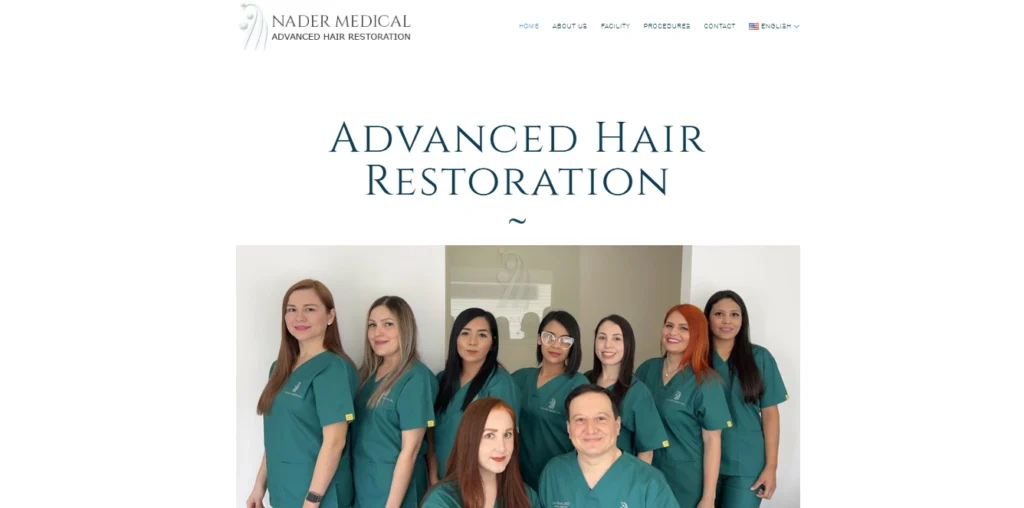
Highest quality FUT at a considerably lower price than the East/West coast. Has a great track record for quality work at the lowest price for surgical treatment and care. A great clinic if you are price conscious.
Dr. Nader also runs his hair transplant clinic, Nader Medical, which is a well-known and frequently visited clinic. In addition, this clinic is located near the border in Reynosa, Mexico, making it easily accessible for many patients traveling from Texas. As a result, international patients continue to travel to be treated by Dr. Nader.
Doctor: Dr. Luis Nader
Location: Boulevard Álvaro Obregón #1960-13 Colonia Cavazos CP 88720Reynosa, Tamaulipas México.
Phone No: (011 52) 899 – 920 – 3489, (956)502 – 0224, 1 – 844 – 803-4211
Website: https://nadermedical.com/
#8 Hair Restoration Institute of Dallas Texas, USA
Dallas, TX | High-Density FUT Specialists
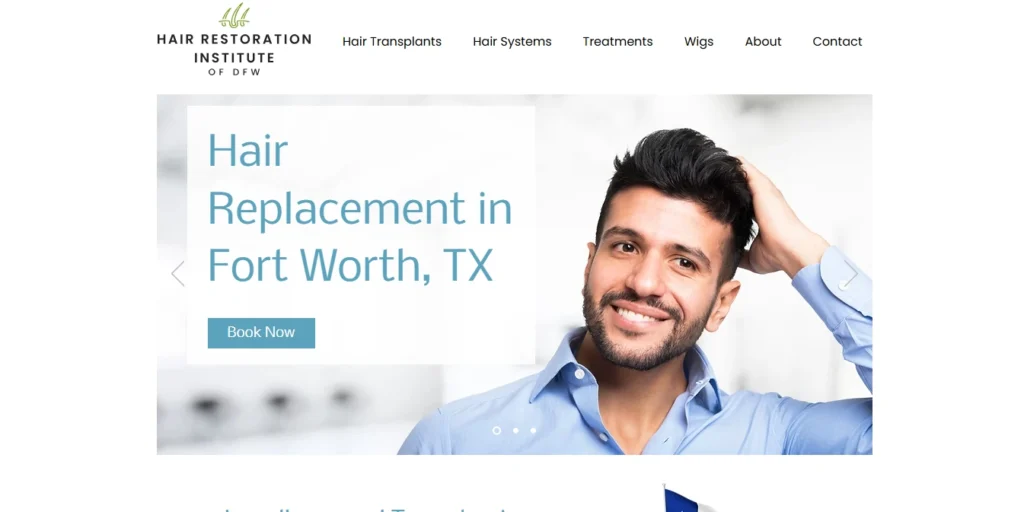
Dense in FUT strip surgery for highest density results, focused solely on massively bald patients. Natural-looking results achieved with meticulous surgical technique. Optimal for Norwood Stage 6-7 patients seeking the highest density.
Doctor: Dr. Jesse Smith
Location: 1201 W Lancaster Ave, Fort Worth, TX 76102, United States.
Phone No: +1 817 – 854 – 4247
Website: https://www.hriofdfw.com/
#9 Erdogan Clinic (ASMED) Istanbul, Turkey
Istanbul, Turkey | Top International Destination
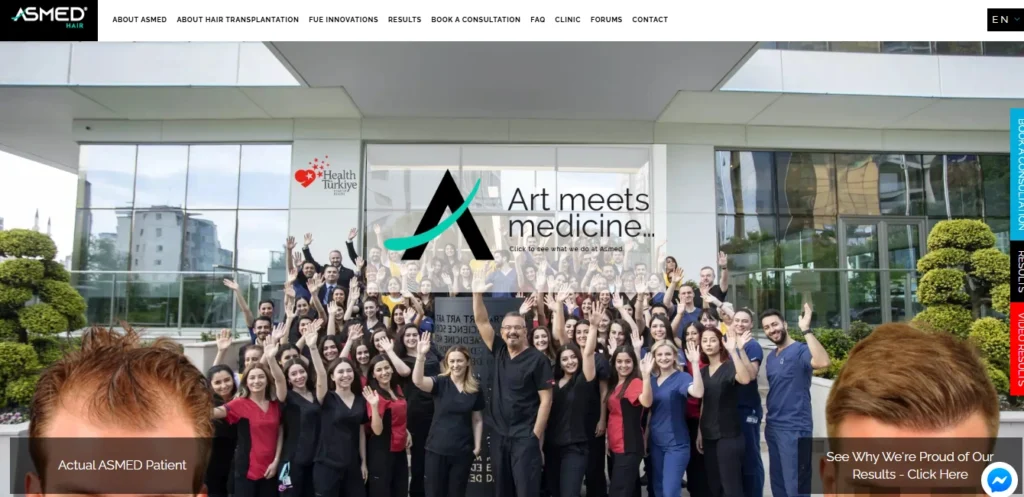
Internationally best known hair transplant clinic in Turkey managed by Dr. Koray Erdogan. Performing high-volume FUT & FUE combined transplants. Receives thousands of medical tourists each year. Competitive all-inclusive prices appeal to international visitors.
Doctor: Dr. Koray Erdogan
Location: Atatürk, Sedef Cd. No:1/1 34758 Ataşehir/İstanbul, Türkiye.
Phone No: +90 216 464 11 11
Website: https://www.hairtransplantfue.org/
#10 Smile Hair Clinic Istanbul, Turkey
Istanbul, Turkey | Medical Tourism Value Package
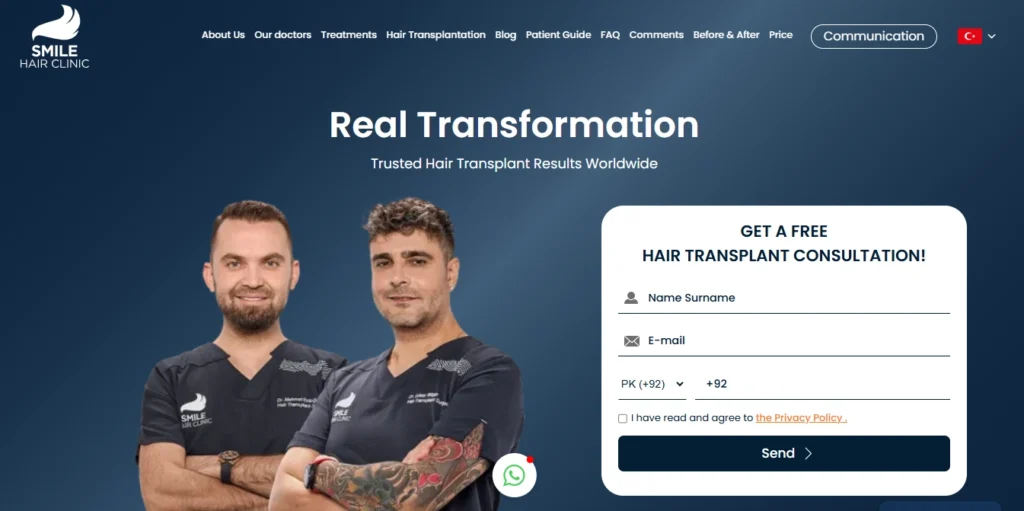
Innovative technology and clear, upfront, all-inclusive package pricing for international patients. Excellent online presence with documented, verified before & after photo. Great option for a hair transplant and holiday combination.
Doctor: Dr. Mehmet Erdoğan, Dr. Gökay Bilgin, Dr. Firdavs Ahmedov, Dr. M. Reşat Arpacı, Dr. Ali Osman Soluk
Location: Tatlısu, Alptekin Cd. No:15, 34774 Ümraniye/İstanbul, Türkiye
Phone No: +90 549 149 24 00
Website: https://www.smilehairclinic.com/
List of Top 30 Best FUT Hair Transplant Surgeons in the World 2026
| Rank | Surgeon | Location | Specialty |
|---|---|---|---|
| #1 | Dr. Robert Bernstein | New York, USA | Innovator of FUT; science-based restoration |
| #2 | Dr. Victor Hasson | Vancouver, Canada | FUT mega-sessions, maximum density |
| #3 | Dr. Jerry Wong | Vancouver, Canada | High-yield FUT, advanced baldness |
| #4 | Dr. Carlos Wesley | New York, USA | Complex repair & hairline reconstruction |
| #5 | Dr. Jerry Cooley | Charlotte, USA | FUT patient safety & natural results |
| #6 | Dr. John Bloxham | New York, USA | Precision FUT strip, minimal scar technique |
| #7 | Dr. Sanusi Umar | California, USA | Hairline artistry & complex repair |
| #8 | Dr. Rahal | Ottawa, Canada | High-density FUT, natural hairline |
| #9 | Dr. Koray Erdogan | Istanbul, Turkey | FUT/FUE combined, high-volume |
| #10 | Dr. Ron Shapiro | Minnesota, USA | Artistic design, transplant repair |
| #11 | Dr. William Rassman | Los Angeles, USA | Inventor of modern FUE technique |
| #12 | Dr. Bijan Feriduni | Hasselt, Belgium | Repair cases & artistic hairlines |
| #13 | Dr. Bessam Farjo | London, UK | FUT/FUE expertise & hair restoration research |
| #14 | Dr. William Lindsey | Virginia, USA | FUT megasessions & repair work |
| #15 | Dr. Ken Anderson | Atlanta, USA | Advanced FUE/FUT & regenerative therapy |
| #16 | Dr. Raghu Reddy | London, UK | Ethical manual FUE & dense hairlines |
| #17 | Dr. Muttalip Keser | Ankara, Turkey | Manual FUE pioneer |
| #18 | Dr. Luis Nader | Reynosa, Mexico | Natural results & donor preservation |
| #19 | Dr. Konior | Chicago, USA | Elite hairline artistry & dense packing |
| #20 | Dr. Christian Bisanga | Brussels, Belgium | Afro hair transplant & repair cases |
| #21 | Dr. Jean Devroye | Brussels, Belgium | High-density FUT/FUE procedures |
| #22 | Dr. Serkan Aygin | Istanbul, Turkey | Sapphire FUE & medical tourism |
| #23 | Dr. Hakan Doganay | Antalya, Turkey | DHI implantation specialist |
| #24 | Dr. Bruno Ferreira | Porto, Portugal | Natural hairline design |
| #25 | Dr. Jose Lorenzo | Madrid, Spain | Dense packing FUE expert |
| #26 | Dr. Jose Couto | Madrid, Spain | Elite frontal hairline restoration |
| #27 | Dr. Patrick Mwamba | Brussels, Belgium | Afro-textured hair restoration |
| #28 | Dr. Marcelo Pitchon | Sao Paulo, Brazil | FUT/FUE combined procedures |
| #29 | Dr. Thiago Bianco Leal | Sao Paulo, Brazil | High-density modern FUE |
| #30 | Dr. Zarev | Sofia, Bulgaria | Extreme graft cases & donor management |
FUT Hair Transplant: Full Advantages & Disadvantages
Advantages of FUT
- Max grafts harvested (3,000-5,000+) per session.
- Highest grafts survived (90-98%).
- Cheapest grafts compared to FUE.
- Perfect for advanced cases of hair loss (NW 5-7).
- Retains future supply of FUE donor hair.
- The best choice for hair transplant repairs.
- Does not require entire head to be shaved.
- Permanent results for life.
Disadvantages of FUT
- Linear scar on the donor site (under hair)
- Takes longer to heal than FUE (10-14 days)
- Cannot wear extremely short styles
- More discomfort to the donor site after operation
- Requires a visit to have stitches removed
- Requires a skilled surgeon for best scar result
Related Hair Restoration
Here is a guide to the most common topics involved in FUT hair restoration, with an overview of relevant areas:
Norwood scale hair loss androgenetic alopecia hair graft survival rate strip surgery scar trichophytic closure donor area density follicular unit transplantation hair transplant Turkey vs USA shock loss after transplant PRP hair therapy.
Hair transplant surgery to repair male pattern baldness is commonly done on more advanced states of inherited hair loss. Moreover, hair can be restored and natural hair coverage can be improved in female patients. Hair can be restored and natural hair coverage can be improved in female patients. In addition, these procedures improve the overall hair density and appearance.
In addition, the cost per graft in a hair transplant depends on several factors such as clinic location, surgeon skill, and the total number of required grafts. Moreover, it is important to choose an ISHRS-certified surgeon to ensure a safe and accurate procedure. Consequently, the long-term results tend to be more permanent and reliable. Therefore, following your surgeon’s aftercare instructions is essential for the best outcome.
The bald areas are implanted with grafts. This process ensures proper handling and natural aesthetics of the grafts. Therefore, FUT has the ability to move the highest number of grafts in a single session. In fact, it is commonly used for large-scale hair restoration. Furthermore, for this reason, it is considered one of the best methods for advanced hair loss cases. Therefore, it is often recommended for advanced hair loss ca
Moreover, it is highly effective for patients with severe hair loss. As a result, it is often preferred in such cases. In addition, this method helps surgeons achieve full coverage in a single session. Ultimately, it remains a reliable option for advanced restoration needs.
FAQs:
Q: What is FUT hair transplant?
FUT (Follicular Unit Transplantation) is a surgical hair restoration method which produces permanent results. A thin strip of skin is surgically removed from the permanent donor area on the back of your head. It is then microscopically separated into follicular units of 1–4 hairs and implanted into the balding areas. Moreover, FUT also has the capability to move the highest volume of grafts in a single session. Therefore, it is often considered one of the best procedures for advanced hair loss cases. In addition, it is very effective for patients with extensive hair loss. As a result, it is frequently preferred in such cases. Furthermore, this allows surgeons to achieve full coverage in a single session. Consequently, it remains a reliable option for advanced restoration needs.
Q: How much does FUT hair transplant cost in the USA in 2026?
FUT hair transplant costs in the USA range from $4,000 to $13,000 depending on location, number of grafts and the surgeon you choose. The priciest states are California and New York where a patient can spend anywhere from $6,500 – $13,000. However procedures with the same quality in states like Texas, Florida, and Pennsylvania will cost a fraction of that between $4,000-$10,000. Many people who are concerned about value while still focusing on the quality of the procedure will travel to those states.
Q: FUT vs FUE- which one is better for advanced baldness?
More grafts can be retrieved in one FUT session as opposed to FUE (3000-5000+). Furthermore, cost per graft is usually less in comparison to FUE. Also the viability rate of FUT grafts is greater (90-98%). It may be the more beneficial technique for extreme hair loss cases. Thus, FUT is a better procedure for advanced baldness (Norwood 5-7) whereas FUE is better for a patient wanting no linear scar with limited, but significant hair loss. Many surgeons advise a combination of both FUT and FUE for severe baldness.
Q: Does FUT leave a visible scar?
FUT leaves a linear scar on the donor area of your scalp. If the surgery is performed by a skilled surgeon with the correct stitch placement (trichophytic closure stitching) the scar will usually be very fine and can be easily concealed with medium length hair. Those wishing to wear hair very short would be better to opt for FUE or consider procedures such as FUE into scar or scalp micropigmentation.
Q: Is FUT hair transplant painful?
No, the procedure is performed using local anaesthetic and so there is no pain involved. After the operation it is quite normal to feel some discomfort, the tightness and sore donor site can feel sore and tight for 3-5 days and the pain involved with the procedure is usually only moderate or mild, it is well managed using prescription painkillers, patients find their pain reducing within 3-4 days of the procedure. Most patients say that post-operative discomfort is mild to moderate and is not anywhere near as bad as they originally expected.
Q: How long does FUT hair transplant recovery take?
Recovery- sutures removed after 10-14 days where after this stage most can return to normal routine. Most should be back at work within 2 weeks in office work. Total cycle for growth of the hair can take 9-12 months, the phase of shock loss within hair being shed, and regrowth about two weeks following.
Q: Is FUT still used in 2026?
This procedure is also very popular for cosmetic and medical hair restoration in 2026. Moreover, many leading ISHRS surgeons agree that it is the best option when a higher number of grafts is required due to severe hair loss. In addition, surgeons usually prefer FUT over FUE when a high yield of grafts is needed, as it reduces cost per graft and offers a higher graft survival rate. Therefore, it is used in many clinics, especially for patients with advanced hair loss.
Q: How many grafts can be taken in a single FUT session?
Generally, a FUT session yields approximately 3,000 grafts, depending on the size of the donor area and hair density. Moreover, when a surgeon has high experience and the patient has adequate donor density and good scalp laxity, the procedure can produce more than 5,000 grafts in a single session. In fact, clinics such as Hasson & Wong are well known for performing mega sessions, and they actively demonstrate FUT as a high-yield method. As a result, this characteristic makes FUT more beneficial than FUE in cases that require a large number of grafts.
Q: Are FUT results permanent?
Yes, as the hairs transplanted are taken from the back and sides of your scalp, where the follicles are genetically protected against miniaturization and fall-out caused by DHT (the hormone that causes male and female pattern hair loss). As the follicles retain this resistance to DHT in the new site where they are placed, they are permanent and will not fall out.
Q: Which is cheaper – FUT in Turkey or USA?
Moreover, clinics in Turkey charge much lower prices for FUT than in the US, typically ranging from $1,500 to $3,500. In contrast, clinics in the US usually charge between $4,000 and $13,000. Similarly, leading Turkish clinics such as Dr. Koray Erdoğan’s ASMED deliver excellent results using modern and effective techniques. However, US clinics follow strict medical standards and provide more accessible post-operative follow-up. Consequently, many patients prefer Turkey due to lower costs and satisfactory outcomes.
Conclusion: Is FUT Hair Transplant Right for You?
Up until now, it is one of the most effective and cost-effective ways to restore hair as of 2026. Patients with significant hair loss (Norwood stages 5-7) will be able to gain 3,000-5,000+ ever-growing grafts in a single surgery. The results provide natural-looking density, and the graft survival rate remains high. Therefore, many surgeons consider FUT a clinical gold standard compared to FUE. Moreover, they describe it as a more satisfactory option for patients, as it can provide equivalent or even better results. In addition, it is often available at the same or lower cost, which makes it a more practical and beneficial option for many people.
Ultimately the choice of which you pick will be down to yourself and depends on the following factors.
- Your Norwood scale (hair loss amount): FUT for Norwood 5+.
- Your ideal hairstyle: FUE for short hairstyles, FUT for medium +.
- Your budget: you get more grafts for your money with FUT.
- Your need for grafts to survive: FUT is the best as rates will be higher.
- The future need for the donor area: FUE would be saved for the future in this scenario.
FUT carried out by a board certified ISHRS member surgeon, will give high-density, permanent, natural, and life-transforming results.
Ready to Explore FUT Options?
Request an ISHRS hair restoration surgeon to analyze your donor area, Norwood classification, and recommend the appropriate procedure for your condition. Be sure to review the surgeon’s credentials thoroughly and inspect authentic before and after photographs. Also, check real patient testimonials for authentic accounts of the patient’s journey. Additionally, observe the transparency of consultations between the facilities. As a result, make sure you receive an accurate graft number estimate before you commit to any procedure.
Medical References & Sources
- International Society of Hair Restoration Surgery (ISHRS) – Clinical Practice Guidelines
- American Academy of Dermatology (AAD) – Hair Loss Treatment Guidelines
- Bernstein RM, Rassman WR. “Follicular Transplantation.” International Journal of Aesthetic and Restorative Surgery. 1995.
- PubMed Clinical Trials in Follicular Unit Transplantation – NCBI Database
- Mayo Clinic – Hair Loss: Diagnosis and Treatment Protocol
- IAHRS (International Alliance of Hair Restoration Surgeons) – Verified Surgeon Registry
Editorial & Medical Review
Written by: Wajiha Aqeel
Co-Founder & Hair Restoration Research Lead
Medically Reviewed by: Dr. Anam Sahibzada
Specialist Dermatologist & Trichologist
Data & publication oversight: Daniel Brooks
Co-Founder & Senior Operations & Data Director
Content reviewed by:
Mehwish Fareed
Clinical Aesthetician & Content Reviewer
Asma Shamshad
Medical Student & Content Contributor
Originally published: May 20, 2026
Research & content last reviewed: July 15 , 2026
Last medically reviewed: July 2026
Last updated: September 15, 2026
Medical & Affiliate Disclaimer:
The content on Hair Grow Needs is for general informational and educational purposes only and should not be considered professional medical advice. For full details regarding our policies, please read our official Disclaimer.