
Medical Disclaimer: This article is for informational purposes only and does not replace professional medical advice. Read our full Medical Disclaimer.
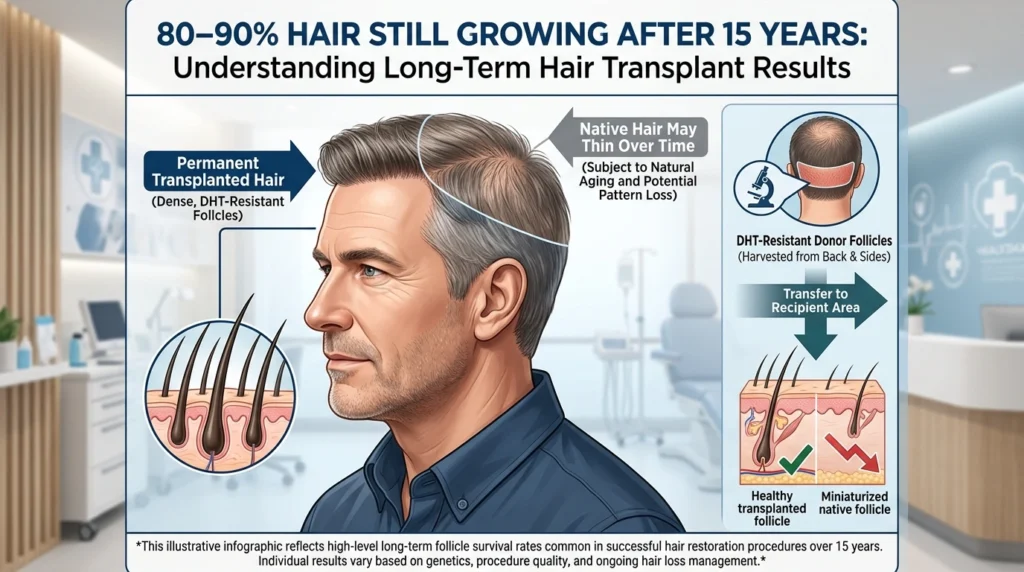
Does a hair transplant last forever? The follicles that are transplanted are permanently resistant to D.H.T (the hormone that causes patterned baldness) and will last for the lifetime of the patient. Ten to fifteen years after the transplant 80-90% of the transplanted hair will still be present, if it has been performed correctly. It should be noted that remaining native hair will thin over time due to continued ageing, unless further treatment in the form of Finasteride and Minoxidil is carried out as recommended by the majority of surgeons.
How Long Does a Hair Transplant Last
How long do the hair transplants last? Simply: permanently. However this can be said only for the transplanted hair follicles.
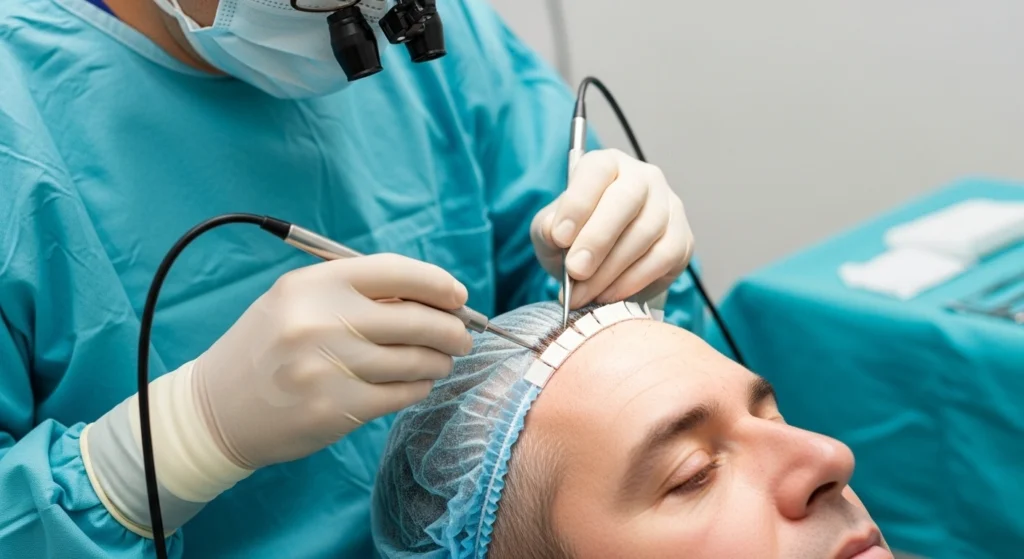
The hair transplantation procedure removes DHT-resistant hair follicles from the donor sites (back of scalp, temples, etc) and transplants them to areas experiencing hair thinning and loss. Since the follicles retain the inherited traits from the donor site after they are transplanted, they are resistant to DHT which is what causes androgenetic alopecia. This ensures the permanency of hair growth in the recipient area.
| Hair Type | How Long It Lasts | Why |
|---|---|---|
| Transplanted follicles | Lifetime – permanent | DHT-resistant genetics preserved after transplant |
| Native non-transplanted hair | May continue thinning | Still subject to DHT and aging |
| Overall appearance density | May change over decades | Native hair loss continues around transplanted zones |
That is why the question how long does a hair transplant last can be divided into two sections: the transplanted hair, and the resulting appearance.
Is Hair Transplant Permanent?
Yes, hair transplants are indeed permanent. The scientific principle is proven and backed by the ISHRS (International Society of Hair Restoration Surgery).
How DHT resistance makes transplants permanent:
The reason for androgenetic alopecia (male and female pattern hair loss) is that the follicles are sensitive to the presence of dihydrotestosterone (DHT) which is made from testosterone. The follicles on the top of the head and the front of the head are genetically determined to shrink and stop producing hair after sufficient exposure to DHT.
Follicles in the donor area at the back and sides of the scalp are resistant to DHT (have never miniaturized and never will). When transplanted to the recipient area these follicles keep this genetic programming. These follicles are permanent. They will grow on their new site in the same way as they will grow in their original site at the back and sides of the scalp.
| Fact | Detail |
|---|---|
| DHT resistance | Donor follicles retain resistance after transplantation |
| Genetic programming | Follicle genetics do not change based on location |
| ISHRS position | Transplanted follicles should be permanent if correctly harvested |
| Graft survival rate | 90 – 97% at board-certified clinics |
| Long-term retention | 80 – 90% of transplanted hair present at 10 – 15 years |
A permanently transplanted hair is not permanently the same looking as they were in earlier years. The aging continues on the surrounding scalp. In non transplanted areas the existing hair could gradually become thinner in years leading to contrasting densities of transplanted areas and existing surrounding hair. This explains why long term plan and use of medicines are important.
Results Timeline Month by Month
A firm grasp on the entire process and time frame is needed in order to accurately gauge how long hair transplants last and what to expect from it.

| Stage | Duration | What Happens | What to Expect |
|---|---|---|---|
| Shock loss | Weeks 2 – 4 | Transplanted hairs shed temporarily | Normal – follicle survives beneath skin |
| Dormant phase | Months 1 – 3 | Minimal visible growth | Patience required |
| Early growth | Months 3 – 5 | Fine new hairs emerging | First signs of progress |
| Visible improvement | Months 6 – 9 | Density noticeably increasing | Hairline shape becoming clear |
| Significant results | Months 9 – 12 | 70 – 80% of final density visible | Most patients see strong improvement |
| Final results | Months 12 – 18 | Full mature density achieved | Complete natural appearance |
| Long-term stability | Years 1 – 5 | Transplanted hair stable and growing | Maintenance medications recommended |
| Decade results | Years 10 – 15 | 80 – 90% of transplanted hair retained | Native hair may have thinned around zones |
In the early stages following transplantation, transplanted follicles lie dormant to cope with the trauma of surgery. The hair shaft is shed while the follicle stays alive within the skin and grows from month 3 onwards. This period of resting is universal and an expectation, not a problem.
10–15 Year Long-Term Results Data
However, and more importantly for the patient who decides to undertake this procedure is not just “how long does hair transplant last for 1st year”. More critically, how does hair transplant look in 10 years time.
| Timeframe | Transplanted Hair Retention | Native Hair Status | Overall Appearance |
|---|---|---|---|
| Year 1 | 90 – 97% of grafts growing | Stable with medications | Excellent |
| Year 3 – 5 | 90 – 95% retained | Some native thinning possible | Very good |
| Year 5 – 10 | 85 – 93% retained | Progressive native thinning | Good – may need touch-up |
| Year 10 – 15 | 80 – 90% retained | Significant native thinning possible | Good with maintenance medications |
| Year 15+ | 75 – 88% retained | Continued native loss | Additional session may be needed |
Source: Clinical results-pooled data from ISHRS member surgeon data reports, long term Bosley Medical studies, and 10 year Ziering Medical studies
What the 80 – 90% at 10 – 15 years means:
A realistic outcome is that, following a single FUE procedure of 2,500 grafts, 2,000-2,250 of these grafts will still grow naturally in 10-15 years, if a board certified surgeon with correct handling technique performed the procedure and the post-op procedure was adhered to.
The native hair problem:
It’s because the surrounding non transplanted hair is losing due to the continue androgenetic alopecia. The transplanted areas are still dense but the adjacent native hair are thinning so creating the visual appearance which urge patients for a second procedure (10-15 year mark).
Key Factors That Affect How Long Hair Transplant Lasts
1. Surgeon Expertise and Graft Handling
By far the most important factor determining the longevity of hair transplant is the survival rate of grafts during the operation. Grafts sit out of the body during the extraction to implantation stage, and when the follicle is not properly managed, dried out, or allowed to vary significantly in temperature, the follicle can suffer irreversible damage even before it is planted.
Board-certified physicians in ABHRS certified clinics store grafts in precise storing solution (HypoThermosol or chilled normal saline) keep the time out-of-body to minimum and manage follicles with microscopic precision. The 60-75% graft survival rate often experienced in technician-driven procedures in low-cost clinics as compared to the 90-97% by qualified physicians is the determinant of long-term outcome.
2. Donor Hair Quality and Density
| Donor Factor | Impact on Longevity |
|---|---|
| High donor density | More grafts available = better coverage |
| Healthy follicle structure | Higher survival rate after transplant |
| DHT resistance strength | Determines permanent growth reliability |
| Over-harvested donor zone | Reduced future session options |
3. Technique Used
Both FUE and FUT create permanent results, but how the graft is taken will determine its success and consequently how the results look ten years on due to the differences in graft survival rates. Higher graft survival rates can be achieved with the newer Sapphire FUE and DHI methods at 92-97%, compared with 88-92% with standard FUE, or in the worst cases, even lower.
4. Post-Operative Care
The first two weeks post-operation are the most vital. Any grafts dislodged during this period do not regenerate, but instead are lost forever. Those patients who comply perfectly with post operative procedure (no touching, correct washing techniques, no sun exposure, no alcohol, no smoking) have reliably higher graft survival and ultimately higher density.
5. Age at Time of Procedure
| Age at Transplant | Long-Term Consideration |
|---|---|
| Under 25 | Higher risk – hair loss pattern not stabilized, future loss may require additional sessions |
| 25 – 35 | Moderate risk – loss may continue, maintenance medications essential |
| 35 – 50 | Lower risk – loss pattern more stable, results more predictable |
| 50+ | Most predictable – loss largely complete, single session often sufficient |
6. Maintenance Medications
Finasteride and Minoxidil have no effects on transplanted hair but prevent the loss of existing (native) hair from the damaging effects of DHT. A comparison of those patients on regular maintenance medication over 10-15 years with those discontinuing medication postoperatively shows considerably greater results with maintenance medication over time.
7. Lifestyle Factors
| Lifestyle Factor | Impact |
|---|---|
| Smoking | Reduces scalp blood flow – impairs graft survival and long-term growth |
| Chronic stress | Triggers telogen effluvium – affects native hair density |
| Poor nutrition | Protein, iron, zinc deficiency accelerates native hair loss |
| Alcohol (post-op) | Increases swelling – risks early graft displacement |
| Sun exposure (early) | UV damage to healing grafts in first 4 weeks |
FUE vs FUT Which Lasts Longer?
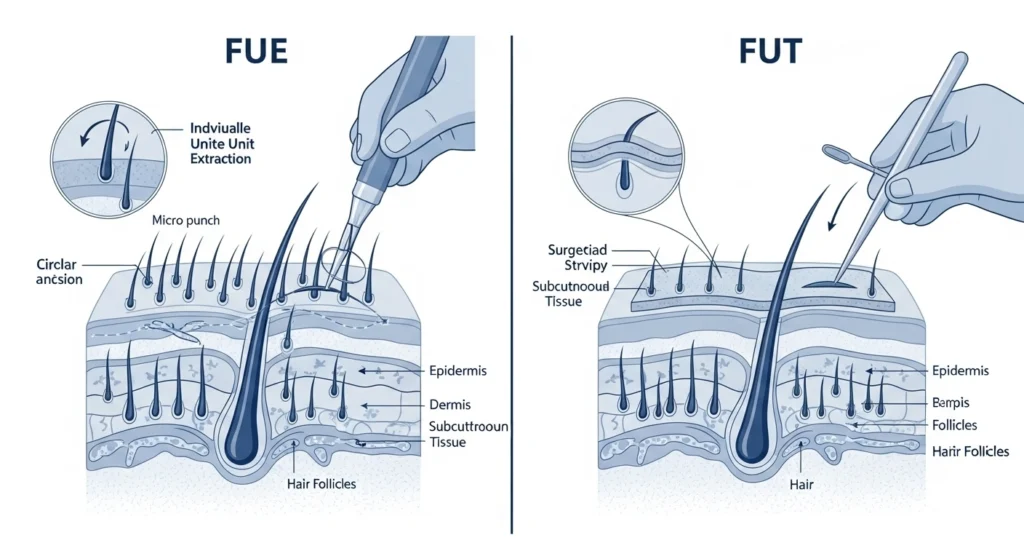
| Feature | FUE | FUT Strip |
|---|---|---|
| Longevity of transplanted hair | Permanent | Permanent |
| Graft survival rate | 88 – 96% | 90 – 95% |
| Scarring | Tiny dot scars | Linear scar |
| Recovery time | 7 – 10 days | 10 – 14 days |
| Max grafts per session | Up to 4,000 | Up to 5,500+ |
| Long-term density | Excellent | Excellent |
| Best for | Natural results, short hair | Maximum grafts, large sessions |
| 10-year retention | 80 – 90% | 82 – 92% |
FUE and FUT both achieve equally permanent results. The marginal better density 10yr with FUT due to the slightly greater number of grafts per session in advanced cases-yet the reduced scarring with FUE and reduced recovery period will often make FUE the preferred option.
How to Make Hair Transplant Results Last Longer
To prolong the effects of a hair transplant as much as possible, the prime strategy will focus on protecting your existing hair against continuing DHT loss:
Essential (Do These)
| Strategy | How It Helps | When to Start |
|---|---|---|
| Finasteride 1mg daily | Blocks DHT – protects native hair from continued loss | 3 – 6 months before surgery |
| Minoxidil topical/oral | Stimulates native hair growth, extends follicle lifespan | Immediately post-procedure |
| PRP therapy sessions | Growth factors support graft survival and native hair | 1, 3, 6 months post-op |
| Annual scalp assessment | Monitors native hair density, plans future needs | Every 12 months |
Recommended
| Strategy | Benefit |
|---|---|
| Balanced protein-rich diet | Feeds follicle growth cycle |
| Quit smoking | Improves scalp blood flow significantly |
| Stress management | Reduces telogen effluvium risk |
| SPF 50+ scalp protection | Prevents UV damage to grafts in first 6 weeks |
| Gentle washing protocol | Protects grafts in first 14 days |
Advanced
| Strategy | Benefit |
|---|---|
| Low-level laser therapy (LLLT) | Stimulates miniaturized native follicles |
| Exosome therapy | Emerging regenerative support for scalp health |
| Nutritional supplementation | Biotin, zinc, iron – address deficiency-driven loss |
Signs Your Hair Transplant May Not Last
Early warning signs (Months 1–12):
| Sign | Meaning | Action |
|---|---|---|
| No growth at month 6 | Possible graft failure | Contact surgeon immediately |
| Uneven patchiness at month 9 | Inconsistent graft survival | Consultation required |
| Persistent redness beyond month 3 | Possible infection or folliculitis | Medical evaluation needed |
| Grafts visibly dislodged week 1 – 2 | Premature loss – not reversible | Follow strict aftercare |
Long-term warning signs (Years 1 – 10)
| Sign | Meaning | Action |
|---|---|---|
| Density declining in transplanted zone | Possible non-DHT-resistant grafts were used | Surgeon consultation |
| Rapid native thinning around transplant | DHT-driven loss continuing | Medication review |
| Hairline recession beyond transplanted area | New loss in untreated zones | Second session planning |
Do You Need a Second Hair Transplant?
Some 10-20% of patients require and return for a second session of hair transplantation within a period of 10-15 years. Reasons are nearly invariably related to persistent native hair loss and not graft failure.
When a second transplant is needed:
| Reason | Timeline | Solution |
|---|---|---|
| Native hair thinning around transplanted zones | 5 – 15 years post-op | Additional FUE session |
| Inadequate density from first session | 12 – 18 months | Touch-up session |
| Hair loss progression to new areas | 5 – 20 years | New session for new zones |
| Initial under-correction | After final results | Revision session |
Second transplant eligibility depends on:
- Area density of leftover donor sites
- Number of grafts harvested so far
- Current Norwood stage
- Age and stability of pattern loss
Cost of Maintaining Hair Transplant Long-Term
| Item | Annual Cost | 10-Year Cost |
|---|---|---|
| Finasteride (generic) | $240 – $720 | $2,400 – $7,200 |
| Minoxidil (topical) | $200 – $600 | $2,000 – $6,000 |
| Annual scalp check | $100 – $300 | $1,000 – $3,000 |
| PRP sessions (optional) | $1,500 – $4,500/year | Variable |
| Second transplant session | $4,000 – $15,000 (if needed) | One-time |
| Total 10-year maintenance | Variable | $5,400 – $16,200+ |
Contrast this with the expenses of wigs ($500-5,000/year = $5,000-50,000 over 10 years) or toupees; hair transplant is the cheapest permanent alternative, given that proper maintenance is taken care of.
Common Myths About Hair Transplant Longevity
| Myth | Fact |
|---|---|
| Hair transplants only last 5 – 10 years | Transplanted follicles are permanent – 80 – 90% present at 15 years |
| Transplanted hair will fall out again | DHT-resistant donor follicles do not miniaturize post-transplant |
| You’ll need a new transplant every few years | Most patients need at most 1 – 2 lifetime procedures |
| Results look good immediately | Full results take 12 – 18 months |
| Cheap clinics get same permanent results | Graft survival varies 60 – 97% – surgeon quality directly affects longevity |
| Medications are optional after transplant | Medications protect native hair – essential for long-term appearance |
FAQs:
Q: How long does a hair transplant last?
Transplanted hair follicles are permanent. These follicles are resistant to DHT and continue to grow throughout your life. After 10-15 years, a well-performed hair transplant should maintain 80-90% of all transplanted hair. While transplanted hair does not shed, other, non-transplanted hair will continue to age and shed due to ongoing androgenetic alopecia over time, affecting the overall aesthetic.
Q: Is hair transplant really permanent?
Yes. Hair follicles used in transplants are taken from a donor area which is inherently DHT-resistant, and it retains its resistance after transplantation. The ISHRS agrees that a properly transplanted hair follicle should grow a hair permanently. In themselves, the transplanted hairs are permanent, although the native hair may continue to shed and a touch-up transplant might be necessary.
Q: How long does hair transplant last without medication?
Transplanted hair is itself permanent, with or without medication. The non-transplanted hair will, however, continue to thin over time with androgenetic alopecia unless managed with Minoxidil or Finasteride and could make a visible difference with 5-10 years from the time of the surgery.
Q: What percentage of hair transplants are still visible at 10 years?
Available clinical data indicates that at 10-15 years from the surgery 80-90% of properly transplanted grafts should remain and continue to grow. Poorly performed grafts, by poorly experienced teams handling the grafts very poorly, result in significantly lower survival rates.
Q: Does FUE last longer than FUT?
FUE and FUT result in hair which is equally permanent. Graft survival rates are 88-96% for FUE versus 90-95% for FUT; the choice depends on preference and scarring considerations. Transferred follicles last for a lifetime in both procedures.
Q: How long does hair transplant shock loss last?
Shock loss, temporary loss of transplanted hair, can occur between weeks two to four after the surgery and may last approximately 4 to 8 weeks. The hair follicle, however, remains alive under the scalp and starts to regenerate new hair around month three. Shock loss is a normal part of the healing and growth process and not an indicator of a failed transplant.
Q: When do you need a second hair transplant?
A second transplant is normally considered by around 10-20% of patients 10 to 15 years after the initial transplant to address the effects of on-going androgenetic alopecia and loss of native hair. A second transplant should be performed at the appropriate time relative to loss of density in the original untreated hair, your age, Norwood class and residual donor capacity.
Q: Can a hair transplant fail permanently?
Permanent failure is possible but exceedingly rare and usually due to error in the procedure such as damaging the follicular integrity with an extraction tool (in FUE), drying out the grafts during the process (storage problems), premature dislodgement in the first 14 days after surgery or severe infection. Qualified ABHRS certified surgeons boast 90-97% graft survival.
Conclusion
So how long do the results of a hair transplant last? The short answer is, forever – a DHT resistant set of genetics maintained during transplantation should guarantee permanent growth for 80-90% of properly transplanted grafts even at the 10-15 year point.
Of course, long term “permanence” in transplantation can be confusing, since implanted grafts, and overall cosmetic results differ – native native transplanted hair will still age and thin, meaning maintenance medications, year check ups, and careful, realistic long term planning with your surgeon are as critical as the transplant itself.
Selecting a board-certified ABHRS surgeon, following post-operative care guidelines to the letter, and taking prescribed medications every day are the three most patient-controllable factors-and are likely the three most important in ensuring your hair transplant result continues to look it’s best for as long as possible.
Editorial & Medical Review
Written by: Wajiha Aqeel
Co-Founder & Hair Restoration Research Lead
Medically Reviewed by: Dr. Anam Sahibzada
Specialist Dermatologist & Trichologist
Data & publication oversight: Daniel Brooks
Co-Founder & Senior Operations & Data Director
Content reviewed by:
Mehwish Fareed
Clinical Aesthetician & Content Reviewer
Asma Shamshad
Medical Student & Content Contributor
Originally published: April 25, 2026
Research & content last reviewed: July 2026
Last medically reviewed: September 2026
Last updated: September 15, 2026
All clinical results discussed are from reports of ISHRS member surgeons, long term studies performed by Bosley Medical, and follow-up data from Ziering Medical. All content in this article is for information purposes only and should not be substituted for an examination by a board-certified hair restoration surgeon.
Sources:
ISHRS – ishrs.org | ABHRS – abhrs.org | Healthline Hair Transplant Guide | Bosley Medical Clinical Data | Ziering Medical 10-Year Follow-Up | American Academy of Dermatology – aad.org
Medical & Affiliate Disclaimer:
The content on Hair Grow Needs is for general informational and educational purposes only and should not be considered professional medical advice. For full details regarding our policies, please read our official Disclaimer.