
Medical Disclaimer: This article is for informational purposes only and does not replace professional medical advice. Read our full Medical Disclaimer.
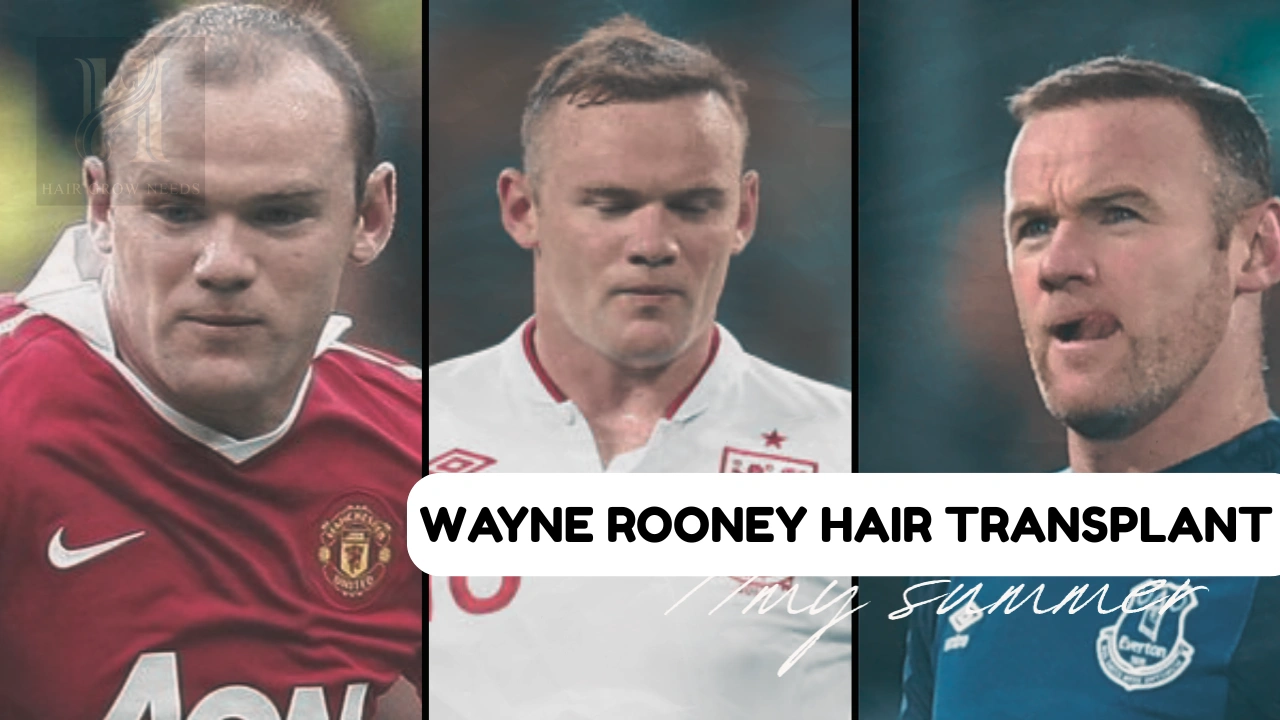
Wayne Rooney’s willingness to go public about his hair transplant made hair restoration more of a mainstream talking point.
Let’s call a spade a spade. When most guys first registered that Wayne Rooney was going bald they weren’t considering hair transplants. They were considering football. But somehow, somewhere between 2011 and now, the ground quietly shifted – and a single public discussion about a hair transplant from one footballer became a game changer for the hair restoration industry as we know it today.
The Wayne Rooney hair transplant is more than the journey of a single man’s hairline; it’s the story of a famous face choosing to not lie. It’s a story that put ‘before and after’ photographs into the hands of millions; and, for many men sitting in a barber’s chair with a shrinking forehead, it became the “Oh, that is actually achievable” moment.
This guide explains the details from the exact type of procedure, to costings (for the US patients) and recovery times, candid and expert opinion, country comparisons and all the unanswered questions that young men in their 20’s and 30’s are still looking for in 2026.
Why the Wayne Rooney Hair Transplant Became a Global Story
In Hollywood and pro sports, celeb hair transplants existed behind the scenes, until the year 2011. No one admitted it. P.R. Departments put out denial letters. The results either gave themselves away by being obvious, or blended in seamlessly enough to become invisible. It was all whispered, on the down-low.
That was all turned on its head completely, and it wasn’t an accident. Wayne Rooney, a global superstar football player, aged 25 at the time-a mere boy who was already the face of the sport around the world-was photographed, hair visibly thinning-hair that millions had watched recede on stadium lights, or high definition television screens. There was no way to miss his receding hair line. There was no way to deny it.
He got on twitter-which wasn’t that old then-and then he said something that shook a lot of people. He wrote, plainly, that he’d just undergone the Wayne Rooney hair transplant operation, and that he was looking forward to it. No shame. No qualifiers. Just one of the most visible men on earth being up-front about a procedure he’d obviously spent time considering.
Why This Mattered To The Hair Restoration Industry
At 25, sporty, a world-renowned and masculine figure, Rooney threw open the doors of hair transplant options to the consciousness of millions of young men who had previously never believed the solution could be “for real.” His public declaration undoubtedly succeeded in bringing hair transplantation more into general public discussion, although the extent of the rise (if any) in clinic inquiries can be tough to establish.
It was the timeliness as well. The FUE process was mature enough by 2011 that an effective procedure could truly look natural. Not a hair plug the way they did in the 1980’s that represented an embarrassing past era of hair restoration. Rooney’s candid confession came along at precisely the right scientific moment.
What Procedure Did Wayne Rooney Actually Have?
The Harley Street Hair Clinic identifies Wayne Rooney’s procedure as an FUE (Follicular Unit Extraction) hair transplant. Its published case information records a 2013 procedure involving 3,500 grafts and notes that this was the planned second phase of treatment that had begun in 2011.
FUE involves removing individual follicular units from the donor area and transplanting them into areas affected by hair loss. Unlike FUT, which involves removing a strip of scalp tissue, FUE generally avoids the single linear donor scar associated with FUT, although individual extraction scars can remain.
Here’s how it really works. A skilled surgeon uses a punchtool-usually 0.7-1.0mm in diameter-to extract individual follicular units from the donor sites (generally at the back of the head, sides of the scalp). Each follicular unit will consist of 1-4 hairs. It is then transplanted into a small incision in the recipient sites (the balding or thinning area).
The difference with FUT (Follicular Unit Transplantation), which has been replaced as the number one technique, is that a linear strip of tissue has to be excised leaving a linear scar which, unless carefully hidden, may not be acceptable to someone in a profession that allows hair styles short lengths.
FUE generally avoids the linear donor scar associated with FUT, although it can leave multiple small scars. The result from this procedure is tiny dots rather than a strip scar, these are generally not noticeable even with extremely short hairstyles.
FUE Advantages That Made It Right for Rooney’s Profile
Linear scar Minimal recovery time Realistic hairline design Possible to wear hair very short survival rate if performed by a good surgeon.
If you’re interpreting photographs, explicitly label it as visual interpretation rather than fact. On the front hairline reconstruction and the temples, as these were the most visible area of hair loss for Rooney at that age. Some visual assessments may place Rooney’s early hair loss within the Norwood III range, but this is an interpretation of photographs rather than a documented clinical classification.
Interestingly, HSHC’s 2013 page itself lists Norwood 3V.
Why Hairline Design is The Most Important Part of The Entire Surgery
One area which isn’t always discussed in detail concerning celebrity hair transplants is the artistic aspect. This is because the technical procedures for both taking and placing the grafts is only one aspect of a hair transplant. The hairline design constitutes the other half and determines whether the procedure looks natural or ‘surgical’.
A hair restoration specialist must evaluate and factor in the direction and angle of the patient’s existing hair, the contours and shape of their face, their age and what they may expect hair to continue to do in the future before a first hairline is ever drawn.
Implantation at an angle slightly off by a few degrees will mean no amount of styling could ever save it. The consistent and natural reading to the public by Rooney must mean he had a surgeon that addressed the hairline design skillfully.
Graft Count and What It Means for Your Own Hair Loss
The hair restoration experts analyzing the before and after photos of Wayne Rooney’s hair transplant believe the first transplant involved somewhere between 1500 to 2000 grafts. This number falls somewhere in the mid range for frontal hairline transplants.
To get a perspective, each graft can contain between one to four hair follicles. At 2.5 hairs per graft (average) 1750 grafts would be the transplantation of 4375 hair follicles. While this might sound like a high number, the average head of hair has 100,000 hair follicles, and a hair transplant will not ever replant all of your hair; it restores the most visually important areas and thickens your hair line.
Important Reality About Graft Estimates
All of the graft numbers you hear reported with these procedures (including Rooney’s) is the result of estimation based on the appearance and there are no actual records released for public consumption as Rooney or his clinic never gave a definitive number.
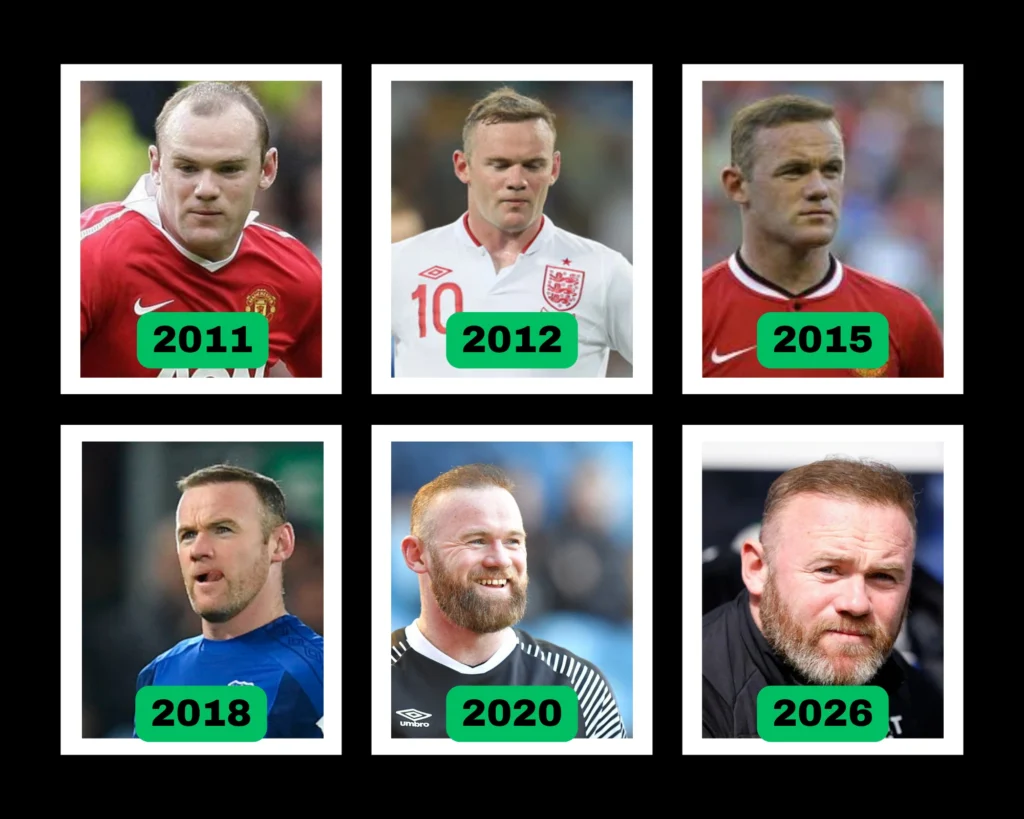
Numbers aside, it’s what the multi-session story is about that is truly more significant. Rooney, as is the case with most young men undergoing a hair transplant in his mid-20s, kept losing hair in the region surrounding the transplanted regions in the ensuing years.
This is not an indication that the transplant was performed poorly; this is simply biology at work. DHT-sensitive hair follicles that were not transplanted can still be influenced by dihydrotestosterone and that will lead to the male pattern balding process continuing.
That is why prudent surgeons always approach a hair transplant in a young patient planning for future hair loss; the idea is to ration the donor hair that the patient has available such that further surgeries are available to accommodate decades of male pattern balding.
Wayne Rooney Hair Transplant Cost in 2026
There is no definite figure that has been released for the cost of Wayne Rooney’s hair transplant. Figures from media sources have fluctuated over the years, but these figures reported should be viewed as figures that have been reported as the cost but are unofficial.
FYI hair-transplant cost today differs significantly by country, the surgeon, the number of grafts, the technique utilized, as well as the facility. Therefore, you will not able to establish your own potential medical-care cost based on the hair transplant costs your idol incurred or what you saw online.
| Cost factor | Figure | Evidence / interpretation |
|---|---|---|
| Reported 2011 cost | £30,000 | Reported by contemporary media; not an official clinic invoice |
| 2013 grafts | 3,500 | Published by Harley Street Hair Clinic |
| 2013 procedure type | FUE | Published by Harley Street Hair Clinic |
| 2011 graft count | Not publicly confirmed | No reliable primary figure identified |
| Rooney’s total lifetime cost | Not publicly confirmed | Should not be estimated as fact |
Contemporary reporting did indeed report £30,000 in 2011. TNT reported that figure and Rooney’s own statement that he had the procedure at Harley Street Hair Clinic; the Evening Standard also reported £30,000.
Public graft calculations Rooney underwent a graft operation in 2013 – total published information provided by his transplant clinic indicate 3,500– the details for this transplant were in the form of a case report (hshairclinic) – the amount of grafts used for his first surgery in 2011 however weren’t published on its behalf.
USA vs UK vs Turkey: Honest Country Comparison
One of the first and perhaps most common research expeditions following the Wayne Rooney story involves people comparing what other countries can offer. For the American patients researching treatment in countries with a considerably cheaper procedure,Turkey in particular has become quite an issue. Let me present a fair evaluation.
| Factor | USA 🇺🇸 | UK 🇬🇧 | Turkey 🇹🇷 |
|---|---|---|---|
| Typical reported cost range | $4,000 – $18,000+ | £4,000 – £15,000+ | $1,500 – $5,000+ |
| ABHRS certification available | also verify state medical licensure and surgeon-specific credentials | Verify GMC registration and surgeon qualifications | Verify the physician performing the procedure and the clinic’s licensing/credentials |
| Regulatory considerations | State medical licensing and healthcare regulations apply | GMC and UK healthcare regulations apply | Regulations and oversight vary; international patients should verify clinic and physician credentials carefully |
| Follow-up care | Generally easier for U.S. residents receiving treatment domestically | Generally easier for UK residents receiving treatment domestically | International patients may need to travel for treatment and should plan how complications or follow-up will be handled |
| Techniques available | FUE, FUT and other techniques may be available depending on the surgeon and clinic | FUE, FUT and other techniques may be available depending on the surgeon and clinic | FUE, FUT and other techniques may be available depending on the surgeon and clinic |
| Main consideration | Surgeon qualifications, planning, follow-up and total cost | Surgeon qualifications, clinic standards, planning and follow-up | Careful clinic and surgeon vetting, technician involvement, travel and follow-up |
| Best suited to | Patients prioritizing domestic care and easier follow-up | Patients prioritizing domestic care and established private healthcare options | Patients seeking potentially lower prices who are willing to research providers carefully |
All cost figures contained in this comparison guide are average market price indication only and may not necessarily reflect your overall citywide or nationwide price, especially given there is wide variation in procedure costs based on numerous factors such as the following; count of grafts to the head, the skill and experience level of your surgeon, surgical methodology, hair transplant center, complexity of your hair condition and inclusion in package options.
Turkey boasts some of the world’s best hair transplant surgeons. However, there is also a high number of “hair mills” massive clinics where technicians do most of the work and the surgeon merely oversees things. If you’re looking at Turkey, the results you get from the top of the line clinic in Istanbul can be a world away from those you’ll get from the cheap outfit next door. The price you pay isn’t a guide to quality.
Before and After Results: What Changed and What Didn’t
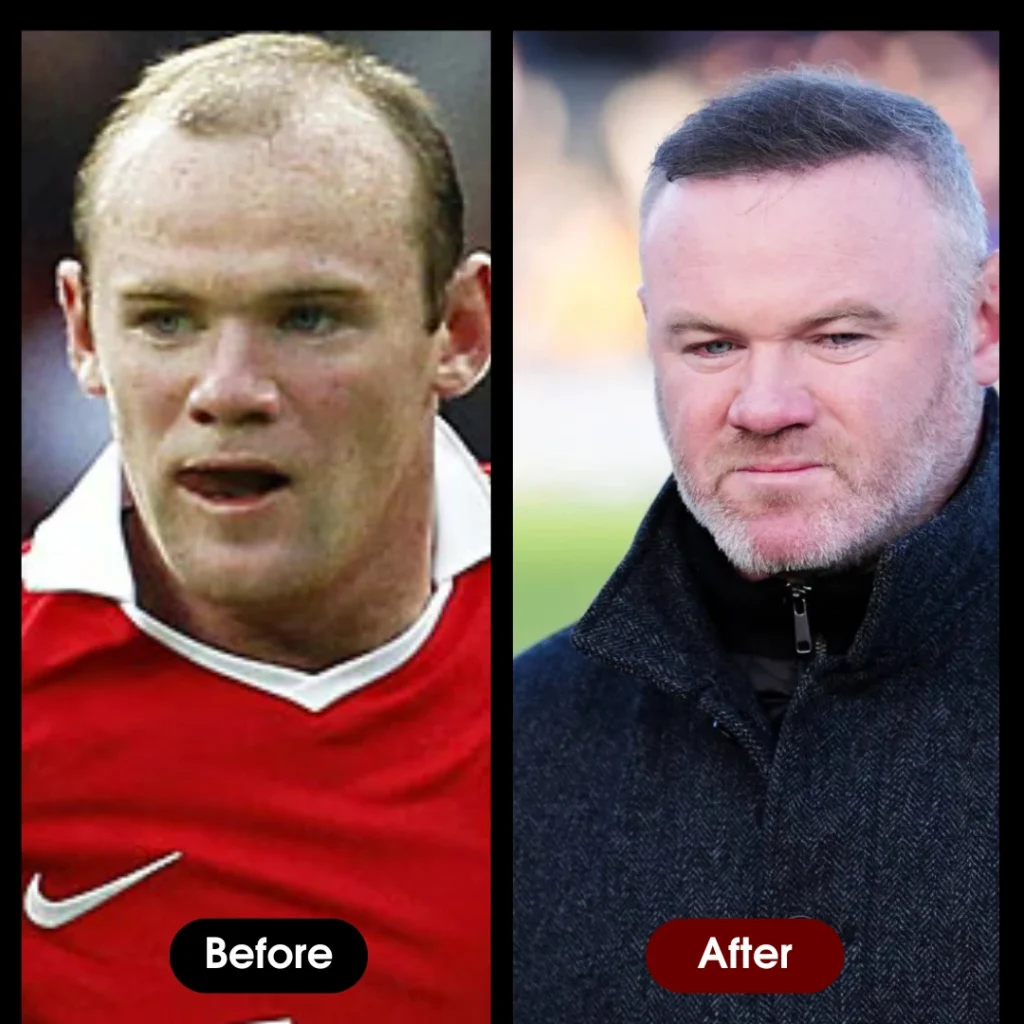
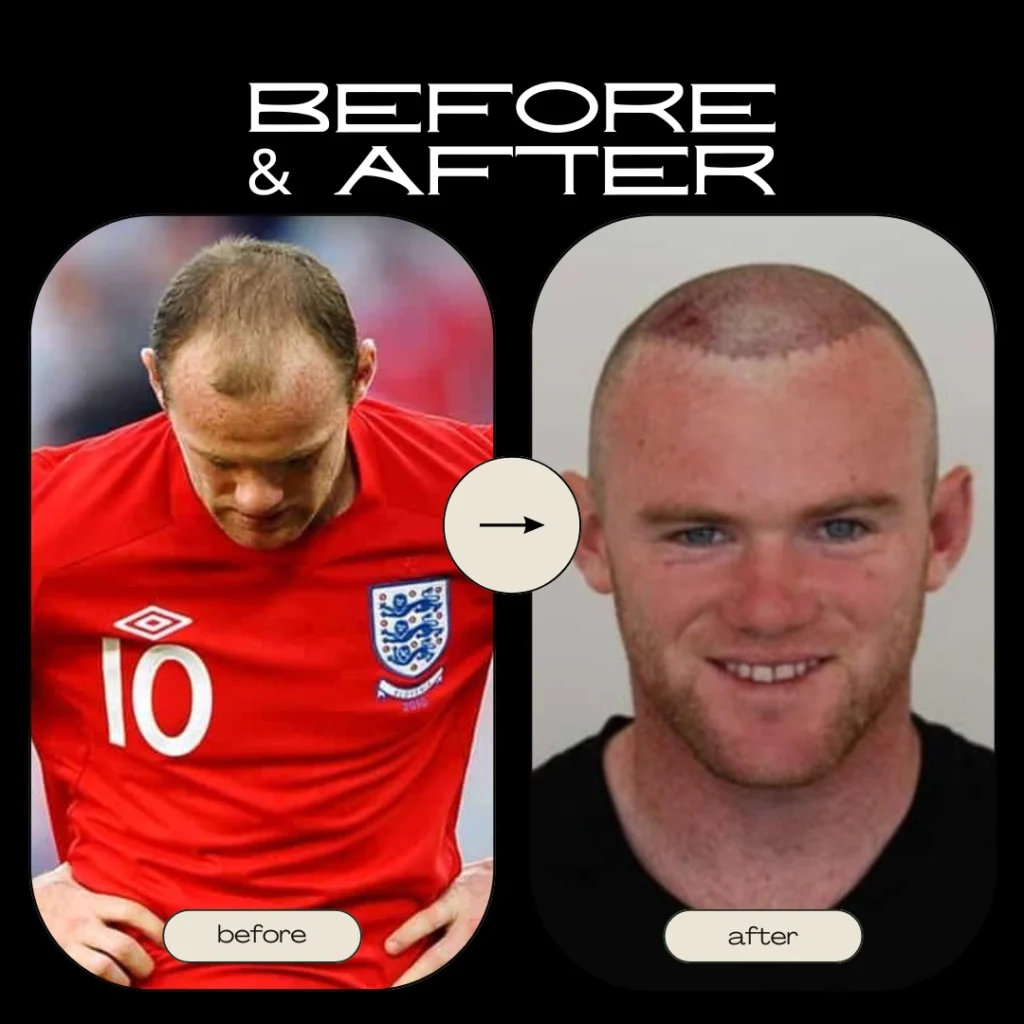
Wayne Rooney hair transplant before and after comparison was one of the most talked about celeb hair restoration in the history of the internet because there was a visible difference which could be measured and – more crucially – it was credible.
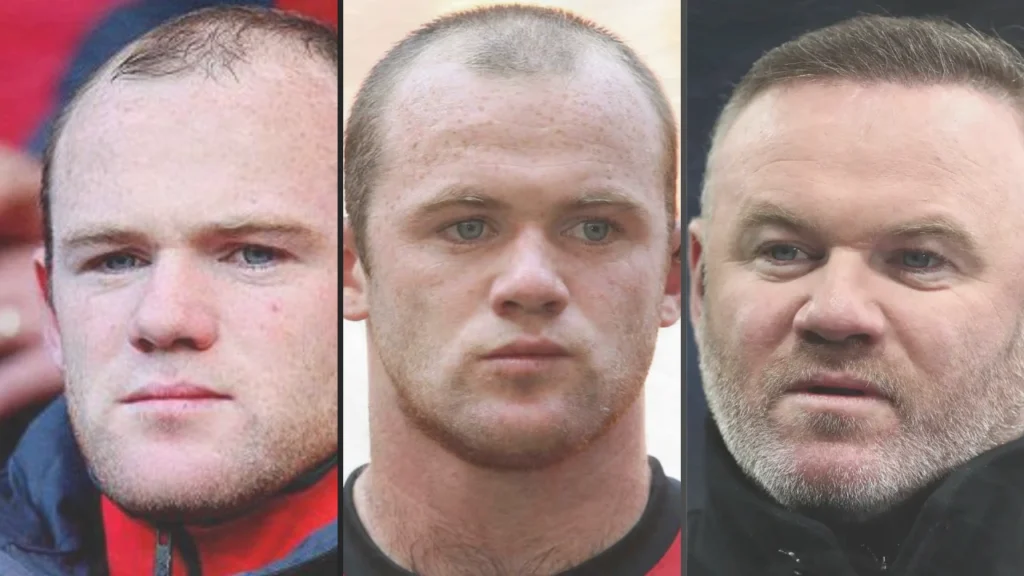
The before pictures revealed a temples-receding hairline in a classic M-shaped opening that made Rooney look a much older age than he was. The hairline at the front of his head was withdrawing and under the intense floodlights of a televised match, there was no hiding it; his hair was thinning and going further back from his forehead and into his head.
The after pictures paint an entirely different picture. His frontal hairline has been restored to its rightful place, density has been re-instated at his temples and his overall facial frame looks more youthful and in proportion. Most critically however, it did not look like a wig, hair system or a surgical implant – it looked like Rooney’s own hair.
What People Often Miss About Celebrity Before and After Photos
Before and after pictures before and after are almost always taken in perfect conditions – excellent lighting, professional styling and at the right time after recovery. That doesn’t make the result fake; it just means that the actual everyday result is a little bit less than what it appears in pictures due to factors such as lighting, how hair is styled and hair density of the transplanted area.
The honest reply for most patients with a similar pattern of loss as Rooney’s first procedure is the following: a competent FUE hair transplant procedure will restore your hairline and improve your confidence, however, it will not result in a hairline reminiscent of your late teenage years, but instead one that is strategic, looks natural and lasts a life time.
Does a Hair Transplant Actually Look Natural?
This is perhaps one of the biggest questions surrounding the Wayne Rooney story, and so here’s the definitive answer: yes, a modern FUE hair transplant can look absolutely natural; providing certain parameters are met.
These parameters are: a skilled hairline-designing surgeon; correct graft angulation mirroring natural hair growth; correct density application (not creating the ‘doll hair’ look); an adequate amount of healthy follicles to harvest; and realistic goals and expectations.
Where the results do not look natural, and this does occur more often than the industry likes to promote, it typically is a result of poor hairline design; over ambition on the density target and a failure to have sufficient donor follicles; or bad graft angulation.
The single question that separates great clinics from average ones;
Inquire with every clinic you are considering, “Am I allowed to speak with the surgeon that is designing and executing my hairline?” If you receive any evasive answer, are directed to a consultant, or given any hint that a technician will be the one performing your procedure, run.
Complete Recovery Timeline: Month by Month
One of the scariest elements of a hair transplant decision is what the recovery actually involves. The recovery timeline is pretty consistent after a hair transplant but there is a “surprise” that almost all first time patients encounter if they have not looked up recovery information prior to their procedure.
| Timeline | Recovery Stage | What Happens |
|---|---|---|
| 1 – 3 Days | Immediate Post-Procedure | The skin around the grafted area becomes red, slightly swollen with very small scabs forming. Patients will need to sleep with their head raised and the appearance can look very harsh at first but is normal. |
| 4 – 14 Days | Scabbing & Initial Healing | Crusts become softer and fall off on their own. Swelling is considerably reduced and the donor area starts to heal up. Most individuals are back to office work in 7 to 10 days time. |
| Weeks 3 – 6 | Shock Loss Phase | You will also see transplanted hair fall out as it is a part of the telogen effluvium process (shock loss). This means that the transplant did not fail, the follicles are still alive under the scalp. |
| Months 3 – 4 | Early New Growth | Notice new fine hairs appearing from your new follicles. Thin and irregular growth is initially to be expected. |
| Months 6 – 8 | Visible Density Improvement | Noticeable cosmetic gains in appearance occur. It takes a defined hairline, the quality of the hair increases and overall density is greatly enhanced. |
| Months 9 – 12 | Final Results | The ultimate and permanent result will show with the growth of density, thickness and natural texture. Subtle results may continue for up to 18 months in a few individuals. |
Is the Wayne Rooney Hair Transplant Permanent?
Transplanted hair is usually thought to be permanent. This is because genetically, the hairs from the sides and back of the scalp, when placed on to the scalp where thinning has occurred, are destined to be resistant to DHT (dihydrotestosterone). That is they do not react to DHT in the same way as do the other hairs on the scalp.
Hence when they have been moved to another area, they carry their genes with them and carry on doing what they have always been designed to do. This is donor dominance, the scientific underpinning of the whole procedure.
Having said that however – and it is critically important for a young patient like Rooney was – the remaining surrounding hair is not necessarily stopped from being lost to DHT. If hair loss continues, then there may well be need for continued maintenance drug therapy (finasteride and/or minoxidil).
The Biggest Mistakes Patients Make After Seeing Celebrity Results
There is a psychological process at play in the minds of most men who decide to undergo hair transplants because of their celebrity role models. It looks roughly like this: “Wow! Before and after pictures. I want results like that! Let’s see which procedure is the cheapest. Okay, I booked! That wasn’t too difficult! Let’s get started and achieve the hair from the before and after pictures!”
What there IS is almost never a random variation between celebrity success and that of the everyday hair transplant recipient, but this variability is almost entirely attributed to either the expertise of the surgeon, or lack of attention paid to the planning of the procedure. Here is how it comes about.
Choosing A Clinic Based Primarily On Price
Hair transplantation is a procedure that is done to the part of the skin of your head that is always showing. When you have the surgeon implanting every single one of the grafts in such a way that you are going to be proud of it for 30 years to come or you will need revision surgery. $3,000 today that seems so affordable could be as expensive as $15,000 later on down the road for corrective procedures-and there is no guarantee that revision would be an option if the donor supply is exhausted.
Booking Before Your Hair Loss Has Stabilized
Certification and medical credentials “Although in the US the ABHRS certification is one of the credentials that a patient may be looking at when screening a hair restoration surgeon, patients should also look at the physician’s medical license and see that the doctor does surgery on the procedure, review experience levels and actual results. To prove their work with the individual patient. Medical history and ABHRS certification necessitate verified training or experience as well as the completion ofwrittenand oralexaminationsin the specialty of hair restoration surgery.
Also, especially with ongoing loss for young patients, any long-term plan should be projected forwards, rather than only considering where a single transplant might look now at the hair transplant line today.
Ignoring The Surgeon’s Credentials Entirely
In the USA, patients may consider ABHRS certification when evaluating a hair-restoration surgeon, but they should also verify the physician’s medical license, surgical experience, role in the procedure, and documented results.
Expecting A Transplant To Solve Deeper Issues
Hair loss has an impact on self-esteem beyond the superficial. Men have expectations on day one, which no hairline can deliver. However a hair transplant will transform how you look and how you perceive your looks. But will not solve deep rooted anxiety, marital or professional problems that have been internally attributed to baldness. Having an realistic concept of what to expect pre-operatively forms part of the treatment.
Celebrity Hair Transplant Cases: What Is Publicly Documented?
| Celebrity | Publicly reported information | Technique | Cost |
|---|---|---|---|
| Wayne Rooney | Hair transplant publicly acknowledged; Harley Street Hair Clinic identifies a 2013 procedure as FUE with 3,500 grafts and describes it as the planned second phase of treatment begun in 2011. | FUE — documented by clinic | Exact cost not publicly confirmed |
| David Beckham | Hair-transplant reports have appeared in media coverage, but no verified clinical record was identified for this article. | Unconfirmed | Not confirmed |
| Gordon Ramsay | Hair-transplant speculation has appeared in media coverage, but no verified clinical record was identified for this article. | Unconfirmed | Not confirmed |
| John Travolta | Hair-transplant speculation has appeared in media coverage, but no verified clinical record was identified for this article. | Unconfirmed | Not confirmed |
| Elon Musk | Hair-transplant speculation and media discussion exist, but the exact procedures and costs are not publicly verified. | Unconfirmed | Not confirmed |
| James Nesbitt | Hair-transplant treatment has been discussed publicly, but exact procedure details and total cost are not reliably documented. | Not fully documented | Not confirmed |
| Calum Best | Hair restoration procedures have been discussed publicly, but exact graft counts and costs are not consistently documented. | Not fully documented | Not confirmed |
| Wayne Bridge | Hair-transplant treatment has been reported publicly, but exact procedure and cost are not reliably documented. | Not fully documented | Not confirmed |
| LeBron James | Hairline changes have been widely discussed, but no hair-transplant procedure has been publicly confirmed. | FUE – suspected, not confirmed | Not confirmed |
Celebrity hair-transplant graft numbers, procedures and costs are frequently reported in the media, but these figures often lack primary medical documentation. Unless a procedure, graft count or cost has been verified by the individual, their clinic, or another reliable and verifiable source, HairGrowNeeds does not present it as factual or confirmed. These reported figures should therefore not be interpreted as genuine medical or clinic records.
Note: No official figure was ever released for the sum that Rooney commanded in 2011. Contemporary reports suggest figures as high as just over 30,000 were reported, but treat this merely as figures in the media, not an official cost price.
Sources: (Standard) & (tnt magazine)
Similarly, listings relating to David Beckham, Gordon Ramsay, John Travolta, Elton John, Nicolas Cage and Elon Musk are based on public speculation and/or media reporting rather than verified medical records. HairGrowNeeds does not make medical claims about the hair-transplant status of these individuals unless reliable evidence is available.
What can be learned from celebrity hair-transplant reports? Media coverage often describes hair restoration involving factors such as hairline design, graft planning and techniques including FUE or FUT. However, individual procedures, graft requirements and outcomes vary considerably. The more meaningful factors to consider are the surgeon’s expertise, appropriate hairline design, donor-area management and planning for potential future hair loss—not simply the reported cost or number of grafts.
Key Takeaways for Patients
Looking further into the individual procedures there is an emerging pattern: UK/US celebrities go for conservative and natural hairlines; earlier transplants (early 2000s) sometimes put density over long term results. The way hair restoration has developed is staggering.
For patients the main takeaway is simple, natural hair transplants aren’t about the country or the money but the surgeon, planning and not choosing a high hairline design that is not sustainable.
Failed or Controversial Celebrity Hair Transplant Cases
The phrase “failed celebrity hair transplant” does not mean a failed surgery per se as this is the general medical use of the term. This term refers more to poor outcome, results look sparse, uneven, changed due to further hair loss or multiple corrective operations.
Today, the true surgical failure in hair restoration (particularly FUE post 2010) is almost impossible and controversial results are normally attributed to aging, genes, outdated techniques or unjustified public perceptions.
Wayne Rooney (Early Results + Long-Term Progression)

He’s often referred to as a ‘failure’ but Rooney is a classic example of an average long term hair transplant.
- The graft count for Rooney’s 2011 procedure has not been publicly confirmed by the clinic. The Harley Street Hair Clinic does, however, document 3,500 grafts for his June 2013 second-phase procedure.
- Subsequent procedures: 2-3 follow-up maintenance procedures (industry estimate)
- The problem: Further natural hair loss in around transplanted areas.
Not a failed procedure, just a good procedure with ongoing loss of natural hair due to genetic processes that often happen to people at that age.
Gordon Ramsay (Rumored Case)

- Grafts estimated at 1,000-1,800 (but unverified)
- Method is FUE based.
- Observation from user: density is uneven with changes in lighting.
No signs of medical failure; it is very likely that appearance variation is based on lighting, styling and time, not surgical error.
John Travolta (Highly Speculative Case)
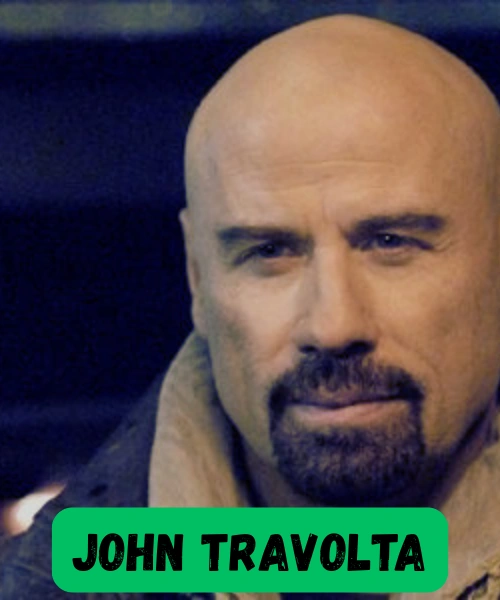
- State of Procedure: Unconfirmed
- Estimated sessions: 2-4 across an unknown period
- Visual evidence: Thinning hair which has progressively filled in over a number of years.
The status of the procedure can be only speculated on based on media assumptions and public sightings of this client.
Elton John (Older Era Procedures)
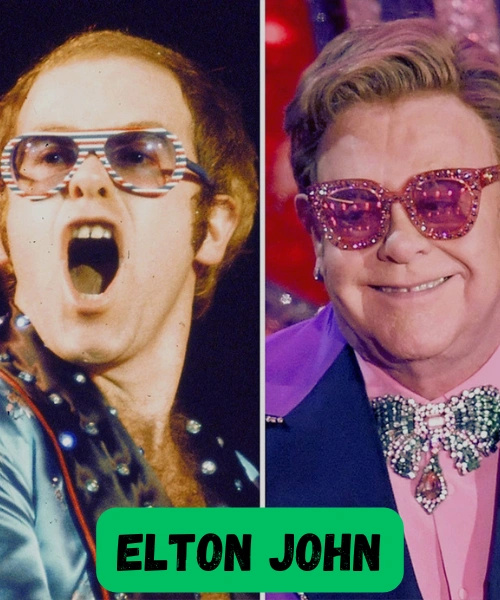
- State of Procedure: Unconfirmed
- Estimated sessions: 2-4 across an unknown period
- Visual evidence: Thinning hair which has progressively filled in over a number of years.
The status of the procedure can be only speculated on based on media assumptions and public sightings of this client.
Nicolas Cage (Unconfirmed / Speculative)

- Status: Unproven Procedure
- Public perception: Changing hairline over time.
- Issue: Speculation fueled by media.
The lack of medical evidence makes this situation unscientific.
FAQs:
Q: How much was Wayne Rooney’s hair transplant?
Estimates by hair restoration specialists put the cost of Rooney’s first hair transplant at a top UK clinic somewhere between £8,000 and £20,000 with follow-up procedures and maintenance treatment in addition. The exact amount was never officially disclosed.
Q: What kind of hair transplant did Wayne Rooney get?
The Harley Street Hair Clinic identifies Rooney’s 2013 procedure as FUE. The clinic reports that the procedure involved 3,500 grafts and was the planned second phase of treatment that began in 2011.
Q: Did Wayne Rooney have more than one hair transplant?
Yes. It’s estimated by most specialists and written in reports that Rooney has had more than one procedure. This is commonplace as patients having procedures performed while in their 20s may experience a degree of further natural hair loss and more grafts may be needed later on for improvement.
Q: Are hair transplants natural looking?
A properly designed, placed and density-matched modern FUE hair transplant should look completely natural. Wayne Rooney is commonly cited as having had a procedure that perfectly demonstrates how natural FUE can look.
Q: How much does a hair transplant cost in the USA in 2026?
Hair transplant costs in the USA range from $4,000-18,000 depending on the location, number of grafts, surgeon skill and technique used. In major cities such as New York, Los Angeles or Miami top surgeons will likely charge $20,000 and up in difficult cases.
Q: Are hair transplants permanent?
Hair transplanted from the donor area is generally intended to provide long-lasting growth, but individual outcomes vary. Transplanted hair may be relatively resistant to the effects of androgenetic hair loss, while non-transplanted native hair can continue to thin.
Q: How long is the recovery period for a hair transplant?
The initial healing will take 7-14 days. Shedding of the transplanted hair (shock loss) occurs around 3-6 weeks and this is normal. You may begin to see new growth in month 3-4, improvement in 6-8 months and full final results are achieved at 9-12 months.
Q: Is a hair transplant painful?
A hair transplant is performed under local anesthesia. You will feel pain from the injections in order to achieve numbing (around 3-4 on a scale of 10), but the actual transplant process is painless. Afterwards most patients experience tightness and soreness which can be combated by painkillers.
Q: Which country offers the best hair transplant procedures in 2026?
The USA has regulation, ABHRS certified surgeons, advanced technology including robotic FUE, easiest follow up. The UK is home to great private clinics with reputable surgeons. Turkey is a very inexpensive option but there is research involved to separate ‘hair mills’ from real hair transplant clinics.
Conclusion:
More than a decade after Rooney fired that Tweet, we’ve reached a place regarding male hair loss where no one, in 2010, would have thought it possible. Young men speak openly about hair transplants. Clinics are transparent. Before/after photo albums are routine. The “stigma” of professional male athletes getting cosmetic surgery is no longer relevant.
Rooney’s role in this development, while probably not intentional, is nevertheless a factor. By bravely admitting something so deeply felt by so many men he essentially gave millions of people a permission slip to investigate if there was something they could do about hair loss but previously felt too mortified to even search for information.
However, by far the most instructive element from Wayne Rooney’s hair transplant saga isn’t his celebrity status. Instead, it’s what distinguishes success from failure. Rooney’s case illustrates why surgeon selection, hairline design, donor management and long-term planning can matter more than simply choosing a procedure based on price. The guys who get scammed into hair transplants overwhelmingly cut corners with price, research, or clinic credentialing, to get things they could realistically not have.
The Bottom Line For USA Patients in 2026
A successful, FUE hair transplant, carefully done by a licensed surgeon who has real experience in hairline design can result in years-in fact, decades-of looking and appearing entirely natural. Whether the result will be described about you or someone else is a function almost entirely of how much research you do, how realistic your expectations are, and whether the quality of the surgeon matters more to you than a lower price up front. Pick a good one and you too can have a Wayne Rooney hair transplant story, minus the tweet.
Written & Reviewed By
Written by: Wajiha Aqeel
Co-Founder & Hair Restoration Research Lead
Data & publication oversight: Daniel Brooks
Co-Founder & Senior Operations & Data Director
Content reviewed by:
Mehwish Fareed
Clinical Aesthetician & Content Reviewer
Asma Shamshad
Medical Student & Content Contributor
Originally published: June 8, 2026
Research & content last reviewed: September 2026
Last updated: September 7, 2026
References & Sources
- ISHRS: International Society of Hair Restoration Surgery ishrs.org.
- ABHRS: American Board of Hair Restoration Surgery abhrs.org.
- AAD: American Academy of Dermatology, hair loss overviewaad.org.
- Mayo Clinic: hair transplant procedure information mayoclinic.org.
- FDA:U.S. Food and Drug Administration, hair restoration device information fda.gov.
- Norwood Scale: Archives of Dermatology, O’Tar Norwood, 1975 (revised classification).
- Public Statements and Interviews by Wayne Rooney: 2011-2023.
- Book chapter/article on patient evaluation and surgical planning for hair transplantation: Bernstein RM, Rassman WR, Dermatologic Surgery, 2002.
- Harley Street Hair Clinic – Wayne Rooney case
- TNT Magazine – 2011 Rooney transplant report
- ABHRS certification requirements
- ISHRS – FUE/FUT information
Medical & Affiliate Disclaimer:
The content on Hair Grow Needs is for general informational and educational purposes only and should not be considered professional medical advice. For full details regarding our policies, please read our official Disclaimer.