
Medical Disclaimer: This article is for informational purposes only and does not replace professional medical advice. Read our full Medical Disclaimer.
Joel McHale has had four documented hair transplants and his surgeries cost around $10,000. The early ones were FUT strips and he claimed that they were painful. Later ones have been FUE hair transplants. The transplants have all been done in Los Angeles and he said of cheaper clinics ‘you get what you pay for’. His progression is steady and it shows a relatively natural and gradual return of hair at a Norwood 2-3 pattern
What Joel McHale Confirmed About His Hair Transplant
Out of all celebrity hair transplant stories that could potentially make a good 2026 case study, this is one of the more legitimate. After all, unlike most celebrities, Joel McHale gave permission and went public about the issue himself during his interviews.
During the We Might Be Drunk podcast and subsequent press reported in People magazine (June 2025) McHale said:
- He had 4 hair transplants done in total.
- The first transplants were FUT strips which he said was extremely painful.
- The latest transplants were FUE technique.
- The price was between $8,000 and $10,000 across all sessions.
- The surgery was done in LA.
- He gave a word of caution to people: “If somebody is like, I’ll do it for $3,000, then you don’t. You get what you pay for.”
- He sarcastically referred to clinics in Turkey when he was talking about cheaper options. However, McHale stated he didn’t use clinics there.
Why the Joel McHale hair transplant case matters for research:
Almost all discussions about celebrities and hair restoration use conjecture, alongside photographic interpretation, to guide the conversation. Discussions of Joel McHale hair transplants are based on official, confirmed statements from the man himself and this make it the best value hair case of all for patients who might be researching their own hair loss solutions in 2026.
| Confirmed Detail | What Joel Said | What It Means |
|---|---|---|
| Number of procedures | 4 confirmed | Multiple sessions are common and normal |
| First technique | FUT strip surgery | Common before 2010 – now largely replaced by FUE |
| Later technique | FUE | Shows technique evolution over time |
| Total cost | $10,000 | Reasonable for LA-based multi-session treatment |
| Location | Los Angeles | US-based, US standards, full legal accountability |
| Advice | “You get what you pay for” | Quality surgeon matters more than price |
Joel McHale Hairline Timeline (2000 – 2026)
In order to view the Joel McHale hair transplant timeline, you need to trace his appearance in the public eye through 2 decades. It was an organic transformation which is how natural, professionally performed hair transplants look.
Early Career (2000 – 2004) Pre-Procedure
Observable features:
- Temple recession starting
- Some front thinning with studio lights
- Higher mature hairline appears
- Likely to be a Norwood Scale of 2-3.
At this time frame his hair loss would be that of any typical male with common male pattern baldness – the slow miniaturization of his hair follicles along the frontal line due to sensitivity to DHT.
The Soup Era (2004 – 2012) FUT Phase
The appearance of his hairline while The Soup was on E! Was:
- Denser hairline over the forehead
- Central density much more straightforward
- Denser at the temple framing
- Much more consistent look under bright studio lighting
This improvement fits with the fact that he has indeed undergone two FUT strip transplants during this time. FUT was still performing well in this time period, delivering results of good density, especially over the forehead, though with a linear donor scar that would need more length of hair to cover.
Community Era (2010s) FUE Refinement
Through the Community and all subsequent procedures:
- More softened, natural looking hairline borders.
- Better density transition zone.
- Thicker in the front.
- More versatility in styling.
These features correspond to the FUE refinements that Joel spoke of. FUE was able to place single hair follicles at natural angles. FUT sometimes produces edges that are a bit too ‘hard’.
2024 – 2026 Stable Mature Results
It has been observed in Joel’s recent public appearances:
- Well maintained hairline relative to his age and features.
- Good density, no visible “pluggy” effect.
- Excellent camera performance in all lighting conditions.
- No thinning seen in the donor areas.
This is the kind of long-term hair transplant maintenance Joel McHale has been achieving – subtle, realistic, and sustained.
Norwood Scale Assessment
| Period | Estimated Norwood | Hair Status | Likely Treatment |
|---|---|---|---|
| Pre – 2004 | Norwood 2 – 3 | Thinning temples, mild recession | None |
| 2004 – 2008 | Norwood 2 – 3 | Stabilized with restoration | FUT sessions |
| 2010 – 2015 | Norwood 2 | Refined, softer results | FUE sessions |
| 2020 – 2026 | Norwood 1 – 2 | Stable, natural | Maintenance |
Before and After Analysis
The Joel McHale hair transplant was specifically a “slow” transformation, which is where quality restoration planning beats the aggressive overcorrection any day of the week.
| Area | Before Restoration | After Multiple Sessions |
|---|---|---|
| Temples | Receding, recession corners | Naturally filled, age-appropriate |
| Frontal Hairline | Thin, uneven | Defined, consistent density |
| Crown | Mild thinning | Stable, maintained |
| Hair Density | Uneven, camera-visible loss | Balanced, camera-consistent |
| Styling Options | Limited by thinning | Full flexibility |
| On-Camera Appearance | Visible thinning under lighting | Natural, consistent |
Key observation: In the case of Joel McHale’s hair transplant results, there is not a significantly lowered hairline or an unnaturally full frontal zone. The absence of these things clearly indicate a properly planned procedure. His hairline is appropriate for a 50 something and precisely what should be expected for long term hairline planning.
FUT vs FUE: What Joel Used and Why
The journey of the Joel McHale hair transplant involves the two primary surgical methods available; thus, his case is particularly thorough in comparing the real-world outcomes of FUT and FUE.
FUT Hair Transplant Joel’s Early Procedures
Joel explain FUT straightforwardly: “I did FUT a long long time ago when it was strips. Painful”.
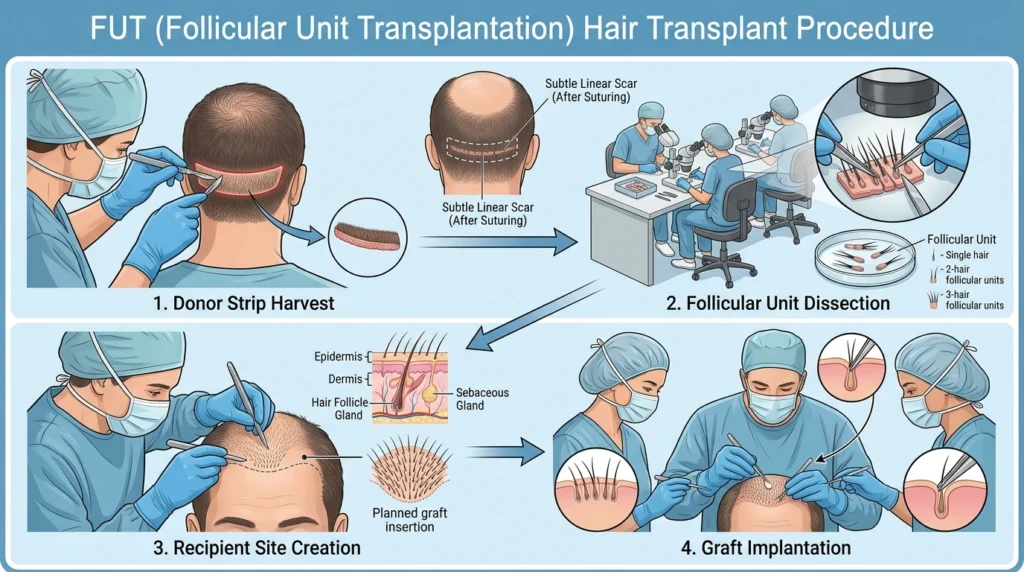
How FUT works: A section of scalp (about 15-25cm by 1-2cm) is excised from the back of the head (donor area). This section is then microscopically divided into individual follicular units and these are transplanted to the recipient area.
Why FUT was standard in the early 2000s:
- Higher volume of grafts per session (5,500+ possible)
- Lower cost per graft
- High follicle survival rates
- Proven surgical procedure
Why Joel’s description of “painful” is accurate: FUT creates a scar that requires stitches and results in a long, linear, tightly healing scar, with significant scalp tightness during healing. Pain relief is now very much better but FUT is still the more demanding of the two in terms of physical exertion.
FUE Hair Transplant Joel’s Later Procedures
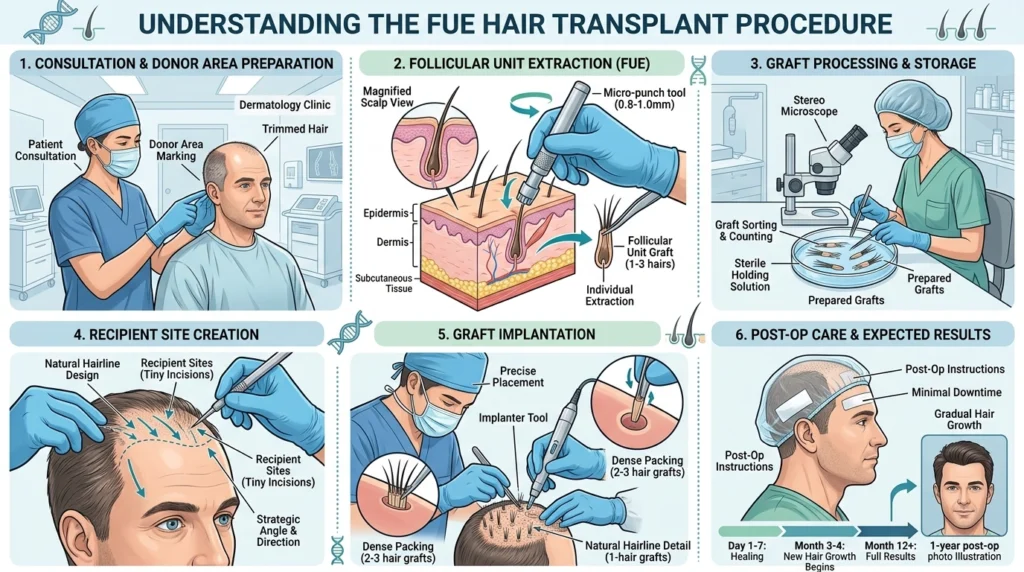
Later on Joel had suggested FUE, and called it ‘plucking’, which describes, colloquially and precisely, what is happening: each individual hair follicle is plucked out.
How FUE works: The hair follicle is individually removed one by one with a micro-punch (0.7-1.0mm diameter) No strip taken. No linear scar. Grafts are placed in the micro-incisions of the recipient site.
Why Joel switched to FUE:
- No linear scar- important for keeping short haircuts in play,
- Quicker recovery & minimal post-op pain,
- Optimal for refinement of existing hairlines,
- More efficient donor utilization between sessions,
FUT vs FUE Comparison Table
| Feature | FUT (Joel’s Early) | FUE (Joel’s Later) |
|---|---|---|
| Scarring | Linear scar – visible with short hair | Tiny dot scars – virtually invisible |
| Recovery Time | 10 – 14 days | 7 – 10 days |
| Pain Level | Moderate to high | Low to moderate |
| Graft Volume Per Session | Up to 5,500+ | Up to 4,000 |
| Hairline Precision | Good | Excellent |
| Cost Per Graft (USA 2026) | $3 – $7 | $5 – $12 |
| Best For | Maximum grafts, severe loss | Refinement, natural detailing |
| Session Type | Usually single large session | Often multiple smaller sessions |
| Modern Popularity | Declining | Dominant globally |
DHI and Sapphire FUE What Joel’s Procedures Didn’t Include
If Joel McHale was undergoing his hair transplant surgery in 2026, the surgeons may also advise him on:
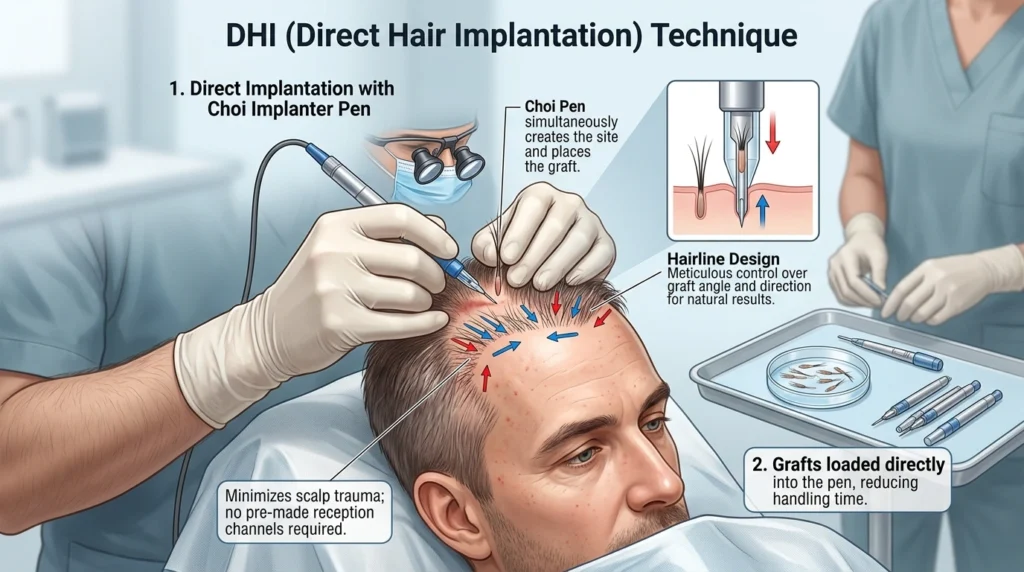
DHI (Direct Hair Implantation): Using a CHOI implanter pen simultaneously removes hair follicles and places them back in the area – much more precise control of angle, direction and depth. The finest in the business for hairline detailing and working existing hair.
Sapphire FUE: Employs sapphire-tipped instrumentation over steel-smaller incisions, less inflammation, and rapid healing with decreased risk of infection.
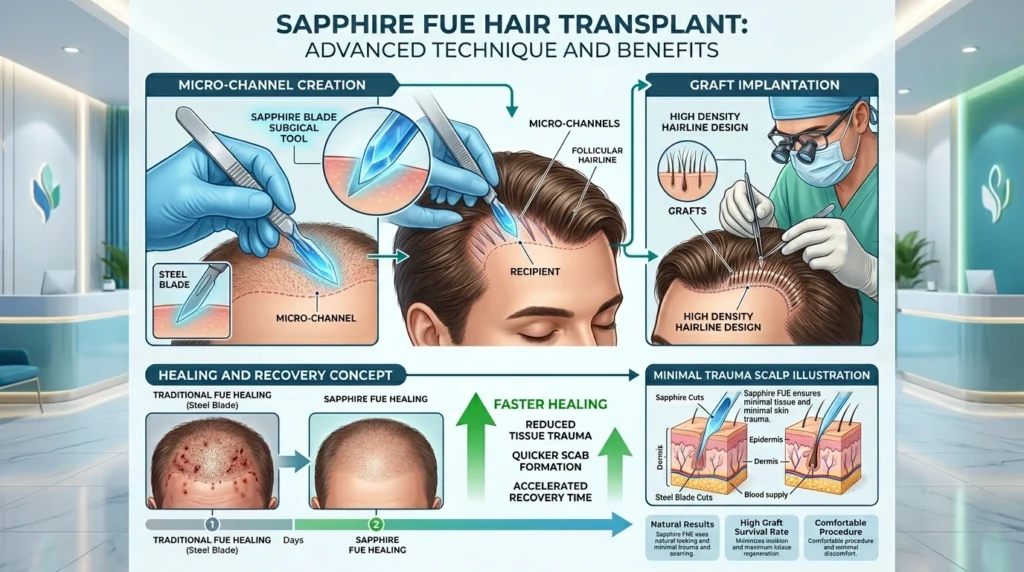
Both are improvements over a standard FUE for certain indications – however neither was in use as a clinical standard at the time Joel had his early procedures.
Cost Breakdown: How He Spent $10,000 Across 4 Sessions
At around $10,000 overall for the four operations, Joel McHale’s hair transplant total cost is incredibly affordable given his A-list celebrity status and location (LA) and the fact that there were multiple procedures.
Estimated Session-by-Session Breakdown
| Session | Technique | Estimated Grafts | Estimated Cost | Purpose |
|---|---|---|---|---|
| Session 1 | FUT | 1,500 – 2,000 | $2,500–$4,000 | Primary frontal density |
| Session 2 | FUT | 1,000 – 1,500 | $2,000–$3,500 | Secondary density + temples |
| Session 3 | FUE | 800 – 1,200 | $3,000–$5,000 | Refinement + softening |
| Session 4 | FUE | 600 – 1,000 | $2,500–$4,500 | Final detailing |
| Total | FUT + FUE | 4,000 – 5,700 | $10,000 | Complete restoration |
Cost Per Graft Analysis
| Technique | Joel’s Era Cost | 2026 USA Cost | 2026 Turkey Cost |
|---|---|---|---|
| FUT per graft | $1.50 – $2.50 | $3 – $7 | $0.60 – $1.80 |
| FUE per graft | $3 – $5 | $5 – $12 | $0.80 – $2.50 |
| DHI per graft | N/A then | $6 – $14 | $1 – $3 |
Important: The total expenditure was $10,000, spread out over approx. 10-15 years and a few sessions, not just one. His cost per procedure was cheap as FUT has historically always been cheaper per graft than FUE.
USA vs Turkey vs UK Costs 2026
Jokingly referred by Joel McHale during his interview, there has been interest in Turkish hair transplant options from abroad. The full price comparison 2026.
| Country | Average FUE Cost | Average FUT Cost | Package Inclusions | Joel’s Advice |
|---|---|---|---|---|
| USA (Los Angeles) | $8,000 – $20,000 | $5,000 – $12,000 | Procedure only | His choice |
| Turkey (Istanbul) | $2,000 – $6,000 | $1,500 – $4,000 | Hotel + transfers + meds | “Do your research” |
| UK (London) | $7,000 – $16,000 | $5,000 – $10,000 | Procedure only | – |
| Canada | $7,000 – $14,000 | $5,000 – $11,000 | Procedure only | – |
| Hungary (Budapest) | $3,000 – $6,500 | $2,500 – $5,000 | Sometimes included | – |
| Poland (Warsaw) | $2,500 – $5,500 | $2,000 – $4,500 | Sometimes included | – |
Joel’s specific warning about budget clinics: If someone’s saying that they’ll do it for $3,000, well then you don’t. You get what you pay for.
This holds true for every market – Turkey included. There is a massive disparity between a $1,500 procedure with a technician, Turkey, compared to $4,000 with a surgeon, Istanbul.
Recovery Timeline Similar to Joel’s Journey
The results of the Joel McHale hair transplant looked progressive over the years, which also correlates with how hair transplant growth and recovery occur naturally over time.
| Timeframe | Physical Status | Visible Change | What Joel’s Journey Showed |
|---|---|---|---|
| Day 1 – 3 | Swelling, redness, scabbing | None | Post-procedure appearance |
| Day 4 – 7 | Scabs forming, tenderness | Grafts in place | Rest period |
| Week 2 | Scabs shedding naturally | Early healing visible | Return to normal activity |
| Week 2 – 4 | Shock loss begins | Transplanted hairs shed | Normal — follicle survives |
| Month 2 – 3 | Dormant phase | Minimal visible change | Patience required |
| Month 3 – 5 | Early new growth | Fine new hairs emerging | First signs of progress |
| Month 6 – 9 | Density improving | Hairline shape visible | Visible transformation |
| Month 10 – 12 | Significant density | Natural results visible | Majority of final result |
| Month 12 – 18 | Final mature results | Complete natural density | Full result achieved |
Multi-session timeline note: All 4 of Joel’s procedures were over years. So, the results, and the visual improvement was not the result of a single procedure but the cumulative effect of multiple procedures. Which is exactly what needs to happen, surgeons are able to monitor graft survival and then choose what strategy they wish to pursue in the next procedure.
Joel McHale vs Other Celebrity Hair Transplants
| Celebrity | Confirmed? | Technique Known | Natural Results | Transparency |
|---|---|---|---|---|
| Joel McHale | Confirmed | FUT + FUE confirmed | Excellent | Highest – self-confirmed |
| Wayne Rooney | Confirmed | FUE confirmed | Good | Moderate – social media |
| Elon Musk | Not confirmed | Speculated FUE | Strong | None – speculation only |
| Matthew McConaughey | Unclear | Unknown | Debated | None |
| John Travolta | Not confirmed | Unknown | Visible plugs visible | None |
| LeBron James | Not confirmed | Unknown | Natural | None |
The Joel McHale hair transplant case isunique because instead of being rooted in photo gossip, it is confirmed through a first person source, which makes it a completely trustworthy hair restoration resource for serious patients.
What Everyday Patients Can Learn
Joel McHale’s hair transplant procedure offers five crucial lessons for any hair restoration patient in 2026:
Lesson 1: Gradual Restoration Looks More Natural
Joel’s outcomes developed over the course of 4 sessions and several years. Complete single-session mega procedures for full reconstruction produce more “unnatural-looking” results compared to staged procedures that permit biological assessment in the interval between stages.
Lesson 2: FUT and FUE Can Work Together
Most of the patients view FUT vs FUE as two opposite entities.Joel demonstrates, through his own example, that the procedures are supplementary and can be used in two stages: FUT for volume and FUE for softening. Today this sequential method is still practiced by surgeons.
Lesson 3: Price Is Not the Primary Decision Factor
Joel’s warning, “you get what you pay for” demonstrates an aspect of research into the results of hair restoration studies that is true and reliable. A skilled surgeon, skillful management of the donor, and handling quality of the grafts is far more important than the lowest quote.
Lesson 4: Age-Appropriate Hairline Planning Matters
His hairline wasn’t pushed back aggressively and isn’t set up for a 25 year old. The hairline of this work is appropriate for his age and face shape. This is good long term planning. A hairline appropriate for a 35yr old will look out of place at 55.
Lesson 5: Multiple Sessions Are Normal Not a Sign of Failure
Four procedures are not atypical for total hair restoration. Patients hoping that the need is met with one procedure, often are disappointed. A phased plan provides a better result and “banks” future donor hair.
How to Choose the Right Surgeon
This case teaches us a lot about the quality treatment that is required, from what we learn from Joel McHale’s hair transplant surgery:
| Selection Criteria | What to Look For | Red Flag |
|---|---|---|
| Board certification | ABHRS or ISHRS membership | No verifiable credentials |
| Surgeon involvement | Surgeon performs extraction AND implantation | “Our team handles surgery” |
| Before/after portfolio | 15+ cases similar to your pattern | Only best results shown |
| Hairline design philosophy | Age-appropriate, 10-year forward planning | “Whatever you want” |
| Donor management | Conservative extraction, future planning discussed | Unlimited graft promises |
| Graft survival data | 90–95% reported | No data available |
| Independent reviews | Google, RealSelf, Reddit r/HairTransplants | Only website testimonials |
| Pricing transparency | Written all-inclusive quote | Vague pricing, hidden fees |
| Post-op protocol | Structured 12-month follow-up | Minimal aftercare plan |
Questions to Ask During Consultation
| Question | Correct Answer | Warning Answer |
|---|---|---|
| Who performs extraction? | “The surgeon personally” | “Our technicians” |
| How many sessions will I need? | Honest assessment with range | “Just one is enough” |
| What is your graft survival rate? | “90–95% documented” | No data |
| How do you plan for future loss? | Discusses 5–10 year strategy | Only current loss addressed |
| Can I see cases similar to mine? | Yes, multiple examples provided | Only dramatic results shown |
FAQs
Q: Does Joel McHale have a hair transplant?
A: Yes. The Joel McHale hair transplant was confirmed directly by Joel himself on the We Might Be Drunk podcast and later in various news reports. He admitted to undergoing 4 sessions utilizing both FUT and FUE methods with a total cost estimated at $10,000. The procedures were done in Los Angeles.
Q: How many hair transplants did Joel McHale have?
A: Joel McHale admitted to having 4 hair transplants. These were a combination of early FUT strip surgeries and subsequent FUE refinement sessions.
Q: How much did Joel McHale spend on hair transplants?
A: Joel McHale reported spending a total of approximately $10,000 for his 4 hair transplants. This is considered to be a reasonable price for multiple procedures done in Los Angeles by US surgeons over a number of years.
Q: Did Joel McHale use FUT or FUE?
A: Joel McHale utilized both FUT (earlier, more painful strip surgery) and FUE (later, more precise) techniques for his hair transplant procedures. He recommends FUE as the better modern option.
Q: Was Joel McHale completely bald before his hair transplant?
A: When describing why he resorted to hair restoration, Joel humorously stated “Yeah, I’m fully bald.” This indicates that his natural hairline would have been noticeably thinning without the procedures.
Q: Where did Joel McHale get his hair transplant?
A: Joel McHale has confirmed that all of his hair transplant surgeries were performed in Los Angeles by surgeons following US medical standards.
Q: Why did Joel McHale switch from FUT to FUE?
A: FUE typically involves less recovery time and pain compared to FUT. It also results in no linear scar and allows for greater precision in hairline restoration. This makes it a more suitable option for later refinement sessions.
Q: Are Joel McHale hair transplant results natural-looking?
A: Yes. The results of Joel McHale’s hair transplants are described as natural-looking, age-appropriate, and not overly dense. This suggests a high quality procedure.
Q: What did Joel McHale say about cheap hair transplant clinics?
A: Joel McHale warned potential patients: “If somebody is like, I’ll do it for $3,000, then you don’t. You get what you pay for.” This emphasizes the importance of choosing a qualified surgeon over a cheaper option.
Q: Is Turkey cheaper than the USA for hair transplants like Joel McHale’s?
A: While Turkey generally offers lower prices ($2,000-$6,000 for FUE, all-inclusive) compared to Los Angeles ($8,000-$20,000), Joel McHale’s caution about quality is universally applicable. It is crucial to research surgeons thoroughly in Turkey, as the quality of work can vary significantly.
Q: What is the best hair transplant technique in 2026?
A: FUE is currently the standard for most individuals. DHI offers increased precision, Sapphire FUE provides faster healing, and FUT remains viable for maximum graft transplantation in a single session. The best technique is determined by an individual assessment by a qualified surgeon.
Q: What was Joel McHale’s Norwood scale before hair transplant?
A: Based on his earlier career appearances, Joel McHale likely had a Norwood scale of 2-3, indicating temple recession with slight frontal thinning, prior to his initial hair transplant procedure.
Conclusion
The Joel McHale hair transplant story is actually useful for 2026 patients researching hair restoration-not because of his celebrity status-but because of its surprising openness. Unlike most Hollywood hair restoration procedures that are highly speculative, Joel provided details on 4 procedures, FUT pain, FUE advancements, total cost of $10,000, and prioritising results over cost.
His results serve as a great example of a sensible, progressive hair transplant regimen: a result that is age appropriate, looks natural over time and is well maintained as opposed to dramatic overnight improvement. He progressed from the old style strip FUT to the newer FUE technique just like the overall technology of hair transplantation has evolved.
For 2026 patients making choices on their own, the Joel McHale hair transplant case highlights 3 golden rules that are universally applicable regardless of cost, locality or technique; select a surgeon who stays with you for the whole procedure, plan your hairline not just for today, but for the next ten years, and accept that natural results take twelve to eighteen months, more than one session and realism.
This article is intended for informative and educational purposes only. Any Joel McHale quotes included are from authenticated public interviews. For individual medical advice, please consult with a board certified hair restoration surgeon.
Written & Reviewed By
Written by: Wajiha Aqeel
Co-Founder & Hair Restoration Research Lead
Data & publication oversight: Daniel Brooks
Co-Founder & Senior Operations & Data Director
Clinic & Pricing Data Last Reviewed: July 2026
Last Updated: July 2026
Medical & Affiliate Disclaimer:
The content on Hair Grow Needs is for general informational and educational purposes only and should not be considered professional medical advice. For full details regarding our policies, please read our official Disclaimer.
Sources:
ISHRS (International Society of Hair Restoration Surgery)- ishrs.org | ABHRS (American Board of Hair Restoration Surgery)- abhrs.org | American Academy of Dermatology | We Might Be Drunk Podcast | People magazine (June 2025) | Mayo Clinic hair loss resources | Clinical trials (PubMed)