

Medical Disclaimer: This article is for informational purposes only and does not replace professional medical advice. Read our full Medical Disclaimer.
In total, a hair transplant in Phoenix runs from $4,000 to $15,000 (or $3 – $10 per graft, as stated above depending on if you receive FUT – $3-$6/graft vs FUE – $5-$10/graft). Those seeking large mega sessions in the 3,000+ graft range see per-graft pricing fall near the 3 to 4 dollar per graft point. All depends on the quantity of grafts your scalp requires, as well as surgeon experience and the clinic location.
If you’ve googled hair transplant Phoenix this month 5 times or more, don’t panic. Thinning hair likes to tiptoe- a widening part here, a retreating hairline there -so that after a point nearly all of us are in search of real information (rather than the next advertisement for another wizard who will pull back from whatever this is), it is hoped that this guide is for you, that you might discover what an Phoenix hair transplant may eventually mean to you in money terms, who are clinics and doctors that will actually merit investigation, just what exactly FUE and FUT represent and that this recovery process entails after all of it goes off the table and into your head.
This list was constructed after hours of digging through consultation notes, reviewing published price points from Phoenix clinics and interviews with actual patients who’ve been through the laser removal experience. Full disclaimer: none of these are paid sponsorships, and none of these reviews were “ghost written” by a clinic.
What is Hair Transplant Surgery?

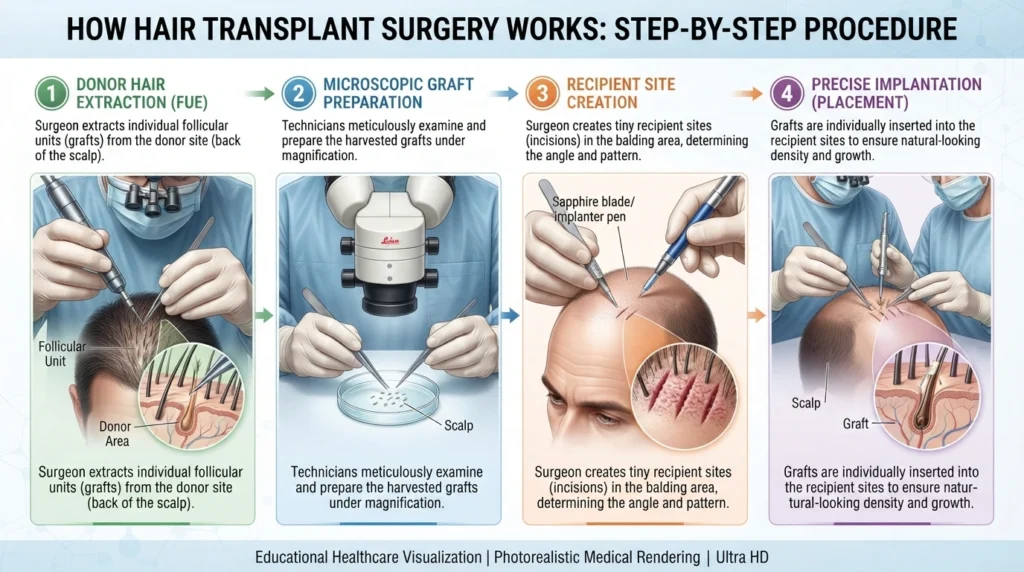
How it works – at its most simple, a hair transplant is just taking active hair follicles from somewhere on your head where you genetically shouldn’t lose your hair (the so-called “donor area,” which is often the back or the sides of your head) and replanting those into the area you’re experiencing hair loss, or lack of growth. The follicle carries its normal genetic makeup. That’s what enables transplants to last permanently in most cases.
Nearly every clinic in the Phoenix hair transplant market offers one of two core techniques, sometimes both:
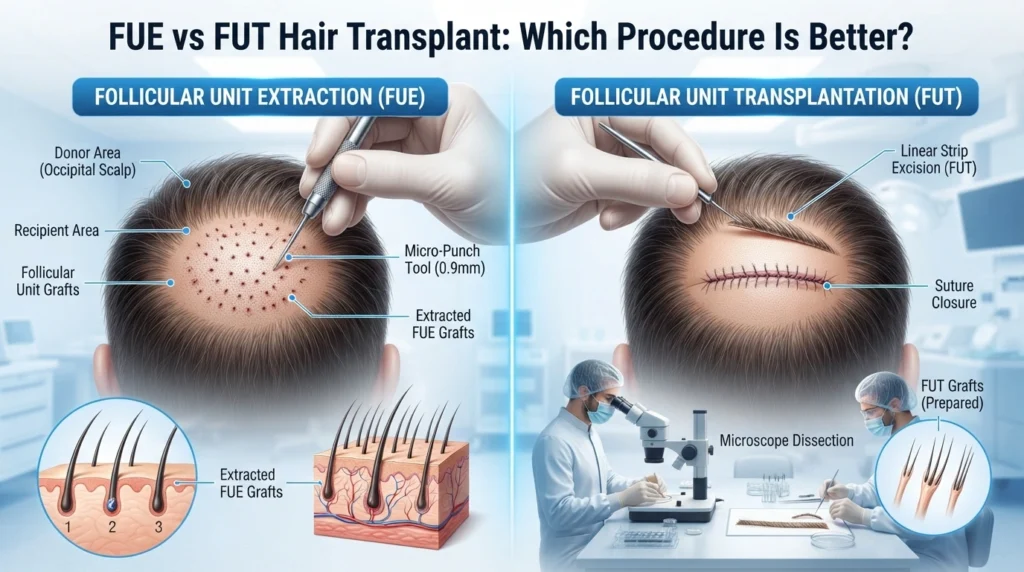
FUE (Follicular Unit Extraction):
We pull out one hair follicle at time with the use of a small punch, we then transplant that follicle to the area where grafts are desired. No linear scar, but quicker recovery, and is one of the reasons it can be more expensive (cost per graft).
FUT (Follicular Unit Transplantation / strip method):
Strips of scalp taken from the donor area, and chopped up into individual follicular grafts, under the microscope. Leaving a line scar (usually easily masked by hair), this procedure involves a very large total number of grafts per day and is the most cost-effective on a per-graft basis
There is no “right” call for which procedure is better for you. This choice depends on the amount of hair you have lost, your desired hairstyle length, the degree of scarring you’re comfortable with, and your financial resources.
Why People Travel to Phoenix for Hair Restoration
I’ve said it time and time again, Phoenix is becoming quite a destination for hair restoration in the Southwest. Not to brag, but you might be wondering why and I can break it down:
- Because this large geographic concentration of board-certified surgeons and dermatologists falls in one compact city-you’re in one place for consults.
- Prices never exceed average costs in Los Angeles, New York, and San Francisco based on graft.
- Treatment options using surgery and medicine offered at the same facility. If you are still not suitable for surgery, many places will provide alternatives like PRP and medicine also.
- Dry climate that many doctors and patients claim will have an effect on new grafted areas during the first week or two.
Hair Transplant Cost in Phoenix 2026

| Method | Cost Per Graft | Typical Total Cost |
|---|---|---|
| FUT (strip method) | $3.00 – $6.00 | $6,500 – $10,000 |
| FUE (follicular extraction) | $5.00 – $10.00 | $9,000 – $15,000+ |
| Megasessions (3,000+ grafts) | $2.99 – $3.99 (bulk rate) | Varies by clinic |
The good news? When you look at it more holistically most, in fact, you will find yourself somewhere in the middle between $4,000 to $15,000. While some of the premier Phoenix clinics can go beyond that for multiple transplants or in some case, very large grafts in the $20,000+ range.
What actually moves the price:
- Graft count: This alone accounts for 90% of your transplant costs. The larger the area you’re thinning, the more grafts you will need to get coverage and the more they’ll charge. A plastic or facial hair surgeon will provide an educated approximation of the number of grafts you’ll need, which will be based on factors like coverage size, natural density of existing hair, and the supply of hairs in the transplant area – but there is no exact science and an online graph really won’t do the trick in replacing an in-person (or photo) assessment.
- Surgeon expertise: surgeons with large before/after portfolios and specialist training tend to require the highest costs for procedures.
- Technology:Graft-storage and robotic FUE add expensive technology to the procedures.
- Clinic location: An in town Scottsdale or Biltmore corridor practice usually incurs more overhead than one a bit further out of town and you can see that reflected in the quote.
Phoenix vs. Other U.S. Cities
| City | Average Cost Range | Notes |
|---|---|---|
| Phoenix | $5,000 – $15,000 | Solid mid-range market |
| Los Angeles | $8,000 – $20,000 | Premium pricing |
| New York City | $9,000 – $25,000 | Highest cost range |
| Miami | $7,000 – $18,000 | High-demand market |
| Chicago | $7,000 – $16,000 | Balanced pricing |
| Dallas | $6,000 – $14,000 | Competitive pricing |
| San Francisco | $9,000 – $22,000 | Premium clinics |
| Houston | $6,000 – $15,000 | Affordable options |
| San Diego | $8,000 – $18,000 | Higher-end clinics |
| Las Vegas | $6,000 – $16,000 | Tourist-driven pricing |
| Atlanta | $6,000 – $15,000 | Growing cosmetic surgery market |
| Seattle | $8,000 – $18,000 | Premium healthcare costs |
| Boston | $8,500 – $20,000 | High-end medical practices |
| Philadelphia | $6,500 – $16,000 | Competitive pricing |
| Denver | $7,000 – $17,000 | Expanding aesthetics market |
| Orlando | $6,000 – $15,000 | Moderate pricing |
| Tampa | $6,000 – $15,000 | Affordable Florida option |
| Austin | $6,500 – $15,500 | Rapidly growing market |
| San Antonio | $5,500 – $14,000 | Budget-friendly choices |
| Portland | $7,000 – $17,000 | Mid-to-premium clinics |
| Nashville | $6,000 – $15,000 | Increasing demand |
| Charlotte | $6,000 – $15,000 | Competitive Southeast market |
| Minneapolis | $6,500 – $16,000 | Well-established clinics |
| Detroit | $5,500 – $14,000 | Cost-effective procedures |
| Columbus | $5,500 – $14,000 | Affordable Midwest pricing |
| Cleveland | $5,000 – $13,500 | Lower overall costs |
| St. Louis | $5,500 – $14,000 | Budget-friendly market |
| Kansas City | $5,500 – $14,500 | Competitive pricing |
| Salt Lake City | $6,500 – $16,000 | Growing cosmetic industry |
| Raleigh | $6,000 – $15,000 | Expanding healthcare market |
Phoenix is so affordable, it is really anybody in the middle. This gives another reason for why people come for procedures from any number of the surrounding states due to how affordable it is versus anything you get into in either of the coastal states.
We thought that to put a figure in your head, how costs weigh up among some of the biggest cities in the USA, Estimated pricing will range significantly depending on the city and city demand:
Top Hair Transplant Clinics in Phoenix

I’m providing names on ten recognized hair restoration practices located in Phoenix-Scottsdale along with the estimated costs.
| # | Clinic | Lead Doctor(s) | Address | Estimated Cost Range | Contact / Website |
|---|---|---|---|---|---|
| 1 | Phoenix Skin Medical Surgical Group | Dr. Lee Laris | 5056 N Central Avenue, Phoenix, AZ 85012 | $5,000-$15,000 | (602) 222-9111 https://www.phxskin.com/ |
| 2 | Biltmore Hair Restoration | Dr. Scott Alexander | 2222 E. Highland Ave, Suite 314, Phoenix, AZ 85016 | $6,000-$14,000 | (602) 956-8800 https://biltmorehairrestoration.com/ |
| 3 | Scottsdale Institute of Cosmetic Dermatology | Dr. Shelly Friedman / Dr. Tam Chu | 8700 E Via De Ventura #130, Scottsdale, AZ 85258 | $6,500-$16,000 | (480) 970-0300 https://www.scottsdaleinstitute.net/ |
| 4 | Alvi Armani – Phoenix | Multi-physician team | 2 N Central Avenue, Suite 1800, Phoenix, AZ 85004 | $8,000-$20,000 | (866) 607-6220 https://www.alviarmani.com/ |
| 5 | National Hair Centers | Dr. Ramona Kelemen | 5828 N 7th St, Suite 200, Phoenix, AZ 85014 | $4,000-$12,000 | (602) 230-0000 https://www.nationalhair.com/ |
| 6 | Regency Medical Group Hair Restoration | Dr. Jason Mussman | 10240 W. Indian School Rd. #115, Phoenix, AZ 85037 (Also locations in Surprise, AZ) | $5,000-$13,000 | (623) 243-9077 https://regencyspecialties.com/ |
| 7 | Restore Hair Clinics | Dr. James Harris & Team | 7150 E Camelback Rd, Suite 444, Scottsdale, AZ 85251 | $6,000-$15,000 | (866) 488-9356 https://restorehair.com/ |
| 8 | Spex Hair (Advisory/Consult Model) | Dr. Scott Alexander (Referral) | Online consultation service (No physical Phoenix clinic) | $3,000-$10,000 (Non-surgical focus) | https://www.spexhair.com/ |
| 9 | Hair For Life Arizona | Dr. Ramona Kelemen | 8723 E Via De Commercio, Suite B-102, Scottsdale, AZ 85258 | $5,000-$14,000 | (480) 525-4547 https://hairforlifeaz.com/ |
| 10 | HairClub | Clinical Medical Team | 2111 E Highland Ave, Suite B-300, Phoenix, AZ 85016 | $4,000-$12,000 | (602) 357-8101 https://www.hairclub.com/ |
Choosing Hair Restoration Services in Phoenix-Scottsdale Just like picking a cosmetic dentist in Phoenix-Scottsdale or an aesthetic clinic in Phoenix, you do not want to go with the first service in the Phoenix-Scottsdale hair transplantation industry that seems accessible. Hair restoration providers have dramatically varied operations, with firms like SpexHair actually serving more of a consulting- referral type service than an actual doctor run clinic, versus companies like HairClub which act in a similar way to corporate branches. If people take notice to the differences in types of practices, it will help them sort through their choices for the better treatment route they can take.
Top Hair Restoration Doctors in the Phoenix Area
| Doctor | Focus |
|---|---|
| Dr. Scott Alexander | Advanced FUE, natural hairline design, internationally recognized. |
| Dr. Shelly Friedman | Nearly four decades in hair restoration surgery. |
| Dr. Ramona Kelemen | Blends surgical and non-surgical, board-certified. |
| Dr. Lindsay Ackerman | Dermatologist, medical + procedural hair loss care. |
| Dr. Howard Luber | Diagnoses underlying causes before treatment planning. |
| Dr. Adam Norberg | Dermatological care across medical and surgical options. |
| Dr. Anna Figueiredo | Personalized non-surgical and clinical restoration plans. |
| Dr. Christopher Bengson | Dermatological approach to long-term scalp health. |
| Dr. Craig Ziering | Known for dense, natural-looking results. |
| Dr. Miguel Canales | Robotic hair transplantation specialist. |
Who Is Actually a Good Candidate for a Hair Transplant?
There are many types of hair loss that simply do not respond to transplant methods, and any reputable transplant clinic will be honest about this with you rather than putting you in an appointment. Most of the best candidates for a Phoenix hair transplant have:
- Consistent amount of healthy permanent hair at the sides/back of the head for taking grafts from, so the area you take from doesn’t appear thin.
- The condition should be pattern baldness (male-androgenetic picaro female-pecia-related loss) instead of a condition such as diffuse thinning which is caused by medical state in active that must be tackled from the root cause first.
- Realistic expectations – know that the result gives you more hair and density, not the precise same hairline of a nineteen year-old man.
- Overall, feeling good now, I have generally been able to feel like myself now as despite it being such minimal, but because this was done locally, there’s always a process of healing.
Younger patients whose hair is still actively thinning may be told to either sit on it or at least see what medicine can do first – because operating in an active recession area is not going to result in a natural long term result for you. This is not to throw under the bus young men needing surgery but this is precisely what you need an in-person consultation to catch, so this alone is a red flag of a procedure being sold right up front to you without so much as the basics.
What Happens During a Consultation
At Most hair restoration Phoenix clinics, we structure our consultation sessions more or less in the same manner, though individual details of the clinic’s procedures may differ slightly:
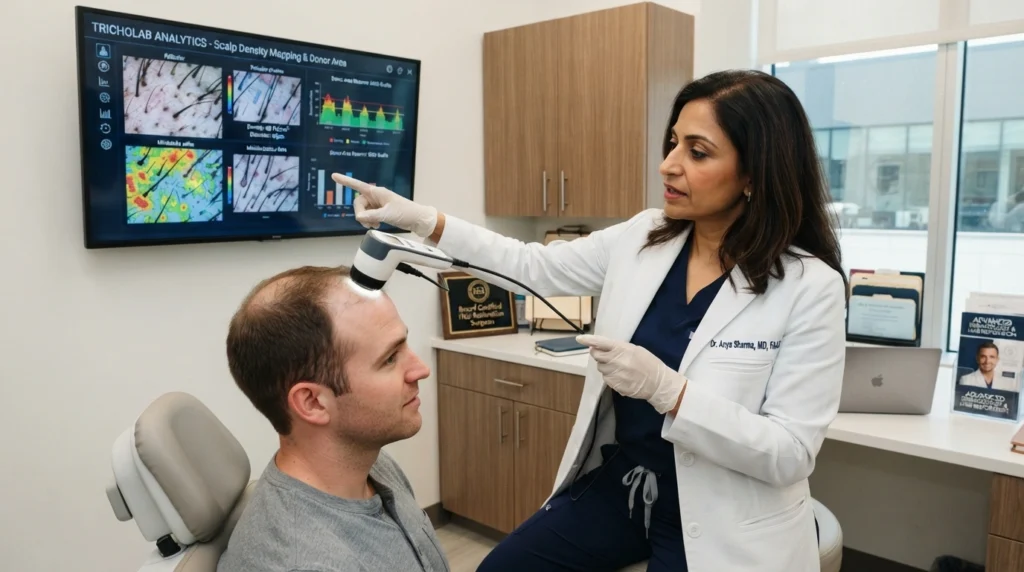
- Analysis of your scalp and hair. Then your hair surgeon will have a thorough examination of you hair to check out density, state of hair loss as well as scalp elasticity.
- Medical history review – with their medical history taken including their family’s experience of male or female pattern baldness, details of any medicines they are currently taking and a brief of any hair surgery they’ve had in the past.
- Graft Estimate – To determine the required amount, we’ll factor in the zone and your quantity of available donor follicles; unfortunately, there’s no ‘guess work’ online.
- Technique recommendation – If so what is the best technique (FUE/FUT or a combo) and estimate cost.
- Photos and simulation – Others can present a composite image showing similar result expected after using advanced simulation software.
Any consultation that bypasses most (or all) of the above and go straight into the hard-sell should definitely be an opportunity for you to get another option.
Preparing for Your Procedure
A few practical steps tend to make the actual procedure day and the following week easier:
- If recommended by your surgeon, attempt to do your best not to drink alcohol or blood-thinning drugs (including certain supplements) for about one week before.
- If you can, try not to smoke for a few days before surgery as it may impact graft healing.
- Schedule your pick-up You may well feel drowsy, tired & sedation post a procedure on a chair.
- On the day of your surgery wear a button up shirt or a zip up shirt to ensure nothing gets pulled over your newly grafted scalp.
- Have your prescribed aftercare products (usually a gentle shampoo, saline spray, and any prescribed antibiotics) ready at home before you go in.
Aftercare: The First Two Weeks
It turns out that the first two weeks after your hair transplant in Phoenix is going to mean more than you ever thought in relation to the care required for them; due to the hair grafts are at their weakest during this time frame.
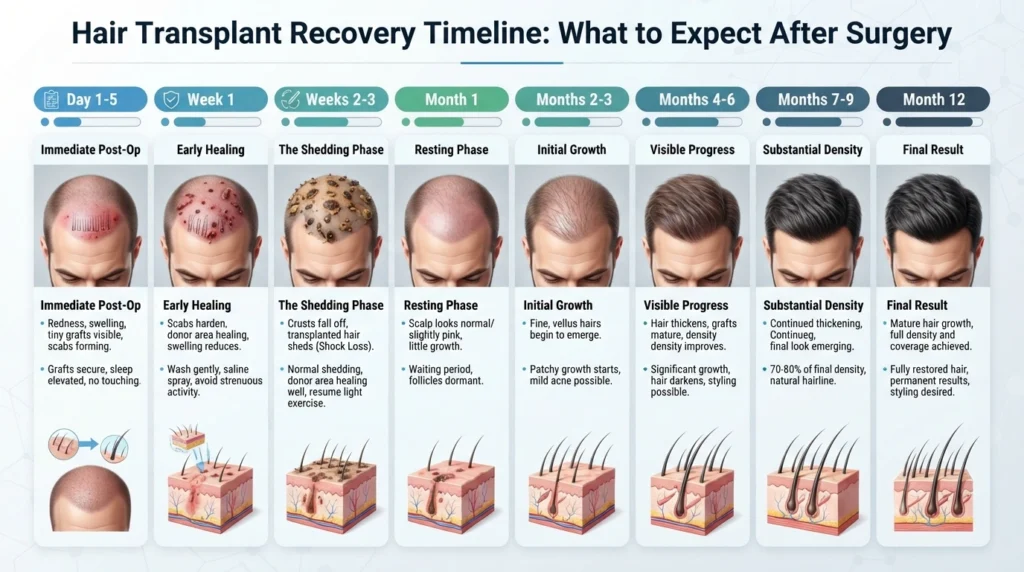
Days 1–3: Place your head slightly higher when you go to bed to minimise any swelling. You shouldn’t rub or scratch the area that has had the skin graft done.
Days 3–5: Light swelling around the forehead is common and typically settles on its own.
Days 5–10: Wash the scab-covered site gently, on the timing of your clinic instructions, so it falls off on it’s own instead of you picking it.
Weeks 2–3: Most patients will have some temporary loss called “shock loss.” This is normal for most transplant patients, and the root or follicle normally remains under the surface and the hair will grow back in a few months.
Ongoing: Continue to stay away from exposure directly to sunlight on your scalp, avoid vigorous exercises, and refrain from pool or salt water until approved by the surgeon; this is usually about 2 to 4 weeks.
Financing and Insurance
Hair restoration is deemed cosmetic for nearly all health plans, so it is generally not included under insurance, with the exception of certain reconstructive surgeries resulting from injuries, burns, or medical conditions that can sometimes be offset to some extent with proper documentation. For other candidates for hair restoration surgery at Phoenix clinics, typically there are a range of prices for:
In-house payment plans spread over several months.
Third-party medical financing (CareCredit and similar services are common in the industry).
Package pricing for patients who need multiple sessions, sometimes at a reduced per-graft rate for the second round.
Every clinic is a little different when it comes to terms of finance, so the best thing is to give each clinic a call and asking what financing options they allow.
Common Myths About Hair Transplants
“It’ll look obviously fake.” With modern FUE & FUT technologies performed by a skilled surgeon, the direction and angle of your hair will mimic natural growth directions, creating a result that looks integrated not attached.
“One session fixes everything.” There are times when you genuinely can have hair restoration hair loss two appointments about 8 weeks apart to help to achieve the density you desire
“Younger is always better for surgery.” As stated above, very young or progressive loss may be best treated medically with medications at first.
“Cheaper is always a scam, and expensive is always better.” Pricing gaps usually result from factors like overhead, technology, and surgeon training, but a city’s priciest and cheapest facilities won’t always be the very best or the worst. Portfolio and reviews often matter more than the price.
Questions Worth Asking Before You Book
A short list to bring to any Phoenix hair restoration consultation:
- But who conducts the procedure – is it the surgeon performing it on patient’s body, or technician group in surveillance?
- How do you figure that’s a good plan of action with respect to the number of grafts needed?
- In the Quote, what all items or things are included and not? example the costs for medicines, extra visits or second sittings charged separately from the quoting price.
- Do you have any before/after photos of patients that may look somewhat like the pattern of hair loss I have?
- What happens if I’m not satisfied with the density after 12 months?
FUE vs FUT: The Real Difference (Not Just the Textbook One)
Since this comes up in almost every consultation, it’s worth spelling out plainly:
With FUE, single follicles are extracted so you will avoid the linear scar, recover a bit faster usually, although this can cost a little bit more money per graft and take time if you are having large quantities done in a single day.
During strip harvesting (FUT), we use a donor incision that extracts strips of skin containing many donor grafts, which speeds up the graft removal process when harvesting numerous grafts. In general, the strip harvesting is less expensive but it results in a thin linear scar which must be concealed by the normal regrowth of hair.
FUE if you have very short or buzzed hair (if not, then it’s FUE/FUT safe, your hair length is safe as long as its a bit longer in the back or donor zone to cover). FUT is generally more cost-effective for a high graft number if you don’t care about longer hair to cover the donor zone.
Nearby Areas & What They’re Known For
If you’re comparing Phoenix against the surrounding metro, here’s a rough lay of the land:
| Area | Distance from Downtown Phoenix | Known For |
|---|---|---|
| Scottsdale | 15 miles | Premium clinics, higher-end pricing |
| Biltmore District | 5 miles | Concentration of established hair restoration practices |
| Tempe | 10 miles | Dermatology-led hair loss clinics |
| Surprise | 25 miles | Regency Medical Group’s satellite locations |
| Mesa | 15 miles | Growing number of PRP and non-surgical providers |
| Glendale | 10 miles | Mixed medical spa and hair restoration offerings |
Non-Surgical Options Worth Knowing About
Not everyone will need or qualify for surgery, which is why many clinics in Phoenix provide:
- PRP (Platelet-Rich Plasma) therapy – your own blood plasma, concentrated and injected into the scalp to stimulate existing follicles. Often paired with a transplant for better overall density.
- Topical and oral medications – can slow further loss, particularly in earlier stages.
- Laser therapy and hair systems – used by networks like HairClub as an alternative or supplement to surgery
- Stem cell hair restoration – An emerging, still-developing treatment which clinics in Phoenix may offer, which can inject the patient’s cells back into the scalp to encourage the hair to “wake up.” However, this is a relatively newer concept compared to PRP, so it might be beneficial to inquired about the successes a particular clinic has found with it before opts for it over more traditional treatments.
Average costs can vary by clinic However, Phoenix cost of a PRP can range $500 – $1,500 for one application, and a series of monthly stem cells or laser could result in considerable costs a full year from now-request total cost, not cost per sitting to compare!
Benefits and Risks:
Benefits:
- Permanent results
Hair transplanted hairs in Phoenix are usually permanent and live naturally once once grow. - Natural hair growth
The hair grow in natural style with time and become blend with existing hair. - Improved confidence
Improvement comes significant improvements in self-confidence and overall personality due to better appearance.
Risks:
- Temporary swelling or redness
for a few days after Procedure, light swelling or redness that ends itself. - Minor scarring (especially in FUT)
FUT method can remain Minor scarring, while it decreases in FUE. - Need for multiple sessions in some cases
Some hair transplant in Phoenix cases may require multiple sessions for better density.
Select among the top Phoenix hair transplant centers that prioritize safety, and the one who takes special time in clarifying what happens next really helps reduce these risks down.
Recovery Timeline
| Stage | What to Expect |
|---|---|
| Days 2–3 | Mild soreness and tightness in the scalp, usually manageable without prescription pain medication |
| Days 7–10 | Scabbing dries and sheds; the scalp begins looking more normal |
| Months 3–6 | New hair growth becomes visible, though density isn’t full yet |
| Months 9–12 | Most patients are close to their final result |
Phoenix vs. Overseas Hair Transplant Packages
The irony is that often hair transplant Phoenix price researchers do end up considering those all-inclusive hair transplant offers originating in Turkey, Eastern Europe, or Mexico-many that advertise for $2000-4000, with travel and hotel included. The price disparity is certainly genuine, but with considerations:
Follow-up care. If anything needs a fix at 3 months later, it will allow a local Phoenix Phoenix-based cosmetic surgeon to see you with an eye check. An offshore operation can’t guarantee this, not to mention revision trip expenses will go up for the costs again!
Regulatory oversight. While regulations differ around the world – for things like board certification standards, mal practice and facility licensing – it’s a lot more difficult to ensure someone else has these credentials far away from home.
Consistency. Sometimes overseas clinics that see very large volumes of patients (dozens per day and hundreds per year by teams of numerous techs) may result in a reduced amount of individual surgeon time available per patient when you compare that to something such as a specialized boutique type of practice in Phoenix.
And none of that automatically implies these international destinations make for poor choices – as a fact, plenty of patients go there get excellent care. However, the “$3k to $10k” line of inquiry that you might run by doctors just doesn’t hold up for obvious logistical, medical and other, well-founded reasons.
Hair Transplants for Women
While much of the advertising is directed at men, female pattern hair loss is prevalent and not rare at women’s clinics throughout the valley, says Dr. Jonathan. The difference from a surgery standpoint is where it appears – ladies tends to have more generalized thinning over the top of her head, or more of diffused thinning, rather than like a horseshoe or a completely bald spot, he explains. Candidacy is also evaluated somewhat differently. Women often need thorough evaluation, including bloodwork to test the thyroid for imbalances and for deficiency. Postpartum shedding and iron deficiencies mimic hair loss due to “womanly pattern baldness.
Facial Hair Restoration: Beard and Eyebrow Transplants in Phoenix
Just as the field of scalp hair restoration has evolved, Phoenix services for facial hair restoration have advanced as well using the same essential technique of follicular unit transplantation (FUE). Beard transplantation uses grafts from the donor area of the scalp to be placed along the jaw and cheek bones to thicken sparse areas, whereas eyebrow transplants uses extremely fine, single hairs at a low angle along the direction of natural brow growth. Both procedures are less expensive than scalp transplants primarily due to the considerably lower number of grafts used, in the 300 to 800 graph range for beards, and less than 500 for eyebrow transplants, but both procedures require a very skillful surgeon who understands how rapidly facial hair can be overdone, grown in the wrong direction.
Long-Term Maintenance After Your Transplant
How a Hair Transplant can Help Your Hair A hair transplant treats baldness or thinning you’re currently experiencing, but the body’s underlying biological pattern to your untreated hair is not magically changed. Even the hair on the parts you didn’t transplant might gradually thin over time due to continued pattern baldness, hence why many surgeons suggest having a transplant done in addition to some maintenance:
Finasteride or minoxidil, prescribed to slow further loss in the surrounding native hair.
Periodic PRP sessions, often every 6–12 months, to support existing follicle health.
Annual check-ins with your surgeon, especially in the first two to three years, to track how the transplanted area is holding up against any new thinning nearby.
Skipping this maintenance is one of the more common reasons patients feel like their results “didn’t last” — in most cases, the transplanted grafts held up fine, but untreated native hair around them kept thinning, creating a new contrast.
Red Flags to Watch For When Choosing a Clinic
Since this is a permanent, semi-invasive procedure, it’s worth being a little skeptical during the shopping phase. Some things that should give you pause:
- A quote given without ever examining your scalp in person or over a detailed video consult.
- Pressure to book same-day, especially with a “discount expires today” pitch.
- No clear answer given as to who actually does the implant and removal, some big operations, pretty much just technicians implant or remove hair on people and doctors go from table to table of various people, not that’s is exactly wrong, but one must know.
- Before and After Photos: Do the photos compare consistently in angle or lighting to make comparison even just slightly difficult the result is likely not real!
- No written breakdown of what’s included in the total price.
How to Choose the Best Clinic in Phoenix:
Finding a Top hair transplant in Phoenix AZ requires research. You should look for:
- Board-certified surgeons which are qualified and experienced.
- Phoenix hair transplants having proven experience in transplants.
- Before/after results so that really outcomes can be evaluated.
- Transparent pricing so that hidden costs can be avoided.
- As a result, clinics that do the work for surgical hair loss and for non surgical Hairloss treatments Phoenix, in general will not try to give treatment recommendations if surgery is going to be an obvious winner. They will at least take in all the pros and cons that are going to play into the selection.
The clinics hair restoration Phoenix as well as surgical procedures, they usually provide more comprehensive care and give better treatment planning.
Conclusion:
Deciding to have a hair transplant is no small feat, especially as a veteran of the constant frustration that comes along with steadily thinning hair and self-consciousness that it provides. Between the world-class surgeons that are available, with techniques that have actually been perfected, like an FUE hair transplant Phoenix patients can look forward to, and even the incredibly accessible rates not seen on the coastal coasts, there has long been solid ground here as the home of hair revival, both operative (FUT, FUE) and non-operative, such as therapy with PRP.
When investigating the cheapest way to perform hair transplants and hair restoration treatments near Phoenix, Arizona, the best Hair Transplant in Phoenix you could possibly find comes down to three core considerations, your procedure must be done by specialists with extensive experience to ensure both patient safety and real-life results to restore lost volume and natural aesthetics effectively. A well-executed Phoenix hair transplant procedure offers a life-altering difference for the appearance and more – it may transform for so many men in so many positive aspects how they perceive and present themselves outwardly in the public, at their profession and social circle by utilizing some or both methods in a smart way.
FAQs:
Q: What does a hair transplant cost in Phoenix?
Cost of hair transplant in Phoenix vary and range in the estimate of $4,000-$15,000, depending on factors like the number of grafts used and clinic technology. It may benefit you to obtain 2 to 3 quotes before going with a clinic.
Q: Is a hair transplant permanent?
The reason the surgical and medicinal treatments we perform the procedures in hair transplant Phoenix Arizona typically lasting a lifetime is that the hair follicle that is donated grows in an area of our scalp that naturally produces genetically resistant to pattern baldness.
Q: Which technology is best for hair restoration?
Both options result in excellent hair transplant natural looking result, minimal scarring is achieved with an FUE method though a FUT transplant can also be a great, affordable choice for large numbers of grafts.
Q: How long does recovery take after a hair transplant?
During the initial healing, most skin will have completed regeneration in about 7 to10 days, with fully restored, visible hair growth within 3 to 6 months and can take up to 9 or 12 months to complete healing.
Q: Is PRP effective for hair loss?
Yes, PRP hair restoration in Phoenix is commonly performed as a stand-alone procedure for the treatment of thinning hair in its initial stages, but can also be used in conjunction with a hair transplant procedure to enhance density.
Q: How do I choose the best clinic in Phoenix?
Seek a surgeon who is board-certified, features an honest before and after picture gallery of his or her hair transplant phoenix before/after procedures, makes sure the hair surgery pricing is upfront and has dedicated hair loss physicians with experience in all areas of hair restoration procedures.
Q: Does a hair transplant hurt?
The procedure is mostly painless on local anesthetic, Most patients have a mild sore or tight feeling in the post-op recovery (first two to three days) which can easily be managed with over the counter pain medication
Q: How many grafts will I need?
Again it all boils down to the thinning, so in relation to the size of the area the thinning occurs & also where & how abundant my donor is (this is why some kind of direct consult with a surgeon is best). It is always better then using online calculators or anything else provided online by a surgeon- as they give a range to patients based on examining the scalp.
Q: Can women get hair transplants in Phoenix?
Sure. Yeah. It’s a – so that is the the female pattern hair loss is fairly common but it is usually what- Many surgeons will first try to confirm that none other that the other causes of of thinning there you know hormonal type medical based type cases so to first investigate those issues prior to considering a surgery.
Q: Is there scarring after a hair transplant?
FUE scarring should only be very small and barely visible dot scars, whereas you may end up with a thin scar line in the donor region with the FUT process but this generally is not visible under remaining hair after it grows back.
Q: Will I need a touch-up session later?
Some people with severe hair loss even opt for a second procedure a few months down the line in order to enhance the fullness still more. For the majority, just the one application leaves you feeling more than satisfied with the result you are already seeing.
Q: Are beard and eyebrow transplants available in Phoenix?
Indeed, there are facial hair transplantation clinics in Phoenix using the identical FUE method utilized with the scalp, generally in a lesser amount of grafts or graft expenditure in contrast to scalp hair transplantation.
Written & Reviewed By
Written by: Wajiha Aqeel
Co-Founder & Hair Restoration Research Lead
Data & publication oversight: Daniel Brooks
Co-Founder & Senior Operations & Data Director
Clinic & Pricing Data Last Reviewed: July 2026
Last Updated: July 2026
References & Sources:
Phoenix Skin Medical Surgical Group – phxskin.com
Biltmore Hair Restoration – biltmorehairrestoration.com
Scottsdale Institute of Cosmetic Dermatology – scottsdaleinstitute.net
Alvi Armani – alviarmani.com
National Hair Centers – nationalhair.com
Regency Medical Group – regencyspecialties.com
Restore Hair Clinics – restorehair.com
Spex Hair – spexhair.com
Hair For Life Arizona – hairforlifeaz.com
HairClub – hairclub.com
International Society of Hair Restoration Surgery (ISHRS) – patient resources on procedure types and standards of care
American Academy of Dermatology (AAD) – general hair loss and restoration guidance
Medical & Affiliate Disclaimer:
The content on Hair Grow Needs is for general informational and educational purposes only and should not be considered professional medical advice. For full details regarding our policies, please read our official Disclaimer.
Pricing figures reflect a synthesis of typical US market ranges as of 2026 and individual clinic estimates; they are not official quotes. Always confirm current pricing, staff, and contact details directly with each clinic before publishing or booking.