
Medical Disclaimer: This article is for informational purposes only and does not replace professional medical advice. Read our full Medical Disclaimer.
For someone with Norwood stages 3-5 hair loss, it is likely the 3,000 graft procedure is going to be the right solution. This can usually transfer approximately 6,000 – 9,000 individual hairs and is suitable for recreating the hairline, filling in some frontal hair, and adding partial coverage to the mid or crown portion of the scalp. If performed in the United States the average cost of a 3,000 graft procedure varies from $9,000-$18,000 and can vary in international locations like Turkey anywhere from $2,500 to $5,500 per procedure, depending on your clinic and surgeon. Growth can be visible between 6 to 9 months, however usually fully grow within 12-18 months.
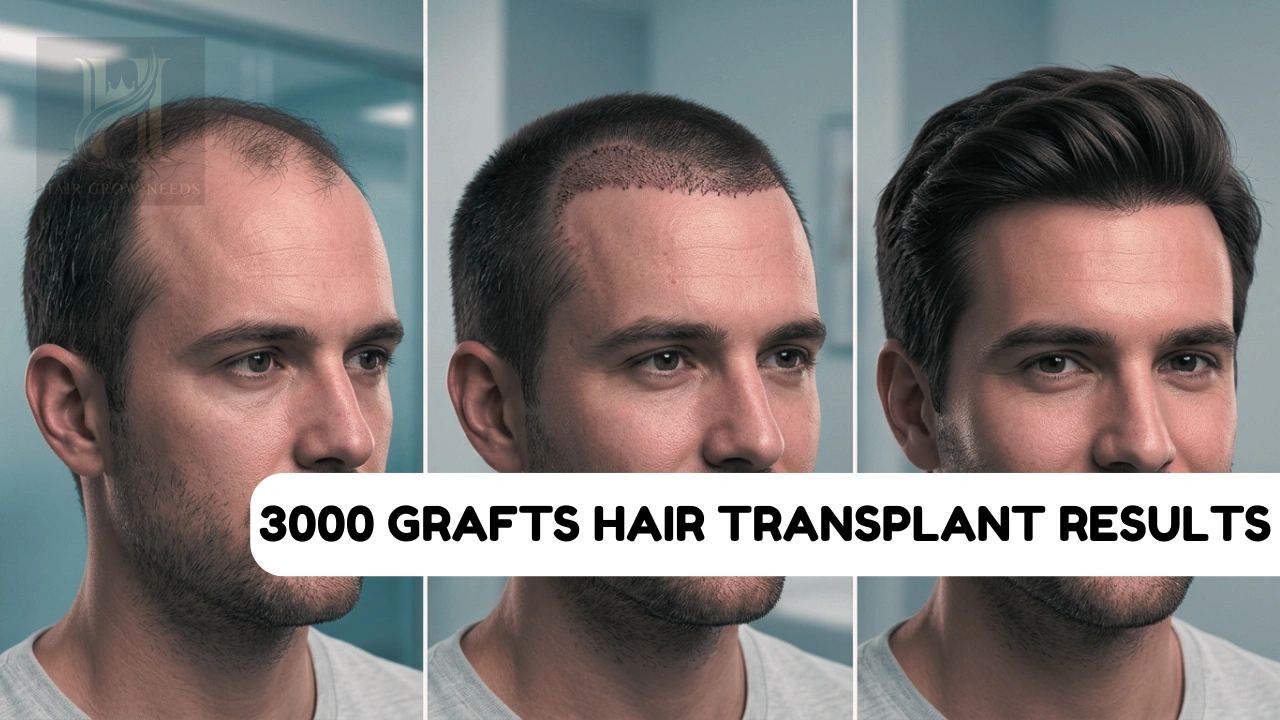
One of the most sought-after, high-intent queries in the hair restoration industry is 3000 grafts hair transplant results. The query is heavily researched in particular by the US market patients who may be suffering from moderate baldness or thinning in the hairline area.
Today, this is one of the most commonly suggested graft numbers by doctors for restoration of the hairline, mid-scalp density or covering of a portion of the crown area while not over-harvesting the donor area. A result of 3000 grafts in an FUE or FUT session performed by a skilled surgeon can yield very natural-looking results in today’s technology through proper angles, directions, and planning for density. Results can still vary based on the numerous clinical factors including the donor hair quality, scalp laxity, the doctor’s skill set, and compliance in post-operative care.
What Are 3000 Grafts Hair Transplant Results?
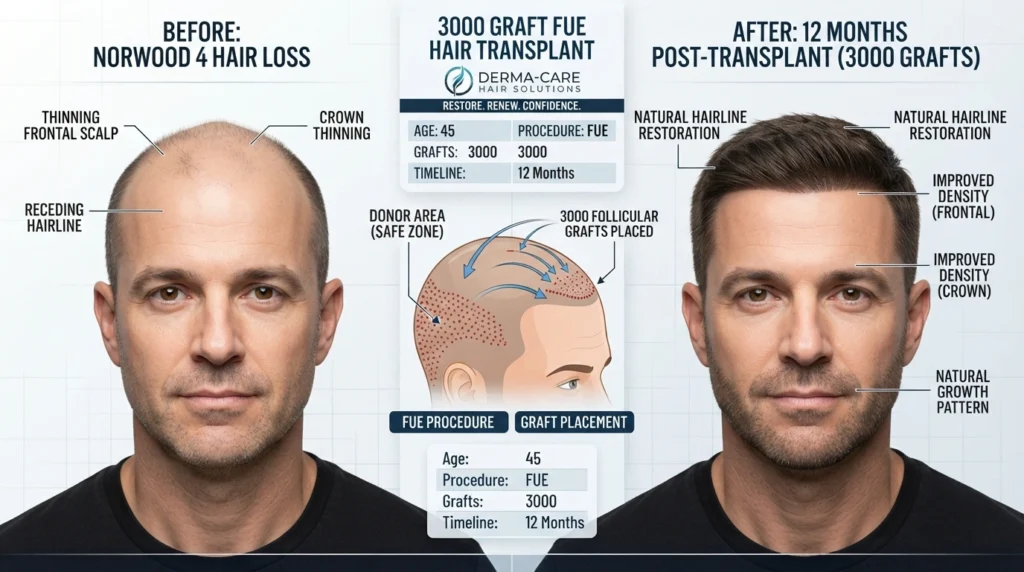
A 3,000-graft hair transplant outcome is referred to as the appearance of the hair restoration result that is achieved by transferring approximately 3000 follicular units to bald areas from the donor areas of the head (often at the sides and the back).
Clinical Understanding:
- Has 1-4 hair follicles in each graft: Each hair transplant graft is a small bunch of natural hairs containing 1-4 follicles.
- Total no of hairs = roughly 6,000 to 9,000 hairs: A routine 3000-graft transplant can involve 6000-9000 hair follicular units transplanted, according to the components of the graft.
- The coverage area may vary depending on hair thickness, curl, and contrast between scalp/hair: The amount of density the applied hair looks like depends on hair thickness, curl and wave of applied hair and differences of the hair’s color and the scalp’s skin tone, and therefore this coverage area will vary.
Expected Visual Improvement:
- A naturally designed hairline that blends with the patient’s facial features.
- Significant improvement to the middle of the scalp thinning.
- Possible improvement to the crown due to how grafts are spread-highly variable.
- Natural, “unplugged” balanced density when done well.
What Is the Success Rate of a 3000 Grafts Hair Transplant?
Under ideal circumstances and performed by an experienced surgeon, a 3,000-graft hair transplant could yield estimated follicular graft survival rates of approximately 90% – 95% some clinics report higher survival rates under optimal surgical conditions; however, individual results can vary. Factors that affect results include the condition of the donor hair, graft extraction and management, surgical skill and patient activity and lifestyle.
Although graft survival is key in evaluating if the surgery was a success, ultimately results vary according to the amount of hair to cover, the shape of future baldness, amount of hair loss, texture, color and the level of contrast. Ultimately the result relies on picking the right professional and care throughout and after the process.
References: International Society of Hair Restoration Surgery (ISHRS), StatPearls: Hair Transplantation, and peer-reviewed studies indexed in PubMed.
How Many Hairs Are 3000 Grafts?
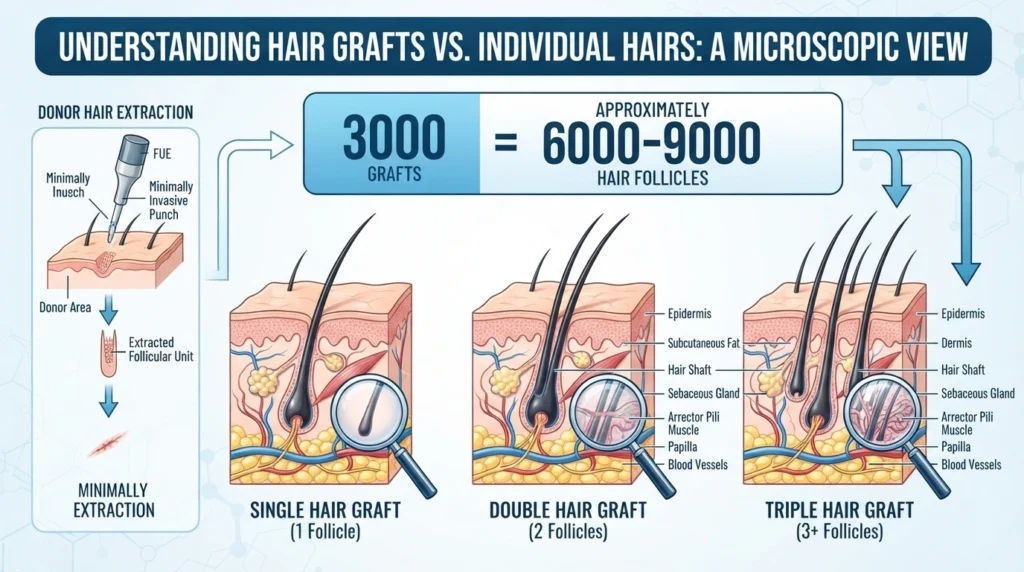
A 3,000 graft hair transplant does not mean 3,000 individual hairs. In the world of hair transplants, a graft refers to one or more naturally occurring hair follicles, and therefore, the exact number of hairs depends upon the patient. Normally, between 6,000 and 9,000 hairs are transplanted in 3,000 grafts, based on the density and characteristics of the follicular units and donor hairs.
| Measurement | Typical Range |
|---|---|
| Number of Grafts | 3,000 |
| Average Hairs per Graft | 2 – 3 |
| Estimated Total Hairs | 6,000 – 9,000 |
| Best Coverage | Hairline, Frontal Scalp & Mid-Scalp |
| Depends On | Donor Hair Quality, Follicular Unit Composition, Hair Thickness |
Ideal Candidate for 3000 Grafts Hair Transplant:
A 3000 graft procedure is NOT for total baldness. It is meant for cases of specific restoration.
Suitable Candidates:
- Norwood 3 to Norwood 5 pattern baldness with noticeable thinning without completely bald scalp.
- Patients with constant density on the back and sides of the scalp (donor area).
- Patients with the aim to restore the hairline and improve frontal density.
- A patient wanting hair enhancement via hair replacement and not coverage of baldness.
- A medically fit patient who does not have a current, or uncontrolled, scalp pathology.
| Suitable Candidates | Not Suitable Candidates |
|---|---|
| Patients with Norwood stage 3–5 pattern hair loss | Individuals with extensive baldness requiring significantly more than 3,000 grafts |
| Healthy donor hair density at the back and sides of the scalp | Patients with poor donor hair availability |
| Good general health and medically fit for surgery | Individuals with active scalp infections or untreated scalp disorders |
| Stable or slowly progressing hair loss | Patients with rapidly progressing hair loss who have not yet been medically evaluated |
| Realistic expectations about coverage and density | Individuals expecting complete restoration from a single session despite extensive hair loss |
The safest and most reliable way to discover whether you are a good candidate for a 3,000-graft treatment is to schedule an appointment for a consultation with a board-certified hair restoration surgeon. Your consultation with our surgeon includes assessing your hair loss patterns, assessing the available donor hair quality, evaluating your overall scalp condition, reviewing your health history, and understanding your cosmetic and long-term hair loss plans to arrive at the best solution.
3000 Grafts Coverage Area
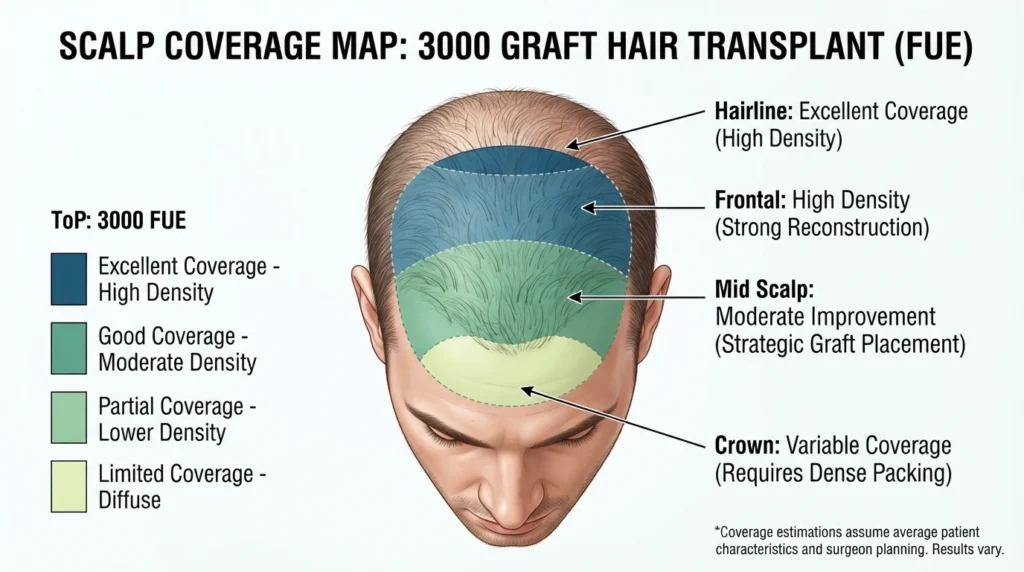
| Area | Coverage |
|---|---|
| Hairline | Excellent |
| Frontal Scalp | Excellent |
| Mid Scalp | Good |
| Crown | Partial to Moderate |
| Full Scalp | Not Recommended |
Before Surgery Checklist
Preparing for your hair transplant by planning ahead will help make your 3,000-graft hair transplant go as smoothly as possible. While your hair surgeon will guide you with more specific instructions depending on your specific medical profile, these preparations are typical for a 3,000-graft hair transplant procedure:
- Stop smoking if advised: Reduced blood supply to your scalp caused by smoking can hinder your recovery and compromise the graft’s survival rate. For this reason most surgeons advise their patients to quit smoking at least one to two weeks prior and post-op.
- Discuss medications with your surgeon: You may be asked to stop taking blood-thinning medicines or dietary supplements (like aspirin, ibuprofen, vitamin E, or fish oil) before your procedure if your doctor thinks this is necessary. Always consult with your doctor before discontinuing any of your prescribed medicines.
- Avoid alcohol for 48–72 hours before surgery: Alcohol can make your body bleed more, and keep it from healing.
- Wash your hair as instructed: Wash your scalp effectively with the clinic prescribed shampoo on the day prior to the treatment or the morning of the operation.
- Wear comfortable clothing: A button-up or zip-up shirt is often recommended to avoid pulling clothing over the scalp after surgery.
- Arrange transportation home: Typically local anesthetic is used during the procedure but many patients have a friend or family member drive them home from our office after their visit.
- Follow all pre-operative instructions: Be sure to strictly follow the pre-surgical care directives from your surgeon on diet, medication, and hair/scalp preparation to ensure the maximum chance of a successful procedure.
FUE vs FUT Which Gives Better 3000 Grafts Results?
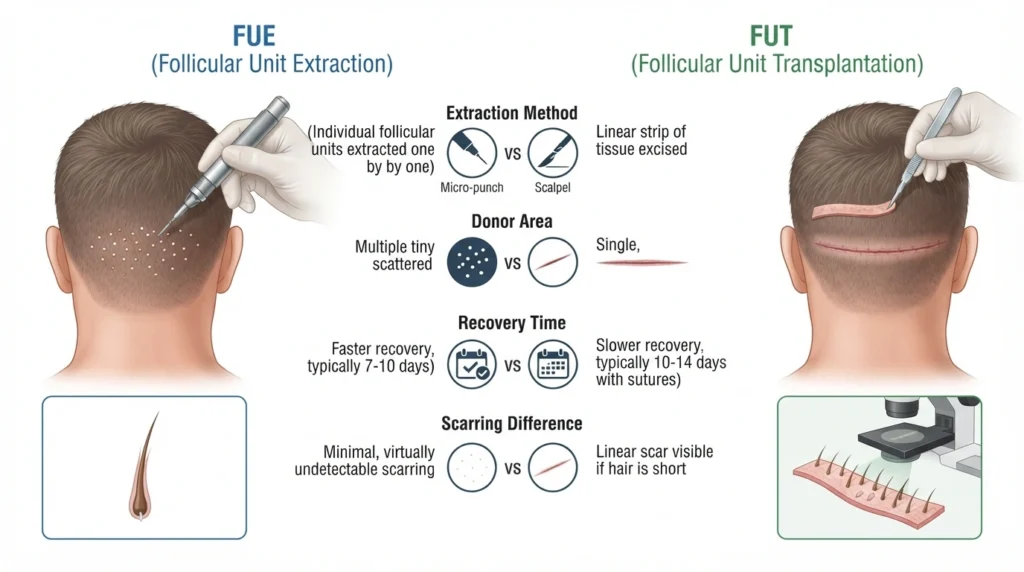
FUE (Follicular Unit Extraction)
- The incision is not straight across, rather individual follicular extractions.
- Faster recovery, as it only takes about 7 to 10 days to fully heal.
- Generally used in clinics within the US because of the cosmetic preference.
Follicular Unit Extraction FUE is often preferred by patients seeking minimal visible scarring and faster recovery. However, the best technique depends on donor characteristics, hair loss pattern, and the surgeon’s recommendation.
FUT (Strip Method)
- Linear donor scar on the back of the head.
- Increased number of grafts in one session.
- Marginally less per graft cost.
- Prolonged healing duration of 10 – 14 days.
FUE is a commonly used technique for many modern 3,000-graft hair transplant procedures because of its minimal linear scarring and relatively faster recovery. Because it is believed to offer the most natural-looking results and a more comfortable patient experience.
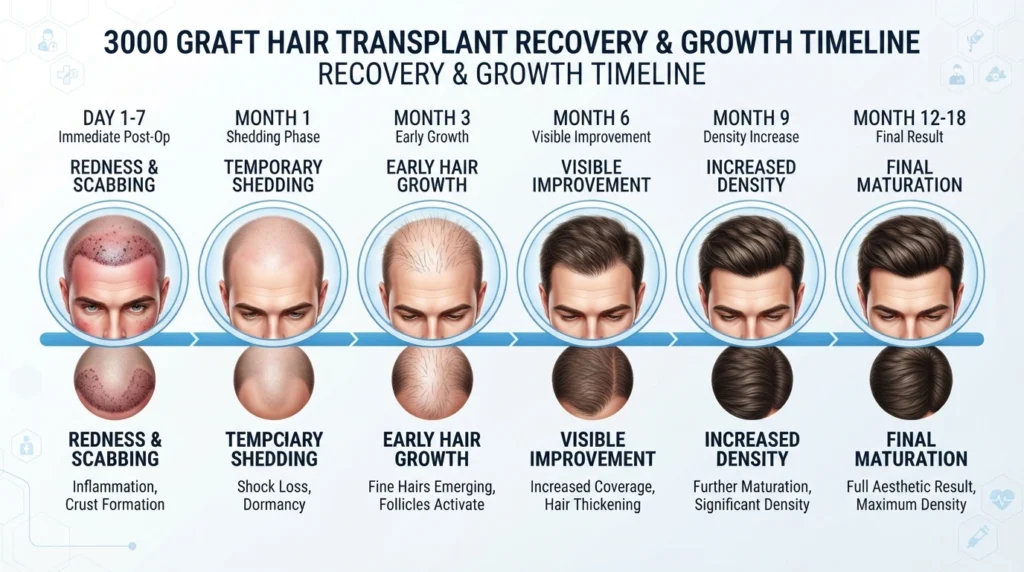
3000 Grafts Hair Transplant Results Timeline (Realistic Medical Flow):
| Time | What to Expect |
|---|---|
| Week 1 | Scabbing & redness |
| Month 1 | Shedding phase |
| Month 3 | Early growth |
| Month 6 | Visible improvement |
| Month 9 | Significant density |
| Month 12 | Near-final result |
| Month 18 | Final maturation (for many patients) |
Week 1-2:
Minor swelling will appear around your scalp and redness around the transplants where a thin scab will form.
You should be able to see nothing at this stage, as you’re hair follicles are still trying to recover.
Week 2-6:
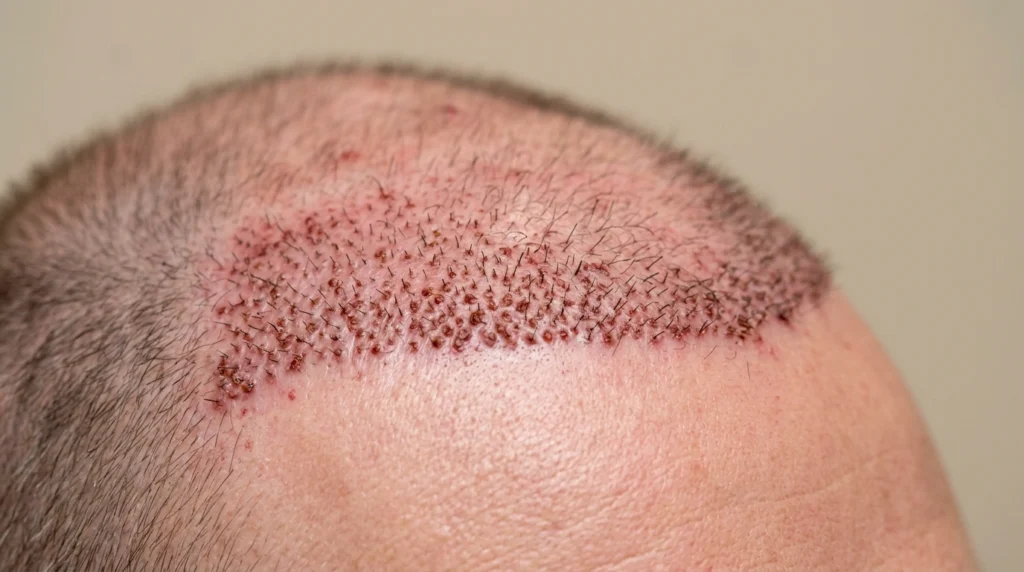
Temporary shedding of native and transplanted hairs can occur as a result of the trauma of the procedure, a normal process of healing.
When hairs are shed, the follicles enter a resting phase when there is no apparent growth before the formation of new hairs commences.
Month 3-4:
New fine and soft hairs are developing from the follicles that were transplanted, showing early hair growth.
There are initial hairs visible on your scalp however; the hair is weak, pale, and low in density in its initial stages.
Month 6-9:
A dramatic increase in hair coverage can be seen – more skin is being covered and there appears to be a much denser appearance.
Hair growth is now appearing more thicker and more durable which is making the density greater and providing a more natural appearance to the transplanted hair.
Month 9-12:
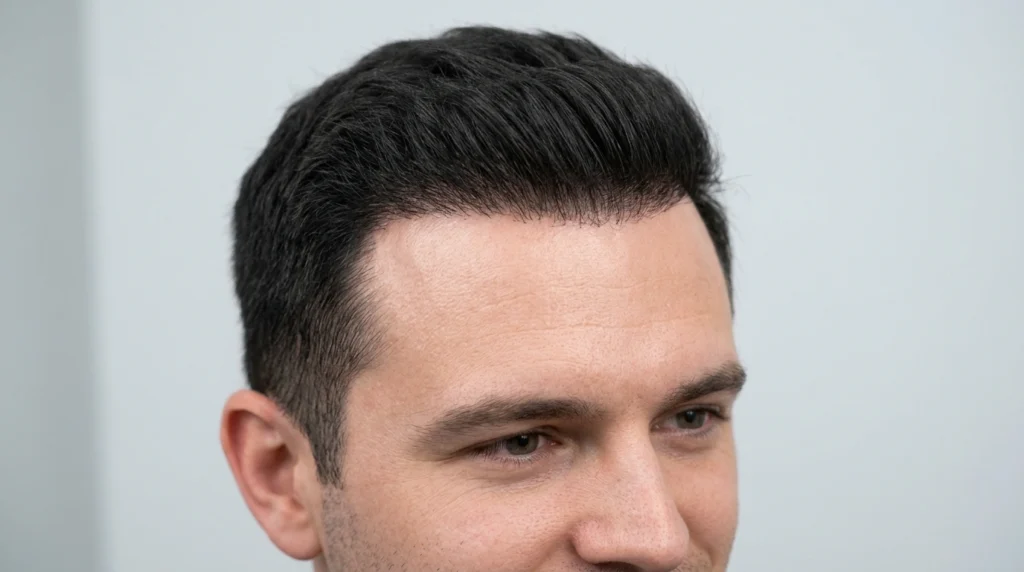
End result final 3000 grafts hair transplant is finally coming to view. The results for the full density stabilization and natural looking hair restoration are quite evident now.
3000 Grafts Hair Transplant Cost Comparison (USA vs Global):
| Country | Average Cost | Cost Per Graft | Quality Level |
| USA | $9,000 – $18,000 | $3 – $6 | Premium medical standards |
| Turkey | $2,500 – $5,500 | $0.8 – $2 | High volume clinics |
| UK | $6,000 – $12,000 | $2.5 – $4.5 | Mid-high quality |
| India | $1,800 – $4,000 | $0.7 – $1.5 | Budget option |
Clinics in USA are costly but more involved with the surgeons and safer with high survival of grafts.
3000 Grafts Hair Transplant Cost by Major U.S. Cities 2026
Figures below are estimated only. Real cost of a hair transplant procedure can vary a lot due to surgeon experience, clinic location, the method you choose (FUE/FUT), extent of hair loss etc.
| City | Estimated Price (USD) |
|---|---|
| New York, NY | $12,000 – $18,000 |
| Los Angeles, CA | $11,000 – $17,000 |
| Chicago, IL | $10,000 – $16,000 |
| Houston, TX | $9,000 – $15,000 |
| Phoenix, AZ | $9,000 – $15,000 |
| Philadelphia, PA | $10,000 – $16,000 |
| San Antonio, TX | $8,500 – $14,000 |
| San Diego, CA | $10,000 – $16,000 |
| Dallas, TX | $9,000 – $15,000 |
| San Jose, CA | $11,000 – $17,000 |
| Austin, TX | $9,500 – $15,500 |
| Jacksonville, FL | $8,500 – $14,000 |
| Fort Worth, TX | $8,500 – $14,000 |
| Columbus, OH | $8,500 – $14,500 |
| Charlotte, NC | $9,000 – $15,000 |
| San Francisco, CA | $12,000 – $18,000 |
| Indianapolis, IN | $8,500 – $14,000 |
| Seattle, WA | $10,500 – $17,000 |
| Denver, CO | $9,500 – $16,000 |
| Washington, DC | $11,000 – $17,000 |
| Boston, MA | $11,000 – $18,000 |
| Nashville, TN | $9,000 – $15,000 |
| Las Vegas, NV | $8,500 – $15,000 |
| Miami, FL | $10,000 – $17,000 |
| Orlando, FL | $9,000 – $15,000 |
Note: These prices are for reference and are based on average pricing for a 3,000-graft hair transplant in a top US metropolitan city in 2026. Individual pricing can depend on the skill of the surgeon, clinic location, transplant method, and the nature of the surgery itself. Contact our team today for a custom treatment plan and cost estimate!
Before and After Expectations (Realistic Medical Outcome):
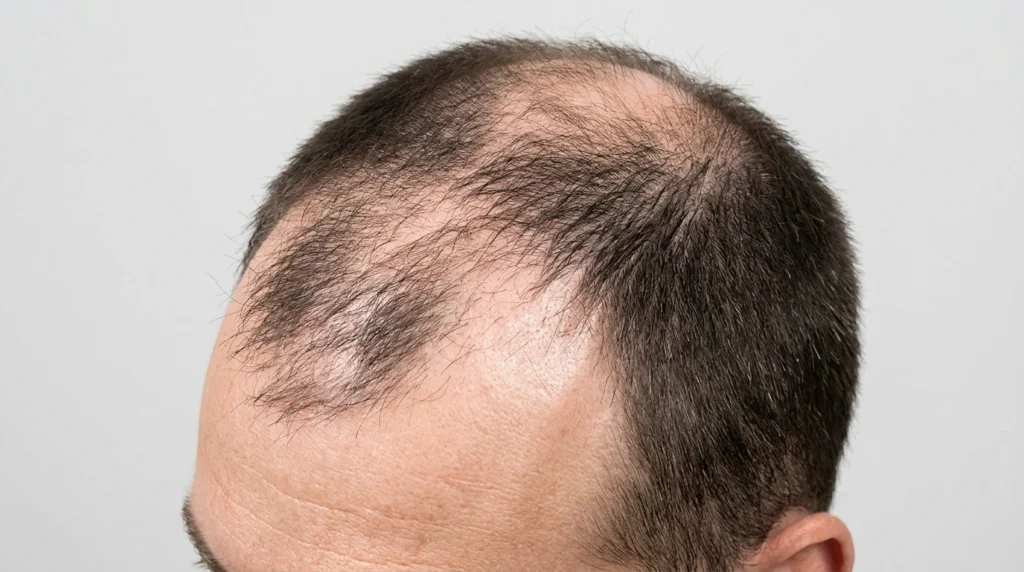
Before Surgery:
Clearly is hair loss: The frontal scalp may appear thinner, with visible scalp showing under certain lighting conditions.
After 9-12 Months:
The front hair line is rebuilt to the face contour. The full density of the scalp appears as a rich, evenly balanced youthful design.
The outcome is subjective and dependent on donor site size and plan of management
Factors That Affect 3000 Grafts Hair Transplant Results:
- Surgical skill in design and placing the grafts.
- Density of the donor hair and the quality of the follicle.
- The method of extraction of the hair follicles, be it manual or motorized FUE.
- Adherence to post-operative instructions.
- Smoking, alcohol consumption, and habits of lifestyle.
- Genetic hair loss progression stability.
Risks & Limitations:
- Shock loss (temporary, within 2 months)
- Uneven densities at early regrowth
- Overharvesting in bad quality clinics
- Infection if hygiene not taken care of
- Unrealistic expectations will lead to dissatisfaction
The risks of hair transplantation surgery performed in a licensed medical setting by experienced and trained surgeons are very low.
Aftercare Instructions (Critical for Results):
Protecting new grafts can only be done successfully with the help of your surgeon’s instructions post-operation.
- Do not touch, rub, or scratch the transplanted area: During the initial healing stage, you must try to avoid touching the grafts whenever possible.
- Follow the recommended washing instructions: Shampoo and wash your hair only as prescribed by the hair transplant specialist.
- Avoid strenuous activities and exercise: Avoid intense exercise and exercise that causes you to sweat until your surgeon clears you to resume.
- Take prescribed medications as directed: Make sure you adhere to your doctor’s post-surgery advice and recommendations. Your post-operative orders include instructions for medications, such as antibiotics, pain pills, and anti-inflammatory pills.
- Attend scheduled follow-up appointments: The post operative visits provide the surgeon with an opportunity to evaluate how your healing is progressing and to discuss any issues or concerns.
Recovery Tips for Better Results
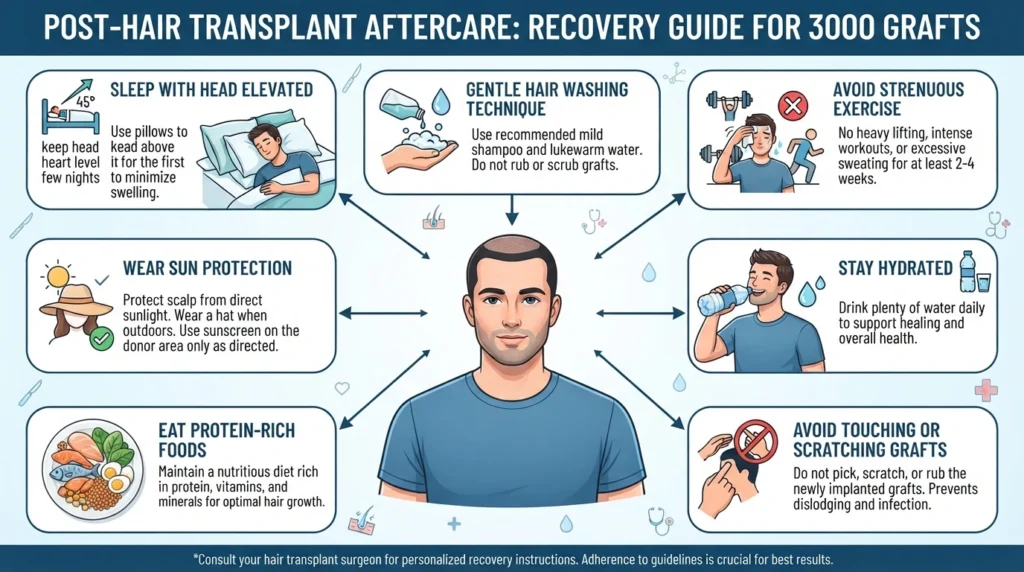
The end result of a 3,000-graft hair transplant procedure comes as much from following the aftercare instructions and practices of the clinic as from the actual surgical intervention. The hair after the transplantation will grow at an optimal speed and rate if these tips and advice were followed strictly after surgery and continue to be a routine during the healing phase.
- Sleep with your head elevated: Sleep with your head propped up about 45 degrees during the first couple of nights to assist with the swelling.
- Avoid pressure on the transplanted area: Don’t put on tight caps or hats until you get cleared by the doctor to do so.
- Stay hydrated: Adequate water intake supports all aspects of healing and recovery.
- Eat a balanced, protein-rich diet: Protein, mineral, and vitamins are very essential for healthy and to make stronger your hair; also it’s helped to rebuilding tissue.
- Protect your scalp from direct sunlight: The time to protect against the sun is in the initial phase of your scalp to reduce scalp sensitivity as UV rays are present during this period.
- Avoid swimming and hot tubs: Refrain from going to pools, hot springs, the ocean, or a hot tub until you are cleared by your doctor.
- Attend all follow-up appointments: Having a post-op appointment with your surgeon helps them keep track of your healing and also answer any questions.
- Be patient with the timeline: Some shedding for the first couple of weeks is normal, as hair is in the active phase of growth, and real changes begin after a couple of months.
Recommended Hair Transplant Clinics in the USA for 3000 Grafts 2026
| Clinic | Location | Estimated Price (USD) |
|---|---|---|
| Bosley | Multiple U.S. Locations | $10,000 – $18,000 |
| Hair Club | Multiple U.S. Locations | $9,000 – $17,000 |
| Bernstein Medical | New York, NY | $12,000 – $18,000 |
| MAXIM Hair Restoration | New York, NY | $9,000 – $15,000 |
| Natural Transplants | Fort Lauderdale, FL | $10,000 – $16,000 |
| Anderson Center for Hair | Atlanta, GA | $10,000 – $17,000 |
| AlviArmani | Beverly Hills, CA | $12,000 – $20,000 |
| Parsa Mohebi Hair Restoration | Los Angeles, CA | $10,000 – $17,000 |
| Shapiro Medical Group | Minneapolis, MN | $9,500 – $16,000 |
| Hasson & Wong (US Office) | Seattle, WA | $10,000 – $17,000 |
| Chicago Hair Institute | Oak Brook, IL | $9,500 – $16,000 |
| Carolina Hair Surgery | Charlotte, NC | $9,000 – $15,000 |
| Bauman Medical | Boca Raton, FL | $11,000 – $18,000 |
| Restore Hair | New York, NY | $9,500 – $16,000 |
| Virginia Surgical Center | McLean, VA | $9,500 – $16,500 |
| Arocha Hair Restoration | Houston, TX | $9,000 – $15,500 |
| We Grow Hair Indy | Indianapolis, IN | $8,500 – $14,500 |
| New England Center for Hair Restoration | Boston, MA | $10,000 – $17,000 |
| Miami Hair Institute | Miami, FL | $10,000 – $17,000 |
| Beverly Hills Hair Restoration | Beverly Hills, CA | $11,000 – $18,000 |
Disclaimer: The treatment cost ranges above are intended as guide prices only and may vary from clinic to clinic. Your ultimate cost of treatment will vary depending on your surgeon’s opinion, number of grafts, donor hair traits and whether you have purchased the full treatment. We advise to call the clinic direct.
FAQs:
Q: Are 3000 grafts enough for hair restoration to be visible?
Yes, particularly for the frontal and mid scalp for moderate hair loss cases.
Q: How natural do 3000 grafts look like?
If the hair transplant has been performed skillfully, it will be impossible to differentiate it from natural hair.
Q: How Much Area Does 3000 Grafts Cover?
A hair transplant procedure using 3,000 grafts can treat an area of 50-100 cm2 depending on how much density you desire, how good the quality of the hair, your hair texture, and the body area being treated.
Q: How long does it take to see full results?
It takes approximately 9 to 12 months for most of our patients to achieve a substantial result. Final refinement of the outcome may continue through the first 12 to 18 months to allow full maturity.
Q: Will 3000 grafts last forever?
Yes, hair transplanted is usually resistant to DHT and wiThe transplant hair, more typically permanent due to the donor hair follicle generally not susceptible to DHT, while non-transplanted hair continues to recede over the years.ll remain for a lifetime.
Q: What is the best technique for 3000 grafts?
FUE is now more popular in the USA as the method to get natural results with little or no scarring.
Q: Can 3000 grafts cover the crown?
With a 3,000 graft hair transplant, you may see moderate to good cover for your crown area, with size of bald area, the density of your donor hair and where the doctor chooses to plant your new hair, all factoring into the degree of coverage you can achieve. In many cases, to fill out the crown to a satisfactory level, because your hair will grow from the scalp in a circular fashion and may require more grafts to achieve the appearance of density, a second transplant might be considered.
Q: How painful is a 3000 graft hair transplant?
A hair transplant with 3,000 grafts is generally considered minimally to mildly uncomfortable because the surgery is conducted with a local anesthetic. Some pressure, pulling, or minor discomfort might be present during harvesting and placement, and you might feel some temporary soreness, tightness, or tenderness in your scalp for a few days, which you’ll manage with the help of prescription medication.
Q: Can existing hair continue falling after transplant?
Yes. Hair transplant procedures replace the hair lost with permanent follicles from a donor area but does not prevent further genetic hair loss in the original non-transplanted hair. In time some men still lose their existing hair, therefore the transplant may require follow up treatment with medications like minoxidil, finasteride or other approaches as determined by the patient.
Q: When can I return to work after 3000 grafts?
If you work at a desk or a non-physical job, the hair restoration may be completed as soon as 3 to 7 days post your hair transplant. However, your recuperation period can be more if your work involves being outdoors, or heavy exertion, dust, heat and perspiration. Your surgeon will give you exact post-treatment directions for the same.
Q: Are 3000 grafts enough for Norwood 5?
For many Norwood 5 clients 3,000 grafts would address most of the forehead and mid section but perhaps not the entirety of the scalp area. Ultimately your result is based on: donor supply, type of hair, size of the scalp, and what your personal goal is. Some patients will require more then 1 hair session.
Q: How Long Do 3000 Grafts Hair Transplants Last?
Is my transplanted hair permanent? Transplanted hair is thought to be permanent as the follicles from the donor are thought to be insensitive to DHT. However, your non-transplanted hair could continue to thin.
Conclusion:
For patients who have a moderate amount of hair loss, 3000 grafts hair transplant results are extremely effective and will appear very natural in the right hands, but a surgeon’s skills, care of the donor area and a disciplined post-op are what really affect ranking and successful results, and the number of grafts being used. For USA based patients, higher priced clinics are likely to offer the best chances of grafts staying, natural density and reliable results. The only way to determine if 3,000 grafts are the right number for your hair loss pattern and future goals is to meet with a qualified hair restoration surgeon for a personal consultation.
Written & Reviewed By
Written by: Wajiha Aqeel
Co-Founder & Hair Restoration Research Lead
Data & publication oversight: Daniel Brooks
Co-Founder & Senior Operations & Data Director
Clinic & Pricing Data Last Reviewed: July 2026
Last Updated: July 2026
Medical information is reviewed using guidance from ISHRS, AAD, ABHRS, ASPS, and peer-reviewed literature.
References
- International Society of Hair Restoration Surgery (ISHRS). Patient Resources and Practice Census.
- American Academy of Dermatology (AAD). Hair Loss: Diagnosis and Treatment.
- American Board of Hair Restoration Surgery (ABHRS). Patient Education Resources.
- National Library of Medicine (NCBI). Hair Transplantation – StatPearls.
- Peer-reviewed hair restoration studies indexed in PubMed.
- American Society of Plastic Surgeons (ASPS). Hair Transplant Surgery.
Medical & Affiliate Disclaimer:
The content on Hair Grow Needs is for general informational and educational purposes only and should not be considered professional medical advice. For full details regarding our policies, please read our official Disclaimer.